

Warning: major spoilers ahead
Over two decades ago horror cinema was forever changed by a low-budget found footage film.
Released in 1999, The Blair Witch Project chronicles the “found footage” of three student filmmakers, Heather, Josh and Mike, portraying themselves as characters during their voyage into the woods surrounding the sleepy town of Burkittsville, Maryland, formerly known as Blair.
During a montage of interviews, residents recount their experiences with the mythical Blair Witch legend, the primary topic of the students’ film. As the trio ventures into the surrounding woods, several bizarre phenomena occur igniting the nightmare that awaits them.
Between the constant shakiness of a handheld camera and overall scattered events, The Blair Witch Project is not necessarily the most conventionally pleasant watch. On top of this, the lack of props, aside from the iconic hanging stick figures, makes the film a visually lacklustre.
Despite these apparent criticisms, The Blair Witch Project succeeded in its goal of generating pure terror among audiences. The film’s originality and icon status have landed it as a classic of the horror genre.
The secret behind the film’s approach to found footage horror can be credited to several production choices.
A large portion of the film’s dialogue was entirely improvised. The actors were presented with a 35-page screenplay featuring a general plot as well as key events. Therefore, the details of the witch are shrouded in mystery for the actors as much as the audience.
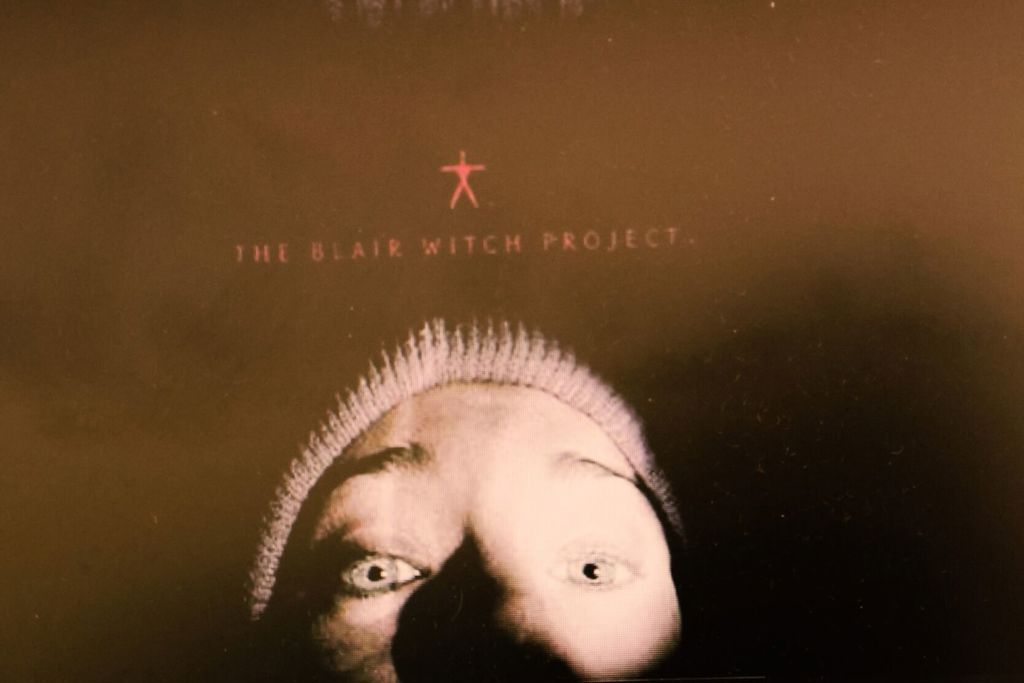
In one of the film’s most iconic scenes, Heather records an apology to the relatives of Josh and Mike, blaming their sealed fates on her naive curiosity and relentless desire to complete the documentary.
With only the upper half of her face visible, Heather sits alone in the dark woodland she has grown familiar with over the production period. At this moment, it’s as though the cinematic world and the real one meet. The audience is witnessing an actor who is completely convinced of their craft, living out the nightmare they have found themselves in.
Having little crew present as a psychological safety net and the idea of a mythical witch lurking through the undergrowth, it’s not hard to believe that Heather’s distress could in fact be real. Her knowledge that she is part of a fictionalized story cannot prevent her imagination from responding to the distant sounds of twigs cracking or the woeful calls of nocturnal beings. The nightmare Heather has in the cinematic and real world is enduring can be summarized by her line, “I’m scared to close my eyes and I’m scared to open them.”
Horror often uses the idea of “to see or not to see;” does it evoke more fear in the audience to reveal what lurks in the dark, or is it best to leave the audience at the unrelenting power of their imagination? Not once in the film is the Witch shown, leaving the entirety of its appearance a source of speculation.
For some, this may come across as a roadblock in the film’s immersion, but in the case of the found footage approach, this has the opposite effect.
The topic of the supernatural has been a subject of debate for centuries. Mediated content of supernatural “sightings” tends to be laughed off by the public, whereas horror cinema embraces these sensationalized depictions as its brand. Supernatural imagery and beings in horror films are noticeably out of place with our understanding of reality and can thus be shrugged off.
In The Blair Witch Project, the lack of supernatural presence amplifies its effectiveness as a horror film. Aside from the meta connections that come with being promoted as “found footage”. The source of fear hides out of sight, watching from the treeline silently as the filmmakers walk in circles of an unsuspecting forest.
The film’s ending leads Heather and Mike to a dilapidated house. In the final moments, Heather ventures into the basement, where she witnesses Mike standing motionless facing the corner before being struck over the head. The shot is uncanny and iconic, leaving the viewer with no visual clues as to what occupied that house or what lured them in.
For the past hour of the film, the viewer has witnessed the trio survive in an unwelcome environment. In this final shot, the viewer is left feeling like they have truly witnessed something they shouldn’t have in a location they should not be viewing.
Perhaps the very myth of the Blair Witch is a manifestation of our mind’s “what if?” response to the unknown. Even in the sanctuary of our bedrooms, the sound of our house’s structure lurching with the wind may entertain supernatural sources not congruent with our understanding of reality as causes. The Blair Witch Project revolutionized horror by stripping it down to its bones, showing us the terror that comes from our brain’s internal quarrel of whether we should investigate the things that go bump in the night, and the grim consequences that may come with what we uncover.