

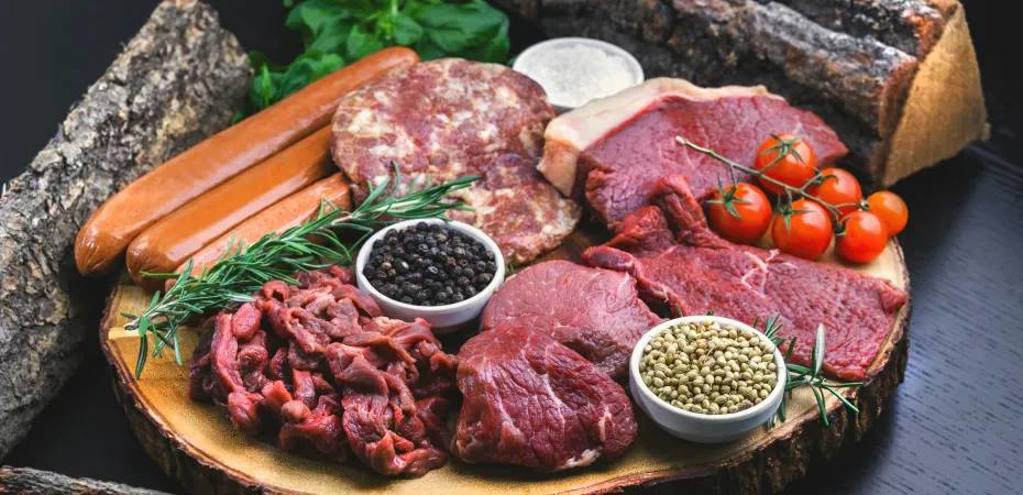
Mythological diets, like many incarnations of the carnivore diet, are silly yet popular and they’re worth debunking.
First of all, a mythological diet is not the same thing as being a vegetarian. Most vegetarians commit to not eating meat for ethical, religious or health reasons. What I mean by a mythological diet is any diet that has both the quality of being an ahistorical fad and of having a kind of naturalist component that its propagators leverage. A naturalist cosmology is usually used to say that this kind of diet is the “correct” diet that humans are meant to eat based on our ancestry, physiological corks or other pseudoscientific premises.
To set the record straight, there are no strict diets that are the natural human diet. There are certainly things we ought not to eat and things it’s best not to eat a lot of, however that doesn’t mean there’s a food group that is best for our species. Scholars of early hominids suggest that our primitive diet likely consisted of the diet of chimpanzees; an omnivorous mix of berries, meats, flowers, bark and more as Andrews & Martins suggest in their heavily cited 1991 study on the matter.
Diets like the carnivore diet have become the sine qua non of otherwise carnival-tier influencers like Brian Johnson, A.K.A. the Liver King, a fitness influencer who preaches a carnivore diet that involves eating raw organs and especially, well, livers.
It sounds absurd, but the pull of Liver King is the idea that it is in line with our real nature. If it sounds like this logic only applies to ‘roided up figures like Johnston, one of the leading public intellectual figures of our time, Jordan Peterson, also swears by the all-carnivore diet. Those of Peteron’s elk tend to cite studies such as the Tel Aviv University metastudy published in 2021 to the American Journal of Physical Anthropology that found that for 2 million years our ancestors were extremely carnivorous.
Though the study is largely opposed to being prescriptive about this fact, stating in the conclusion of the study that with the agricultural revolution, patterns of human diet become fuzzy.
On the other hand, the topic of what human diets are most beneficial, not natural, is hotly contested. For that reason, I don’t plan to put down my own ardently held hypothesis here. However, I would point out that the meat and dairy industry accounts for a large portion of global greenhouse gas emissions, therefore human beings moving to more plant-heavy diets in the future might be a good idea based on that alone. This seems especially feasible now as we can take supplements to get the essential nutrients found primarily in meat products.
On this note, it is also worth mentioning that the trophic studies of our ancestry don’t hinge greatly on our behaviour today. Since the agricultural revolution, human beings have evolved into evermore complex societal arrangements to the point where it’s not hyperbole with things like the Internet to say that we are a global consciousness. We even went to the moon not that long ago. The changes in humanity in the last 10,000 or so years have seen an incredibly rapid advance in our technological capabilities, so much so that we’re even able to make lab-grown meat by culturing animal cells in vitro.
The issue is ultimately that the mythological diet influencers create cults around themselves because they argue their diets are ancestrally “correct” diets. Whether in a more disguised political form as in Peterson’s case, or as a means to amass views as in Liver King’s case, this whole premise is absurd. It can’t be discounted that there’s an aspect of enjoyment taken in dietary superiority too. The unassuming viewer of one of these influencers might feel they are doing the wrong diet. Conversely, the devout follower of a mythological diet now has reason to feel as though they are more in-line with our “true” nature, hence, the superior human specimen.
This insecurity seems to be something that has the potential to affect young men especially. When a phenomenon like mewing, where one positions their tongue in a strenuously concerted way so as to expand their jawline throughout a long period of time, garners a community of 44 thousand — mainly male based on the posts — followers on Reddit, that’s concerning. Likewise, with mythological diets, especially of the carnivore brand, young men can be duped into thinking that they are tapping into the “apex” aspect of themselves, enabling a sort of masculine primality.
It’s pseudoscience through and through but it preys on very real insecurities.
From a philosophical perspective, if anything characterizes the human being, it’s that we are able to be extremely variable in our lifestyles and choices. So long as someone accounts for needed nutrients, they can never eat a piece of meat in their life again and be okay. This applies just as much to the idea that we are primordially meant to eat, say, plants and berries.
From a political view, it’s as if the void left in liberal postmodern societies has pushed people to deify their diets in the absence of any other cause of political sense of duty. To have your epistemological niche is tantamount to having a tribe. In the scattered multiplicity of identity and enclaves that proliferate in a late-capitalist postmodern context, it’s not surprising that diet choices are taking on an air of cult-like fervor.