

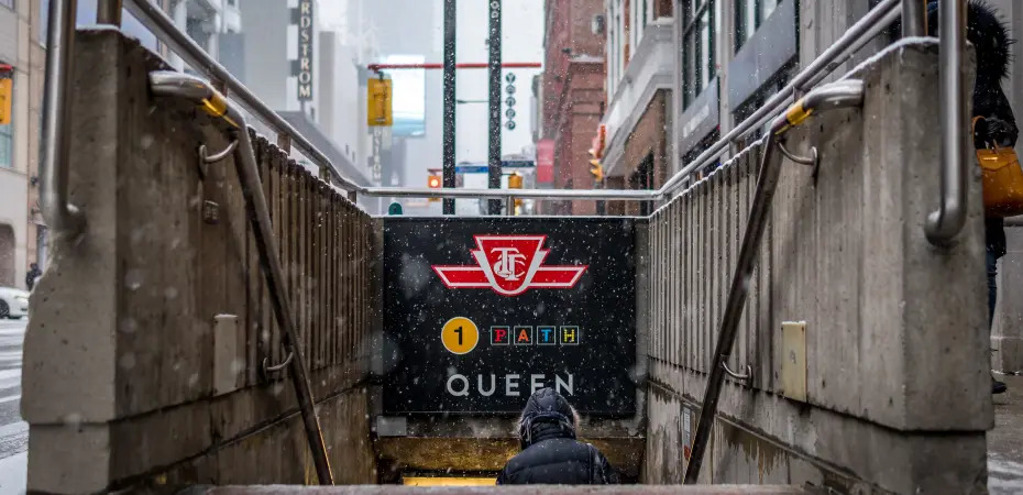
Living in the financial triangle of Ontario — Ottawa, Toronto, Quebec — it’s hard to avoid the constant reminders, from eye-grabbing chyrons to strangers’ small talk, about the recent uptick in crime in Canada with the current economic downturn. The leader of the Official Opposition, Pierre Poilievre, continues to remind his base that “Canada is broken,” especially when it comes to city crime.
“In particular, he [Poilievre] emphasized the issue of crime, saying cities are becoming ‘crime zones’ under Trudeau’s watch and suggesting he is not taking the necessary action to reduce violence.
Poilievre named Toronto as an example after a string of violent incidents on the city’s transit system in recent weeks.
A Statistics Canada report released last Nov. shows the country’s homicide rate increased for the third consecutive year, with cities like Winnipeg and Regina boasting the worst rates per capita. The crime severity index was down in 2021 and 2020 after five years of increases.”
Alongside increased crime in the city comes increased frustration at the current administration.Prime Minister Trudeau recently visited Hamilton for a cabinet retreat. There were protesters outside of his hotel, swarming him, shouting threats and epithets, and whose car horns I could hear from my apartment several blocks away. A couple nights later my partner’s car window was smashed-in overnight and her glovebox and armrest compartment emptied.
When the economy hurts the poor hurts most.
It’s no secret that austerity measures used to combat inflation are a way to discipline workers, and with the 8th consecutive interest rate hike from the Bank of Canada in a 12-month period, the discipline is only getting harsher. It’s no secret that Trudeau has become unpopular with the working class and it’s been a gift to the progressive conservatives who know how to channel that frustration for their own political ends like Poilievre.
Conservatives, then, like to prey on middle class fear and preach the need for law and order, as mayor of Toronto John Tory is in response to the latest violence sprees on the TTC. Because of transit levels being relatively low, likely due to the pandemic, Tory has been cutting its transit funding, which means less staff for oversight and maintenance. Meanwhile, the Toronto government is spending an estimated $300 million on hosting part of the FIFA World Cup in 2026.
This is obscene, especially when with the right planning, properly funded infrastructure can improve community safety.
With the trend of unconscious flight away from city cores over the past few decades, cities exhibit some verisimilitude to the fantasy cities portrayed in film noir—a sinful, trash-laden, claustrophobic, space of financial perdition.
I recently spoke to a man in Hamilton who was on disability — he had had several tendons in his forearm slashed while on the job — who recently lost custody to his six children and was in a weaning stage of an opioid addiction. We briefly chatted about Trudeau’s visit and he said something along the lines of, “No one likes him here anyways, so why is he the leader?” to which I replied; “Good point!”
It’s true, the political polarity of where I live is overwhelmingly NDP and conservative. The two of us agreed that if working people were unified, if they came out to vote as a class coalition instead of federal election voter turnout dropping in the 2019 election to 44 per cent, then we could have leaders who represent the masses.
Capital has done a tremendous job to depoliticize the masses since the neoliberal period. With the precarious work regime, the smashing of the trade unions and new forms of atomization that provide just enough freedoms in the form of self management, such as Uber and OnlyFans, so as to make it harder to organize simply by the logics of self-determination that still siphons surplus value towards Silicon Valley. Workers have not been able to fully recover from this consolidation in the hands of private enterprise.
Philosopher Slavoj Žižek in his book Violence speaks about the limits of a liberal attitude towards crime by comparing fascinating manifest subjective violence to the quiet, hardly detectable objective violence that hums along slowly in the background:
“Opposing all forms of violence, from direct, physical violence (mass murder, terror) to ideological violence (racism, incitement, sexual discrimination), seems to be the main preoccupation of the tolerant liberal attitude that predominated today… Is there not something suspicious, indeed symptomatic, about this focus on subjective violence—that violence which is enacted by social agents, evil individuals, disciplined repressive apparatuses, fanatical crowds? Doesn’t it desperately try to distract our attention from the true locus of trouble, by obliterating from view other forms of violence and thus actively participating in them?”
This is precisely the attitude that should be considered when we speak about the recent uptick in crime; how the very way we approach the issue can already be a part of the problem. The more agency liberals and conservatives pathologically project onto the desperate, the more they fall prey to keeping them there.
Free will is not evenly distributed.