

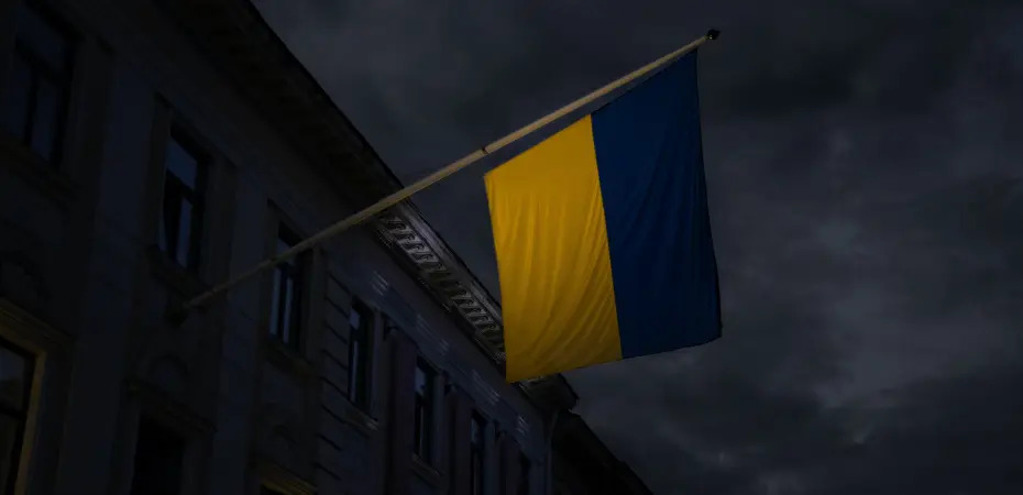
The Russian invasion of Ukraine is nearing its one-year anniversary and taxpayers shouldn’t have to fund a war that western leaders don’t want to end; why not pursue peace negotiations instead?
Last week, world leaders met at Davos for the return of the World Economic Forum (WEF) and the Ukraine war was hot on the lips of many of the attendees. Most notably, NATO Secretary General Jens Stoltenberg, in a bid for further funding towards the war, said that “Weapons are the way to peace.” Commentators worldwide are right to see the Orwellian aroma of this statement.
Perhaps negotiation is the way to peace.
For example, why did a western leader like the former U.K. Prime Minister Boris Johnson, when he was still in office, influence Volodymyr Zelenskyy to drop the near-approved 15-point peace agreement with Russia back in May of 2022? Johnson sowed doubt in Zelenskyy’s mind over the tentative agreement, claiming that Putin would abuse the agreement, with the implied corollary that the West could push Putin to defeat so long as Ukraine didn’t sign on to the agreement.
Finland’s Prime Minister, and the world’s youngest government leader, Sanna Marin, a darling of liberal feminist discourse on the difficulty of being a “girlboss” in power, stated in veritable hawkish terms at the WEF that, “We do not know when the war will end. But we have to make sure it will end [sic], Ukrainians win—there is no other choice… I think other countries are looking very closely at what is happening now in Ukraine, and if Russia would win, then it would send a message that you can invade another country, you can attack another country, and you can gain from that.”
What does win mean here for both Russia and Ukraine? It sounds as if any peace negotiation with Putin is Russia “winning,” and only Ukraine and NATO defeating Putin’s entire army is a “victory” for Ukraine. Marin’s statement echoes the kind of dog whistling and global factionalism that Canada’s Deputy Minister, Chrystia Freeland put to use when asked by a member of the African Development Bank about Western funds being diverted from supporting Africa to the war effort, in which she replied that democracy can only be defended if people are “willing to die for it,” a lesson which Zelenskyy “understood from day one.”
Canada has already dispersed $2 billion since October to Ukraine with billions more to come in throughout the year. While I don’t object to helping the Ukrainians with funding and even weaponry when peace doesn’t seem to be an option, when Western leaders are spinning the funding of the war as a necessary procedure to protect global democracy against the autocratic east when Russia is a weak kleptocracy, it becomes hard to see the rationality of immense spending on the war. Especially when, in Canada, we’re seeing food banks struggling with low resources during this current economic downturn.
It’s not a matter of obscuring Russia’s supreme act of international crime, it’s a matter of negotiating a solution so that Putin’s dominion on raw resource exports slowly fades out — as it is already— along with his regime, Lord willing, instead of the possibility of nuclear fallout.