

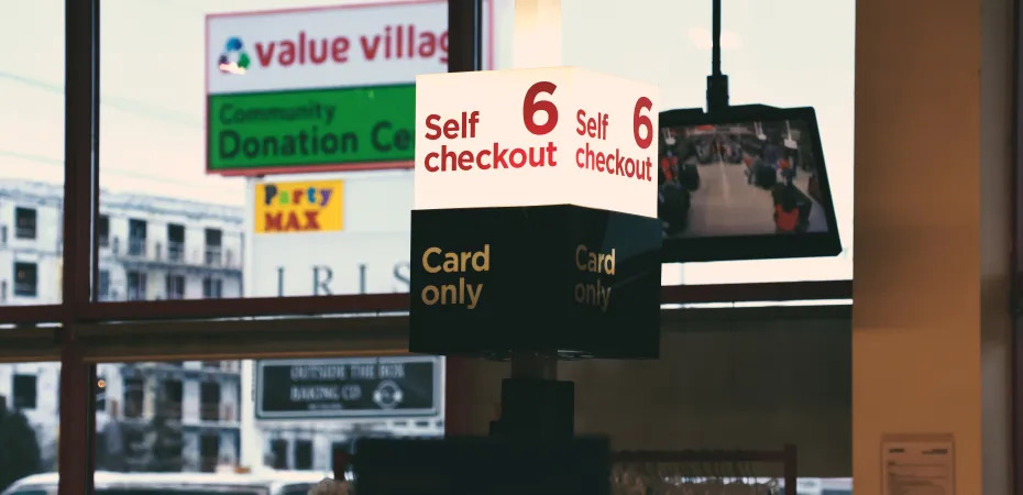
As if there weren’t enough reasons already to boycott Value Village, the for-profit second-hand clothing corporation has begun introducing self-checkout machines across stores in Canada.
Most recently, while visiting the Welland Value Village location on Seaway Drive, the store had been renovated to include several self-checkout machines, while only leaving two worker-operated checkouts open behind the machines.
Seeing the expansion of unethical profit avenues that Value Village has adopted in the past few years, such as opening expensive boutiques in Toronto and making second-hand clothes unaffordable for those who need them most, truly should be of concern to anyone who has ever supported the corporation.
Since Value Village has expanded their unethical for-profit practices to their Welland location, it is of utmost importance as residents of the Niagara region to examine these practices and rightfully critique how they directly impact our community for the sake of profit.
For-Profit Practices
Although there are endless ways that Value Village has managed to extract profit, such as freely-given inventory, some may affect you as a customer more directly than others, or alternatively, those in your community who are struggling.
A common misconception about the corporation is that every purchase guarantees a donation to non-profit organizations, but this mechanism is far removed from reality. In fact, the company includes disclaimers about this on the fine print of its website, but many customers continue supporting the corporation, thinking their money will be donated to a good cause.
On the other hand, the second-hand clothing corporation claims to pay a significant share to their non-profit partners for the free donations they receive as a way to give back, yet, an InvestigateWest report has shown that only eight to seventeen per cent of revenues are donated to partners, leaving massive profits for the corporation rather than the communities they claim to serve, which have caused legal issues for the company.
Something that may affect you more directly as a consumer is Value Village’s new exchange policy, as well as the elimination of change rooms in the stores. Initially introduced as a COVID-19 safety precaution in 2020, Value Village closed down their change rooms in stores and has yet to re-introduce them. Coupled with rigid policies that only allow for clothing exchanges rather than refunds, it makes it more difficult for customers to know if what they are buying fits them, and in the case it doesn’t, the company keeps the profit anyway.
Why care about companies introducing self-checkout machines?
Despite the perceived convenience that self-checkout machines may grant customers, it is difficult to deny the tragic impacts that automation software may have on employment.
Although an argument can be made about automation generating new kinds of jobs, these new positions available due to automation will likely require knowledge of technical skills, making these jobs out of reach for “less-skilled” workers, seniors or impoverished individuals who rely on their customer service jobs.
Additionally, considering that Value Village does not have to invest in inventory as most other companies would, reducing their expenses on labour further for the sake of profit is simply unethical, especially considering one of their brand values is helping out struggling segments of the population and “doing the right thing”.
The impact on the Niagara Region
Several businesses across the Niagara Region have implemented similar for-profit practices as Value Village, but seeing a corporation that openly claims to benefit communities and support good causes be so willing to displace minimum-wage workers for the sake of money is more shocking.
With the skyrocketing, unaffordable prices seen at the Welland Value Village store and the self-checkout machines in place, one thing becomes clear: The store has no interest in benefiting those who are struggling in our community or benefiting anything but their wallets.
Considering that one in seven people in Niagara live in poverty and that homelessness rates are on the rise in the region, it is important for people in Niagara to stand up against the rise in the automation of jobs that could be filled by people in our communities.
Furthermore, with the increasing instances of intense snowstorms in the Niagara region, as well as Canada as a whole, it is essential to ensure that low-income individuals are able to afford and access appropriate winter clothing which has become increasingly difficult as a result of the for-profit practices implemented by second-hand stores such as Value Village.
Ways to help
If you would like to support local non-profit thrift stores that actively help the people in our community the most, make sure to donate or purchase from these thrift stores if you are able:
1. Saint Vincent de Paul stores
Operating in St. Catharines, Niagara Falls and Welland, Saint Vincent de Paul thrift stores allow you to donate clothing and household items to be distributed to the poor at no cost. Profits from items sold to the public go directly to the communities where the stores operate, and volunteers are always welcome.
2. Nearly New Thrift Store Big Brothers Big Sisters of Niagara Falls
The Nearly New Store works hard to raise funds to provide mentoring programs for young children in Niagara Falls. Donations of clothing, toys and books are welcome from Tuesday to Saturday 11 a.m. to 3 p.m. As well, they are in need of volunteers for the operations of the store, as well as for the programs they provide the community.
3. Newark Neighbors-Food Bank and Thrift Shop
Serving as the only food bank in Niagara-on-the Lake since 1971, they gladly accept both food donations as well as donations for their thrift store. Additionally, profits from thrift store items go back to the community in the form of a varied selection of groceries available at their food bank, as well as support to other local food banks.