

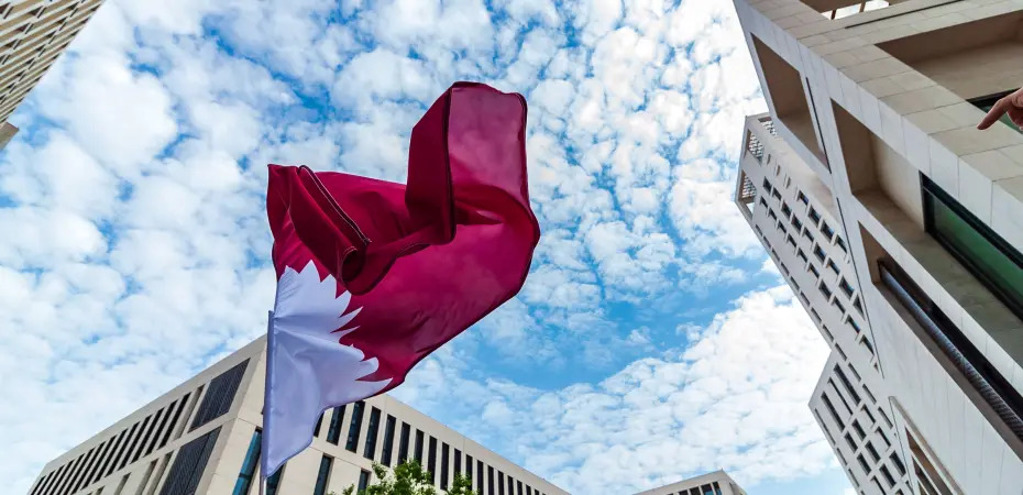
The 2022 FIFA World Cup will be the first time that the soccer tournament is being hosted in the Arab world, taking place in Qatar. With the Qatari government being notorious for their human rights abuses, now is as good a time as any to highlight the oft-ignored geopolitical issues surrounding Qatar and the Gulf states at large.
First of all, the abundance of oil in the Gulf states has its origin in the ancient Tethys ocean which existed around 200 million years ago and existed in the form of a sea between the continents of present-day Africa and Asia wherein now occupies the Gulf states. This ocean was rife with organisms and therefore a kilometers-deep biomass which now sits not too far under the mostly desert covered surfaces of the Middle East as latent fossil fuels such as oil and coal.
This is the historic-geographical context of the Arab world’s oligopoly on global oil exports which finds its political apotheosis in The Organization of the Petroleum Exporting Countries (OPEC), an IGO which has played a large role in global politics since its inception in the 1960s.
Qatar was a member of OPEC for over 60-years before exiting in 2019 over allegedly wanting to focus on natural-gas exports, which large parts of the commentariat saw as a strategic move to get out early from the oil exporting cartel as they fall out of favour in the eyes of governments concerned with climate change.
However, that doesn’t absolve Qatar from the fact that the country amassed great wealth from their oil exports over the last 6 decades, making it a first world country by the 21st century. Qatar has seen an exponential jump in its GDP growth rate since the 2000s, with it having a 17.7 per cent growth rate in 2008 and a GDP of 115 billion USD in the same year and which would nearly double by 2014.
This historical context is important in a few ways. First, it reveals the radical historical contingency of prehistoric global events that lead to the Gulf states’ oil empires, which ought to be mentioned whenever someone tries to justify these states’ wealth as emanating from some kind of technical genius or their being something in the drinking water over there that creates highly efficient engineers, businessmen, refiners and the likes. Second, it implicates these states in a global responsibility related to climate change, workers rights and the oblique consent to the laws and treatment of people in these states by all the countries that are cutting deals with them for fuel—not excluding Canada.
With this second consideration resulting from a historical contextualisation of the Gulf oil powerhouses, the whole of the FIFA controversy comes into the fore as the latest in a long list of major OPEC-adjacent players’ attacks on human rights, from the codified abuses of women in Saudi Arabia to the thousands of workers — many being migrants coming from Nepal, one of the poorest countries in the world — who have died in the scorching Persian Gulf heat of Qatar while constructing the 2022 FIFA World Cup infrastructure.
The president of France, Emmanuel Macron, says in response to requests to boycott Qatar’s World Cup that “Sports should not be politicized.”
This is a profoundly strange sentiment; why are sports exempt from politicization? When the French Federation of Rugby (FFR) allowed transgender women to play in officially recognized leagues was this not a capitulation based on political pressure? Why didn’t Macron jump in to condemn this? How about when the French Senate nearly passed a hijab ban for competitive sports in the country and tabled it because of an uproar from lawmakers?
Simply put, sports are allowed to be politicized so long as they go on after everything is accounted for in some concrete or symbolic way—the latter having already happened this time around with the FIFA Chief bizarrely stating to the press “Today I feel Qatari. Today I feel Arab. Today I feel African. Today I feel gay. Today I feel disabled. Today I feel (like) a vagrant. Today I feel (like) a migrant worker” to empathize with the marginalized.
The idea of global sports being stopped or boycotted altogether to make a point or bring awareness to injustices is hard for the first world to swallow.
Meanwhile, a highly-exchangeable, often voiceless global proletariat is reduced to cheap batteries that fuel our global entertainment. A fuel in need of as much politicization as the literal fuel that made many of these Gulf states rich which is only intensifying the destruction of our planet at this point.