

CANADA: LOBLAWS PRICE FREEZE AND THE NDP’S GROCERY INVESTIGATION
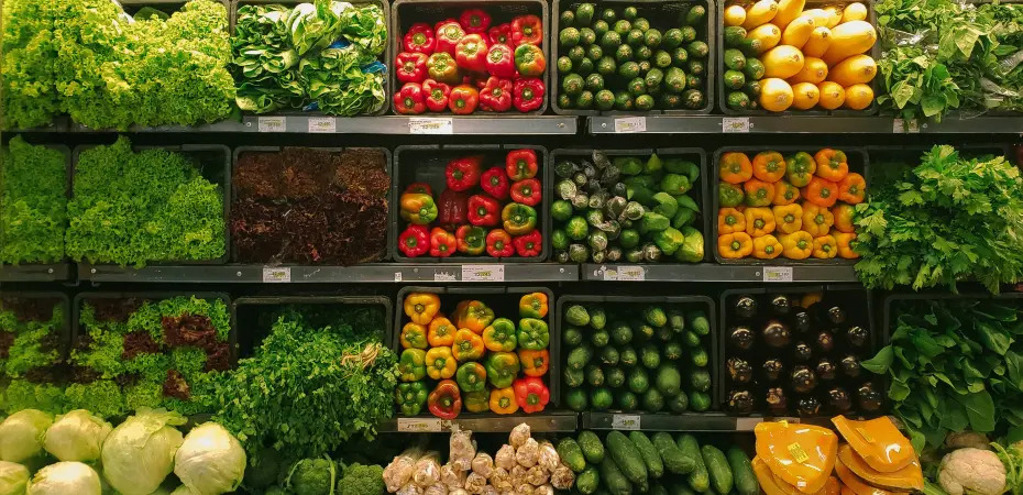
Grocery prices have been soaring for the past year.
In light of the skyrocketing prices, Loblaws recently placed a price freeze on their No Name products. Loblaws Chairman and President Galen Weston Jr. announced that “to help Canadians hit the brakes on food inflation, we are focusing on what is in our control.” Weston claims inflation isn’t the conglomerate’s doing, but is a result of higher price demands from suppliers. Meanwhile, Loblaws’ second quarter profits saw a 2.9 per cent increase, or $356 million, in comparison to the same quarter’s profits from the previous year.
This excuse is nothing new to frustrated consumers.
Oligopolies like Loblaws claim that supply chain issues are the reason that the prices are the way they are, when in reality it’s an issue of monopolization. It’s also probably not a coincidence that this price freeze comes just as the NDP’s motion to investigate grocery price gouging, A.K.A. “greedflation,” passed unanimously amongst MPs in the House of Commons. This means that the liberal government is being asked in a non-binding way to interrogate large grocery firms through a series of methods.
With the Bank of Canada’s recent interest rate hikes, prices may begin to come down on their own. Still, this investigation is important as it will reveal the issues with not breaking up large grocery conglomerates.
U.S.A.: BIDEN’S NATIONAL SECURITY STRATEGY PLACES CHINA AND RUSSIA AS THE STATE’S MAIN THREATS
The United States Congress mandated a document which recently emerged from the White House called the “National Security Strategy” (NSS) which continues a near decade long trend of placing China as the States’ greatest threat.
The document presents a popular schism at the moment in light of the Ukraine war, that of the democratic west against the autocratic east. Biden’s document is anxious about China’s power on the global stage and, instead of offering an alternative framework for foreign policy that is less hegemonic and expansive, states that the US will continue to try to compete with Chinese expansion.
In “Part III” of the document, Biden outlines ways to “compete” with China and “restrain” Russia. This is only further proof of the US’s existential need to dominate the globe. Now that the Soviet Union is out of the picture, other imperial countries — that are no doubt problematic in their own right — are framed as the boogeymen that the US is going to liberate the world from.
INTERNATIONAL: LIZ TRUSS RESIGNS, THE UK CELEBRATES
Liz Truss ascended to the executive cabinet as Prime Minister of the UK in early September and, only 44 days into her term, has resigned as the Tories have been in non-stop scandal since Truss’s reckless budgetary proposals that cut major taxes for corporations.
At a time when inflation is high and global supply chains are disrupted, cutting corporate taxes with no plan for reimbursement was sure to send negative press towards the conservatives.
Truss also ran on the promise of approving over 100 new oil drilling licenses, despite renewable wind energy alternatives being less expensive. Notably, some of Truss’s campaign donors included a pro-fracking group as well as a former brexit MEP who claimed climate change was a “religion.”
As the now former PM walks away from Parliament, the UK’s working class can perhaps catch their breath, if for only a moment as speculation of Boris Johnson’s return to the Executive seat is in the air.
THEORETICAL CONSIDERATIONS: ŽIŽEK’S IDEOLOGY
Slavoj Žižek is probably the most well-known “communist” in the western world. His books have sold well across the globe and clips of him regularly bring in high viewership on YouTube.
Ideology is a notion that gains a felt philosophical currency in the canon through the work of Karl Marx, whose famous critique of capital produced the foremost formula for ideology in continental thought for a century: “they do not know it, but they do it.”
Marx’s conception of ideology separates the intended thought behind an action from the reality of the action itself. He does this because when people engage each other in the marketplace they don’t exchange commodities such as money, Coke, couches and whatever else with attention to the heterogeneous processes of the labour that created those commodities, but with attention to the homogenous abstract values of objectified labour time embedded in the commodity, which is manifest in the price.
The Marxist gesture of ideological critique, then, is always to pull the cover away from the gap between idealist intentionality and the material actuality of subjects’ actions.
Žižek both problematizes and rectifies the Marxist theory of ideology by claiming there is literally nothing outside of ideology. Using the work of psychoanalyst Jacques Lacan, Žižek shows how the symbolic order A.K.A ideology, or the big Other, is needed to establish intersubjective relationships. He rejects the idea that by fully pulling back the covers on the gap between one’s intention and the brute reality of their actions that we can live in a post-ideological world free of exploitation. Rather, we can establish new axioms, or in Lacanese, Master Signifiers, to build an ideological edifice that replaces capital’s hegemony over the symbolic universe.
Whether this new ideology is called communism, socialism, anarchism, or what have you—it will necessarily rely on ideological fantasies to function according to Žižek.
Therefore, the left should embrace the fact of ideology, the ideal-material gap it creates, instead of trying to get past or beyond it.