

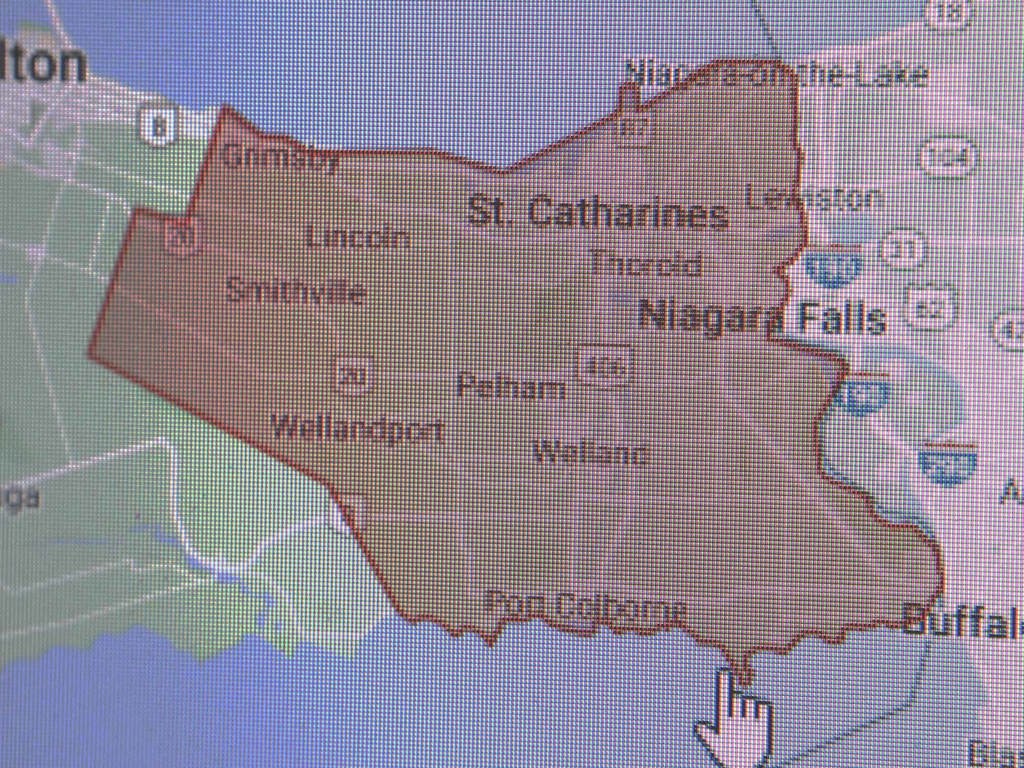
Debates on the possible amalgamation of the Niagara region have returned.
In an open meeting with the Ontario government’s Standing Committee on Heritage, Infrastructure and Cultural Policy on Jan. 10, Niagara politicians discussed whether the current municipal system in Niagara needs to be altered.
The current system consists of 12 municipalities: Grimsby, Lincoln, West Lincoln, Wainfleet, Pelham, Port Colborne, Fort Erie, Welland, Thorold, St. Catharines, Niagara Falls and Niagara-on-the-Lake. Some have argued that amalgamating these municipalities into one or a handful of cities is the natural progression of the Niagara region and the best way to solve long-standing issues, like the housing crisis.
Many in favour of amalgamation would prefer a four-city model, in which St. Catharines, Niagara Falls and Welland would absorb their rural neighbours, and a fourth city would be created out of the more rural municipalities in western Niagara.
Niagara Falls Mayor Jim Diodati is one such believer in this process. He said that with the current model, there are simply too many politicians: “That leads to overlap, duplication and red tape. Time is money, and we use up too much time, which costs too much money. It’s hurting and impeding business. There’s a whole set of rules whenever you move to a new community.”
Diodati said that four cities would maintain a degree of individuality that already exists between municipalities, but provide the stepping stone toward a singular, amalgamated Niagara city, which he believes will one day be the case.
Similarly, St. Catharines Mayor Mat Siscoe said that “creating four larger cities would make reform economically feasible and would allow for major efficiencies to be created that would allow our communities to focus on the priority that we share with the provincial government, to get more homes built faster.”
He mentioned that despite the St. Catharines council voting unanimously in favour of the construction of 11,000 homes, the regional governments across the 12 parts of Niagara, each with “conflicting goals,” have made the process of actually building them difficult.
Others, however, are opposed to the idea. In a commentary for ThoroldToday, Niagara-on-the-Lake resident and municipal affairs worker Paul MacDonell compared the topic of amalgamation to “a reoccurring fungal infection.”
MacDonell said that smaller municipalities in regions which have amalgamated in the past, like Toronto and Ottawa, end up being neglected the most despite experiencing the worst effects. According to MacDonell, the amalgamation will only bring bad things: higher taxes, no savings, unwanted services, undelivered services and little representation.
Niagara-on-the-Lake Lord Mayor Gary Zalepa also voiced his opposition to the amalgamation of Niagara: “Changing government, moving it and making it further away and reducing the number of elected people… that will be shameful.” He said that Niagara-on-the-Lake had hospitals and schools removed by large entities in the past.
Jim Bradley, a regional chair and former Liberal MPP, said that academic studies have shown that “the projected benefits of past amalgamations often failed to materialize… Once we start pulling at these threads, the entire system may start to unravel.”
He suggested that instead of an amalgamation, smaller changes to the governmental system could improve the region without having such a high risk. Implementing an approvals manager or provincial chief planner, for example, could expedite construction approvals. Introducing more provincial incentive programs could also encourage the private sector to build affordable rentals and help mitigate the housing crisis.
No official plans for amalgamation are in place yet, however more meetings will be held across the province over the next two weeks.
The discussion of the possibility of amalgamation will have to continue into future regional meetings.