

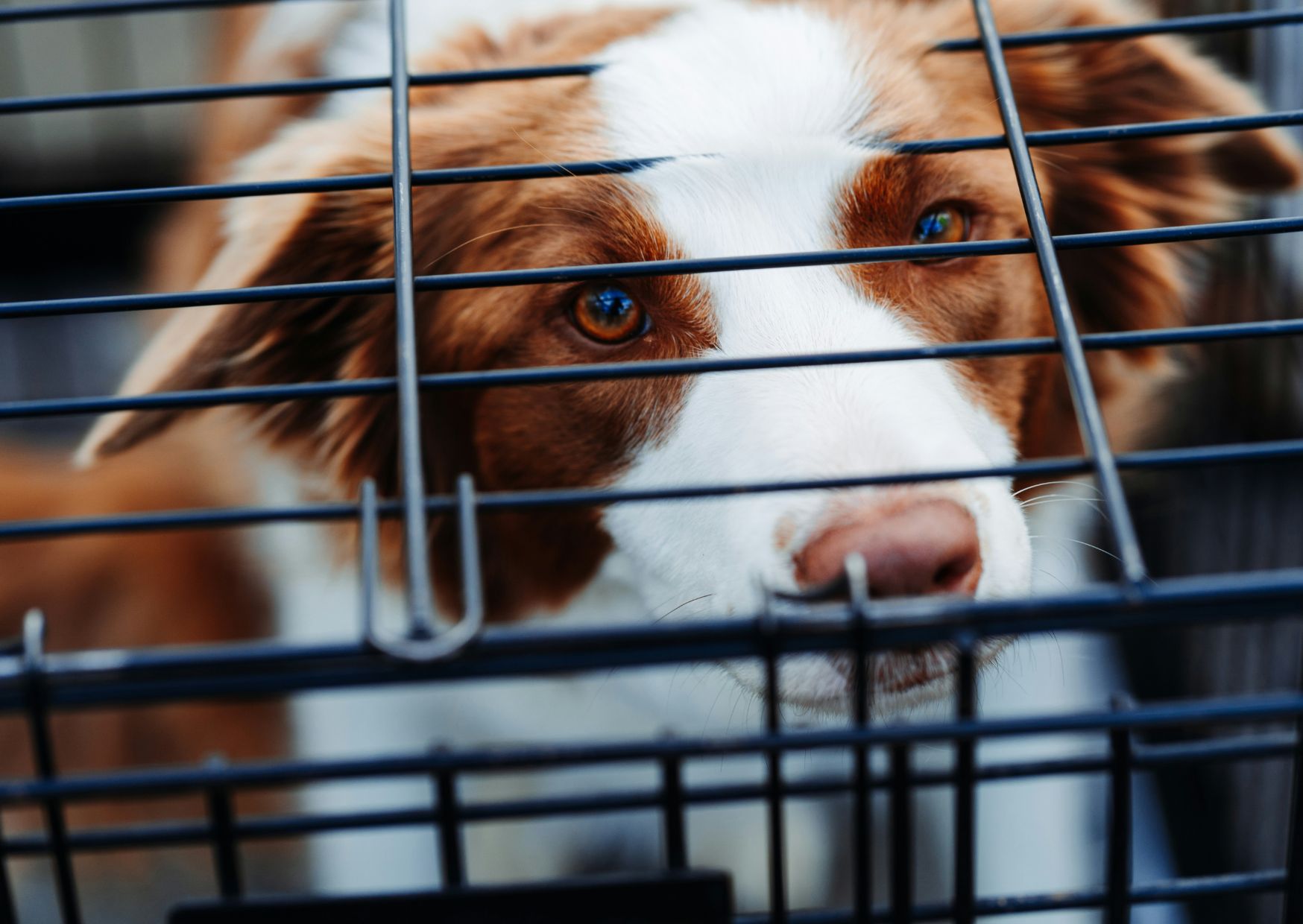
It’s a bad idea to buy a new pet from online marketplaces without doing extensive research first.
Last winter, my family was searching for a puppy to add to the family. Our beloved family dog had passed away well over a year earlier, and we felt we were ready to welcome a new furry friend into our home. We took our search onto Kijiji.com, where there are plenty of adorable puppies up for sale.
What we did not expect was to be effectively scammed and left with an anxious, unsocialized puppy that had grown up in an abusive environment.
Perhaps you’ve heard of “puppy mills.” These are perpetuated by sellers who essentially manufacture a factory line of puppies to go up for sale, without any regard for the dogs’ parents or the puppies themselves. To someone running a puppy mill, dogs are basically commodities meant to be pumped out and shipped away without care.
According to The Humane Society of the United States, many puppy mills have mother dogs spend their lives in cramped cages meant to pump out as many puppies as possible. When father dogs are no longer capable of breeding, they are usually abandoned or killed. It’s a sick, twisted practice that shows heartless disregard for living beings and reduces them to tools defined by their reproductive capabilities.
Things aren’t much better for the puppies themselves, who often suffer from malnutrition or are left in a position where they will eventually starve. As you might expect, they’re not given veterinary care and are not given time to properly interact with humans — an important developmental step in socialising them for a future home.
Unfortunately, puppy mills are much more common than you might think, with an estimated 10,000 puppy mills in the U.S. alone. When buyers purchase dogs from puppy mills, they usually aren’t aware of the conditions behind the scenes. Puppy mills and “backyard breeders” frequently prey on unsuspecting families searching for a new family member, and they thrive on online marketplaces like Kijiji.
Now, let’s be clear: when my family purchased our puppy last December, we were not aware of any of this, or we would never have chosen a puppy from a mill vendor. We took home a two-month-old bichon poodle, but once we let her inside, it was immediately clear that something was wrong.
The puppy was unlike any dog I’d ever seen before. She would sit frozen in place, not moving, not playing, not interacting with anyone. I would call out her name or try to engage with her, but she remained stiff like a statue. She didn’t try to run or hide, either — she would simply stay seated wherever she was placed and wouldn’t even look around.
It was unsettling.
Within a few days, the puppy had started interacting with us, but it was in all the wrong ways. The dog became incredibly dependent on me; crying, screaming and tearing things apart when I was in another room. I couldn’t go to the washroom for more than five seconds before she would start panicking on the other side of the door. For some reason, no one else could calm her down, and the situation was beginning to turn family members against each other.
It was a mess. I dreaded coming home from work because it meant I’d have to see the puppy, which was an absolutely crushing feeling for someone who had always loved dogs and had looked forward to welcoming a new puppy into the family for a long time.
Eventually, we decided that the puppy simply wasn’t a fit for our family, and we surrendered her to the local animal shelter. However, as the shelter’s staff performed some physical tests on the puppy, they noticed that the seller had lied to us in more ways than one.
The staff discovered that the puppy’s teeth indicated that she was closer to seven months old (not two months, as we’d been told), and she had never received any vaccinations or shots (something the Kijiji seller assured us had already been completed). We learned that the seller was effectively running a scam, lying to families about the dogs he’d been selling and obviously mistreating the dogs in the process.
The dog’s strange behaviour started to make sense. As mentioned earlier, puppies need to be socialised with humans at a young age so they can eventually move into a family home, but this puppy had likely been deprived of any human interaction and thus had missed critical moments of development in its early stages. It was heartbreaking.
For those wondering what came of the puppy, the shelter informed us that they would personally train the dog to adapt to humans before she could eventually be rehomed to a new loving family — and they wouldn’t allow her to be adopted until she was ready for it. According to their online records, the dog was sold shortly before Christmas, so it’s safe to assume that her story has a happy ending.
This entire experience was a major learning moment for my family. It caused me to conduct research on puppy mills and start advocating for adopting rather than shopping. I’m hopeful that telling this story will prevent another family from making the same mistake we did and show that adopting from animal shelters or dog rescues is always the best decision when looking for a new furry friend.
To be perfectly clear, this doesn’t mean that every Kijiji pet seller is running a puppy mill. There are plenty of sellers who genuinely care for their animals and won’t sell them unless they make sure they’re going to a loving home. But if you’re going to buy a pet from an online seller, it’s incredibly important to conduct research, ask lots of questions and approach the situation with skepticism. Don’t ever agree to purchase a pet without meeting it first, and if anything seems off, listen to your gut and back out. If you’re still in doubt, it’s probably best to avoid online sellers altogether and adopt a rescue animal instead.
Pets are meant to be nurtured and loved, and many families go searching for an animal with completely innocent intentions. But without being aware of the risks that come with buying animals from online marketplaces, you risk supporting a despicable industry that thrives on abusing innocent animals.