

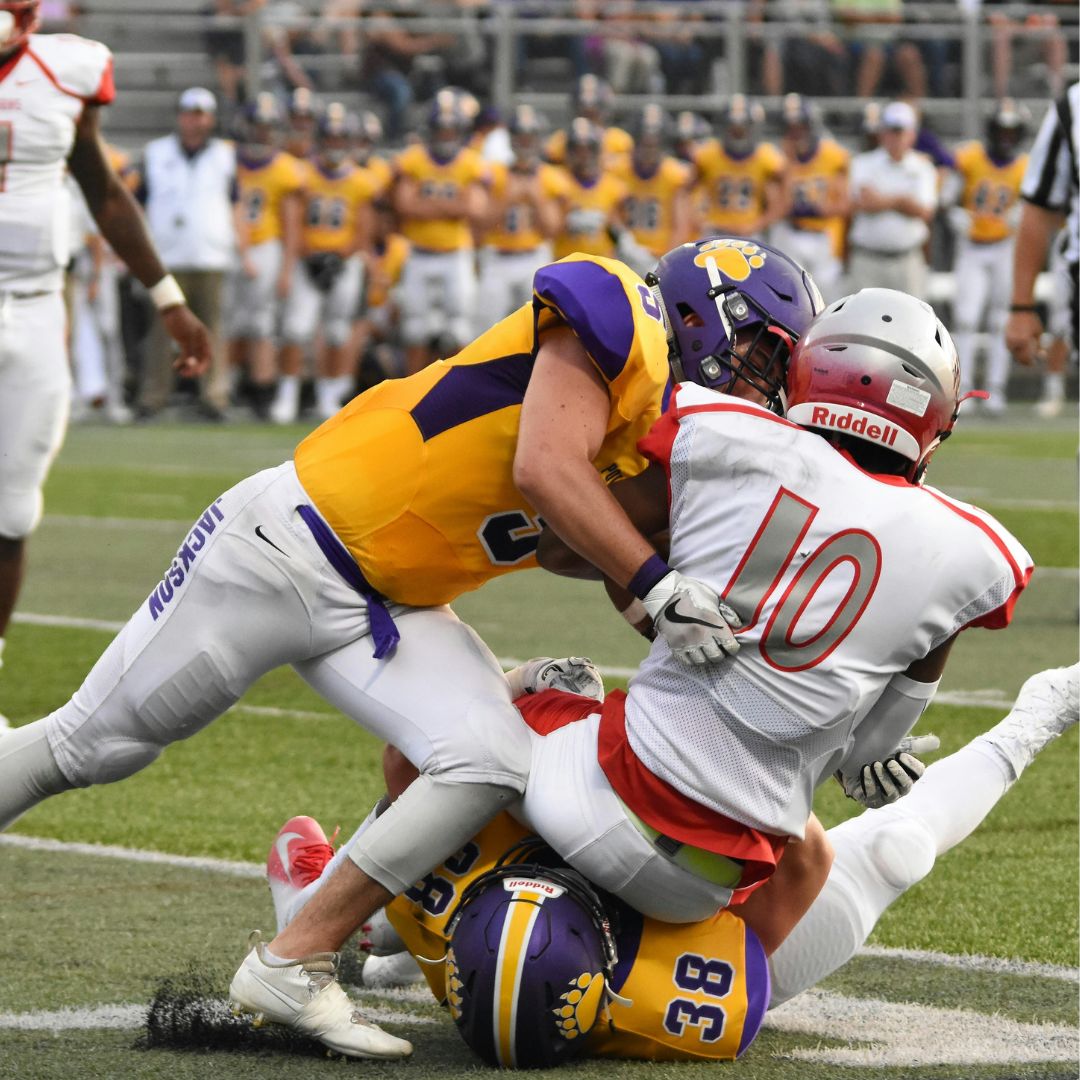
As one of the world’s most popular sports, American football comes with high stakes that extend beyond the game. The intensity and physical demand put players at significant risk for injuries, many of which have lasting, life-altering impacts — with brain injury being one of the worst.
From concussions to career-ending ligament tears, injuries have affected not only players’ careers but also their long-term health and quality of life, bringing into focus the inherent dangers of the sport.
Concussions can have devastating, lifelong effects on the brain, impacting everything from decision-making to emotional stability. The brain, which governs all aspects of thought, behaviour and personality, is particularly vulnerable to the kind of repeated trauma common in American football.
Concussions are among the most frequent injuries players face, and the toll they take can be profound — leading to lasting neurological damage, debilitating mental health issues and in some cases death.
The case of Aaron Hernandez is a tragic example of the serious consequences associated with concussions.
Once a promising tight end for the New England Patriots, Hernandez was convicted in 2015 for the murder of Odin Lloyd, a semi-professional football player and the boyfriend of Hernandez’s fiancé’s sister. The trial revealed Hernandez’s dark side, uncovering his involvement in violent altercations, alleged gang affiliations and a pattern of impulsive, erratic behaviour. This conviction effectively ended his NFL career and thrust him into the national spotlight for reasons removed from his athletic accomplishments.
In addition to Lloyd’s murder, Hernandez was implicated in a 2012 double homicide in Boston, though he was later acquitted. Throughout his career and incarceration, Hernandez showed troubling signs of mental instability such as domestic incidents between him and his fiancé. After his death by suicide in 2017, an autopsy revealed that he had an advanced case of chronic traumatic encephalopathy (CTE), a degenerative brain condition linked to repeated head trauma. It was believed that CTE may have influenced his behaviour, contributing to his aggressions, impaired judgment and deteriorating mental health.
The tragic story is not the only one of its kind, as another former NFL player Phillip Adams faced similar battles with deteriorating mental health attributed to CTE. Adams, a former cornerback who played for six NFL teams, exhibited no significant off-field issues while active. However, six years after his retirement, Adam’s life took a turn: in 2021, he fatally shot six people before taking his own life. An autopsy later revealed that he, too, suffered from an advanced stage of CTE.
The cases of Aaron Hernandez and Phillip Adams reveal an alarming trend in football. Recent findings from Boston University’s CTE Center reveal that 245 out of 376 former NFL players studied — 91.7 per cent — were diagnosed with CTE. This high rate contrasts with the general population, where CTE remains extremely rare.
During CTE, the brain undergoes several progressive and damaging changes due to repeated head trauma. The primary issue of CTE is the abnormal buildup of a protein called tau, which forms clumps that slowly spread and kill brain cells over time. These tau deposits disrupt communication between neurons and lead to neurodegeneration, primarily damaging the frontal cortex, which is responsible for decision-making; the hippocampus, responsible for retaining memories; the amygdala, responsible for regulating emotions; and the precentral gyrus, which is the primary motor cortex.
Considering these cases and the alarming data emerging from CTE research, it’s clear that football’s legacy is as much about the physical and mental toll it takes on players as it is about the thrill of the game. While sports bring excitement and unite fans worldwide, the inherent dangers for athletes can no longer be ignored. The stories of Aaron Hernadez, Phillip Adams and many others show a critical need for continued research and greater transparency to protect players from the hidden, life-altering risks of repetitive head trauma.
As more becomes known about CTE and its devastating impacts, football’s culture must adapt and prioritize player health to prevent similar tragedies and ensure a safer future for the new generations of athletes.