

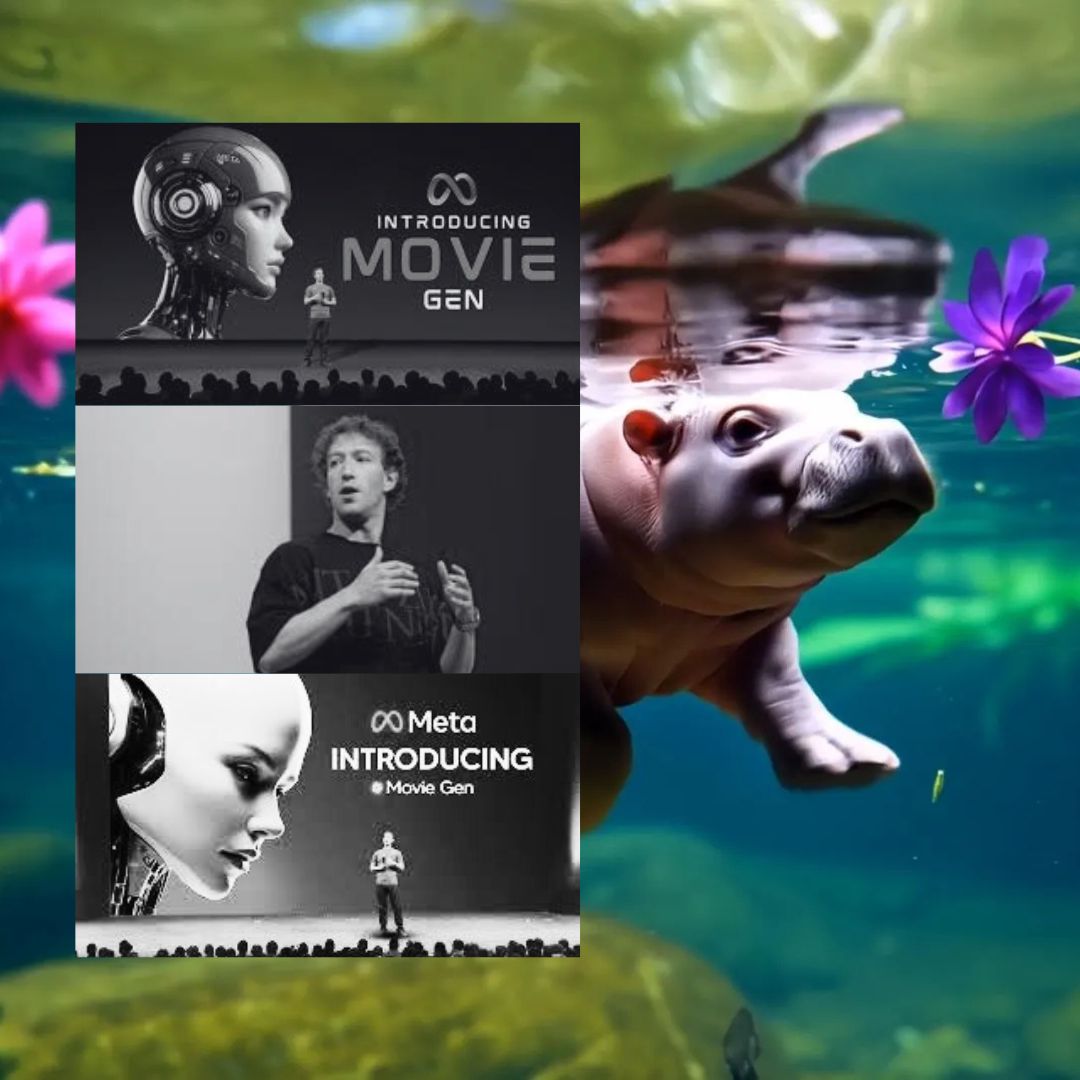
Meta A.I. has teased a generative A.I. for filmmaking, and their reputation has taken a major hit.
Filmmaker and screenwriter Aneesh Chagaty, known for his 2018 thriller Searching promoted the A.I. in a short egregiously titled “I h8 ai”. His commentary in the short is abhorrently out-of-touch with a foul stench of paid-promotion corporate jargon slop radiating through the screen.
In the short, he takes previous examples of short films from adolescence and demonstrates how the generative program can modify backdrops and settings instantaneously. It’s disheartening to see his reflection on films made in his childhood as something that can still be perfected, not with human creativity but with a written prompt and the click of a button.
It doesn’t help that the A.I. editing itself looks like crap.
The fact alone that it was provided to filmmakers by the production company Blumhouse is a dark glimpse into a potential pathway the business side of cinema could take. However, the harsh backlash against A.I. from creatives in the film community has proven that it’s hardly a major threat in the first place.
Chagaty’s so-called short film has an aggregate score of 1.6/10 stars on IMDb. Actors and directors belonging to SAG-AFTRA in Hollywood went on a lengthy strike last year in protest of their A.I. likeness being used without permission or credit. Acclaimed Japanese filmmaker and animator Hayao Miyazaki of Studio Ghibli called early developments of A.I. animation “an insult to life itself.”
The historical recognition of human effort in cinema — be it from small film festivals for independent cinema or the Oscars — has rooted itself deep enough in culture and tradition that a paradigm shift favouring A.I. would be highly unlikely and radically opposed. Perhaps the side of the industry entertaining the notion of A.I. in movies is the production-oriented business side that lacks a connection with the demands of creatives.
Furthermore, art and creativity are ultimately treated as commodities with value. The efforts of a prolific, award-winning director, screenwriter or actor are valued for the quality of their work and not the quantity. A.I. films made in a fraction of the time it takes to produce a feature-length film will carry no value as there will be a gross inflation of them. It’s like saying McDonald’s is the pinnacle of cuisine because it’s a worldwide corporation with locations in essentially every city.
Filmmaking is a collaborative effort. Whether you’re working with a dozen people or a hundred, the symbiosis required between a team to create a film is a valued component of cinematic tradition.
Contrary to what the ghoulish, salivating tech fiends of Silicon Valley hope, it’s unlikely that A.I. will sink its teeth into the entertainment industry and dismantle the traditions passed down throughout cinema history. What can be drawn from the presence of A.I. is a reminder of our capabilities as a species to involve lived experience in the creative process.
The best time to be creative is now. There’s no need to make something perfect, or entirely what you expect it to be — that’s the whole point of growth. Filmmakers spend years refining their approach to realizing a vision; hiccups are bound to occur. The notion that all art must be perfectly realized is damaging and will leave you unsatisfied and defeated.
If you have a book idea, start writing. If you have an instrument you wish to learn, pick one up. If the response to generative technology has taught us anything, it’s that the glossy finish of A.I. cannot hold a candle to even just a few of your own words written down on paper, even if all you’ve got is “untitled short film.”