

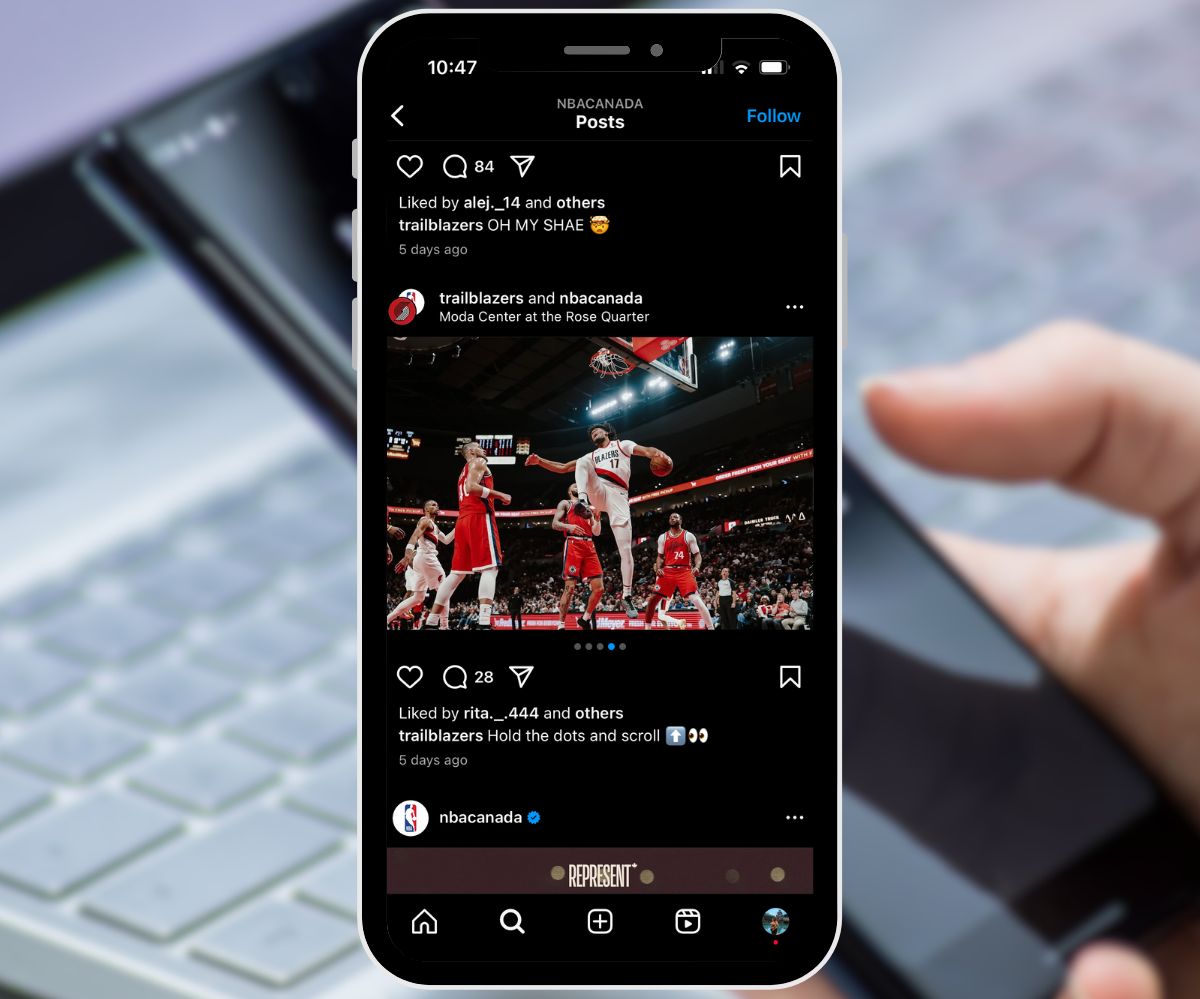
Social media has changed how prominent athletes connect with fans, but with that it brings challenges that can impact their careers both positively and negatively.
The impact of social media on prominent athletes’ mental health is profound and multifaceted, as these platforms often amplify the unique pressures they already face as athletes. For many big-time athletes, the constant stream of feedback — both positive and negative — can significantly affect their mental well-being. Public scrutiny has become a standard part of their lives, and the weight of meeting both performance expectations and maintaining a flawless public image can be overwhelming.
Simone Biles has been candid about the toll that social media and public pressure have taken on her mental health. Leading up to the 2024 Paris Olympics, Biles felt the weight of being regarded as the “face of gymnastics” and an international role model. In an interview with Today, she shared that after a challenging performance, her immediate concern was the potential backlash online: “As soon as I landed [my vault], I was like, ‘Oh, America hates me…’ And I can only see what they’re saying on Twitter right now.”
To manage this pressure, Biles has taken steps to limit her social media usage. She mentioned the importance of reducing exposure to online platforms during competitions, noting that she had logged off certain apps completely.
Social media’s accessibility doesn’t just affect these athletes’ mental health — it also raises serious safety concerns. Breanna Stewart, a prominent WNBA player, has faced significant safety concerns due to her visibility on social media.
In October 2024, during the WNBA Finals, Stewart and her wife, Marta Xargay, received threatening and homophobic emails directly sent to Xargay’s personal account. Stewart expressed her unease, stating that, “The fact it came to Marta’s email is something she [had to] see. The level of closeness was a little bit different.”
Allison Stokke has also been a victim of social media’s safety risks. In 2007, at just 17 years old, Stokke was a high school pole vaulter competing at a national level. During a routine meeting, an innocent photo of her in her track uniform was taken and later shared online without her consent.
What followed was a viral explosion that had nothing to do with her athletic achievements. The image, initially posted on a sports blog, quickly spread across platforms with objectifying comments and captions that focused entirely on sexualizing her appearance. Within days, Stokke became unwillingly viral, with her name and image circulating widely, often in inappropriate contexts. The attention escalated to the point where strangers began contacting her family and showing up to her track meets.
While social media can be a toxic environment, it also creates opportunities for athletes to control their own narratives and build their own personal brands. The Cavinder twins, Hanna and Haley, are prime examples of athletes leveraging their social media presence for financial success. Through their viral TikTok videos, the twins capitalized on the NCAA’s name, image and NIL policy, securing endorsement deals that far exceeded what they could earn from sports alone.
Athletes today face a constant balancing act. Social media offers them the chance to connect with fans, shape their public image and secure endorsements, but it also exposes them to harassment, mental health challenges and safety risks.
The intersection of sports and social media, therefore, is complex, offering both unprecedented opportunities and challenges. As these platforms continue to evolve, so must the support systems and strategies athletes rely on to navigate their digital lives.