

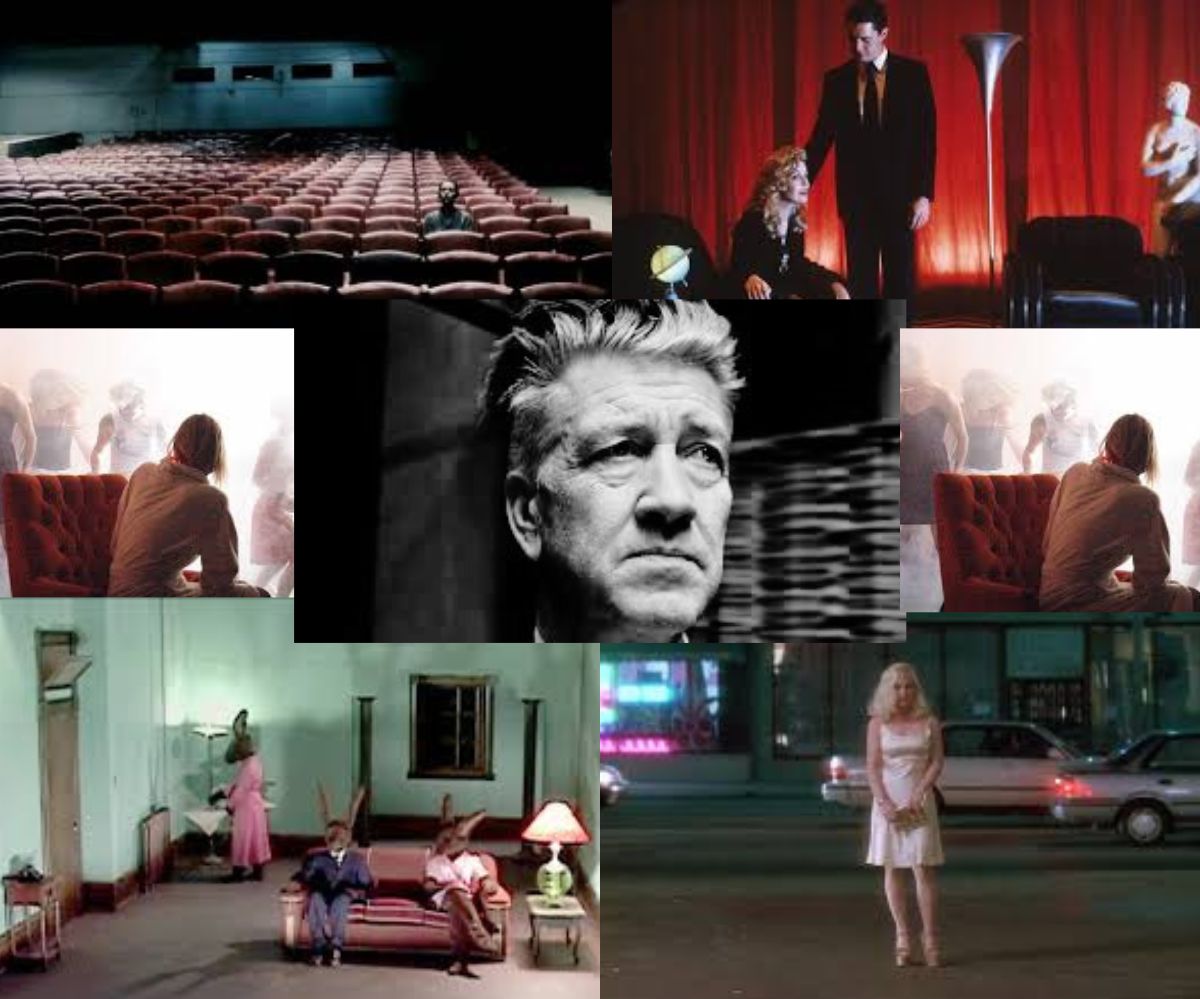
Renowned American filmmaker and artist David Lynch passed away at the age of 78 on Jan. 15. His death was felt throughout the film industry and cinephile community. An iconoclast and pioneer, there will never be another quite like Lynch.
It’s true that many up-and-coming filmmakers choose to take inspiration from his work, and surrealism isn’t exactly new, but the signature feel of a David Lynch film is irreplaceable. His singular style led to the creation of the term Lynchian, a term understood largely through the feeling and atmosphere of his work.
For people new to Lynch’s work, his catalogue can be daunting. Below is a list of several of his films to guide you through his life’s work.
Blue Velvet (1986)
Following the brooding aesthetics of the black-and-white Eraserhead (1977) and The Elephant Man (1980), Blue Velvet is arguably his most accessible film for people new to his filmography. Don’t be mistaken, there are plenty of peculiarities scattered across the film’s story to get lost in, but the plot noticeably operates in a more grounded way than his other works that have a suburban, small-town American setting.
The story follows college student Jeffrey Beaumont, played by Kyle MacLachlan, as he unravels the mystery of a severed human ear discovered in a field. His investigation leads him to the enigmatic nightclub singer Dorothy Vallens (Elizabeth Rossellini), a woman full of secrets she keeps behind a veneer of elegance.
Every film in Lynch’s filmography possesses signature characteristics that separate them from the others, but Blue Velvet may be the closest to his overarching thesis statement regarding the dichotomy of beauty and innocence with evil and cruelty. Beyond the glossy surrealism of suburban life in Blue Velvet lurks a small-town evil that awakens at night when the townsfolk are asleep.
Lynch’s work is a reminder there will always be wickedness in this world, but this can be combated by goodness and love if we commit ourselves to them. As Lynch himself puts it in Twin Peaks: “fix your hearts or die.”
Twin Peaks; Twin Peaks: Fire Walk with Me (1990-1992; 2017)
Perhaps Lynch’s most widely known work is his television series Twin Peaks. Nestled in the mountains of the Pacific Northwest underneath the gloom of clouds sits the town of Twin Peaks. Like Blue Velvet, small towns are his muse here. The show features an ensemble cast all connected to the mysterious death of high schooler Laura Palmer, the central mystery the show builds on.
For many, Twin Peaks was their introduction to Lynch and for good reason. The episodic format of television allowed a narrative to be stretched out over three seasons and a movie, expanding Lynch’s world and hammering home his commitment to style and atmosphere as storytelling devices.
Lost Highway (1997)
A bold, surreal homage to the film-noir and crime genres, Lost Highway may be more perplexing than viewers initially believe.
The film divides its time between two protagonists’ stories. The first follows Fred, a melancholy jazz musician, as he is stalked by a mysterious entity known simply as the “Mystery Man.” His paranoia leads him to believe his wife, Renee, is having an affair. The second story introduces Pete, a young mechanic lured into a game of cat-and-mouse with femme fatale Alice, who’s connected to a gang through her boyfriend. Despite being distinct, both stories are linked by their leading women both played by Patricia Arquette, implying a stronger connection than initially believed.
There are plenty of elements to Lost Highway that make it on the more accessible end of Lynch’s movies. For one, the recognizable, iconic conventions of film-noir and crime thriller make the film a stylish delight. However, it’s this film where Lynch began to push the boundaries of realism in stories, blending dreamlike sequences with realistic settings to challenge audiences to understand what they believe is real.
Mulholland Drive (2001)
On the topic of dreams, Mulholland Drive is perhaps the most acclaimed and beloved of Lynch’s films, and rightfully so. It follows Betty, played by Naomi Watts, as she arrives in Los Angeles as an eager, aspiring actress from rural Ontario. Her plans change upon meeting a mysterious brunette woman who claims to have forgotten who she is following a car accident.
Mulholland Drive unravels like a dream. Betty’s glowing expressions of awe as she enters Hollywood and the subtle halo of light throughout the film construct an uncanny version of a city full of betrayal and broken dreams. It’s as if Hollywood itself is the muse here, with Lynch capturing the uglier sides of the city but nonetheless portraying an idiosyncratic atmosphere from the idyllic beauty: the vast sea of lights visible from the Hollywood sign; the tall palms lining Sunset Boulevard, monoliths of the path to stardom; or the omnipresent sound of distant cars on a highway.
Lynch created pure magic on Mulholland Drive, something irreplaceable that will be revered years from now as one of its decade’s best films.
Inland Empire (2006)
Without a shadow of a doubt, Lynch’s most inaccessible work is his final full-length film Inland Empire. With a sprawling three-hour runtime and a multilayered, experimental plot, the film is best watched after familiarizing yourself with Lynch’s filmmaking style.
The film follows actress Nikki Grace as she takes on a new role in a mysterious film. It’s not long into shooting before the director tells Nikki and her co-star that the film On High in Blue Tomorrows is adapted from an unfinished German film based on a cursed Polish folktale. Production was halted when both leads were found murdered, both as characters in the story and actors in reality.
Once the groundwork is laid out, the film goes all in, jumping between timeless surreal spaces and timelines, but in an unchronological way, to reflect Nikki’s loosening grip on reality. Laura Dern delivers an unforgettable performance as numerous characters in the film. In support of Inland Empire’s release and Dern’s awards campaign, Lynch parked himself on a street corner with a cow next to a sign reading, “For your consideration: Laura Dern.” This same cow accompanied Lynch on the film’s release tour, regarding which he said: “I’m looking forward to meeting theatre owners and getting out among the people with the cow.”
Inland Empire imposes itself on you right from the opening sequence. The entire film is shot on a digital camera, setting itself apart from Lynch’s more polished releases shot on film. For a story as gritty as Inland Empire, this decision creates a visceral sense of immersion and claustrophobia. It’s not always pleasant to engage with as a film, but its rewards are bountiful to those willing to submit to its influence.
—
There are several other Lynch films that deserve attention, but the handful selected offer solid insight into where to begin and how to adjust to Lynch’s storytelling.
The thought that there will never be another David Lynch is bittersweet. On one hand, we may never find stories told the way he did visually; however, we can rest easy knowing Lynch was able to touch the lives of countless people, immersing them in his various worlds and treating his characters with the dignity and complexity they deserve.