

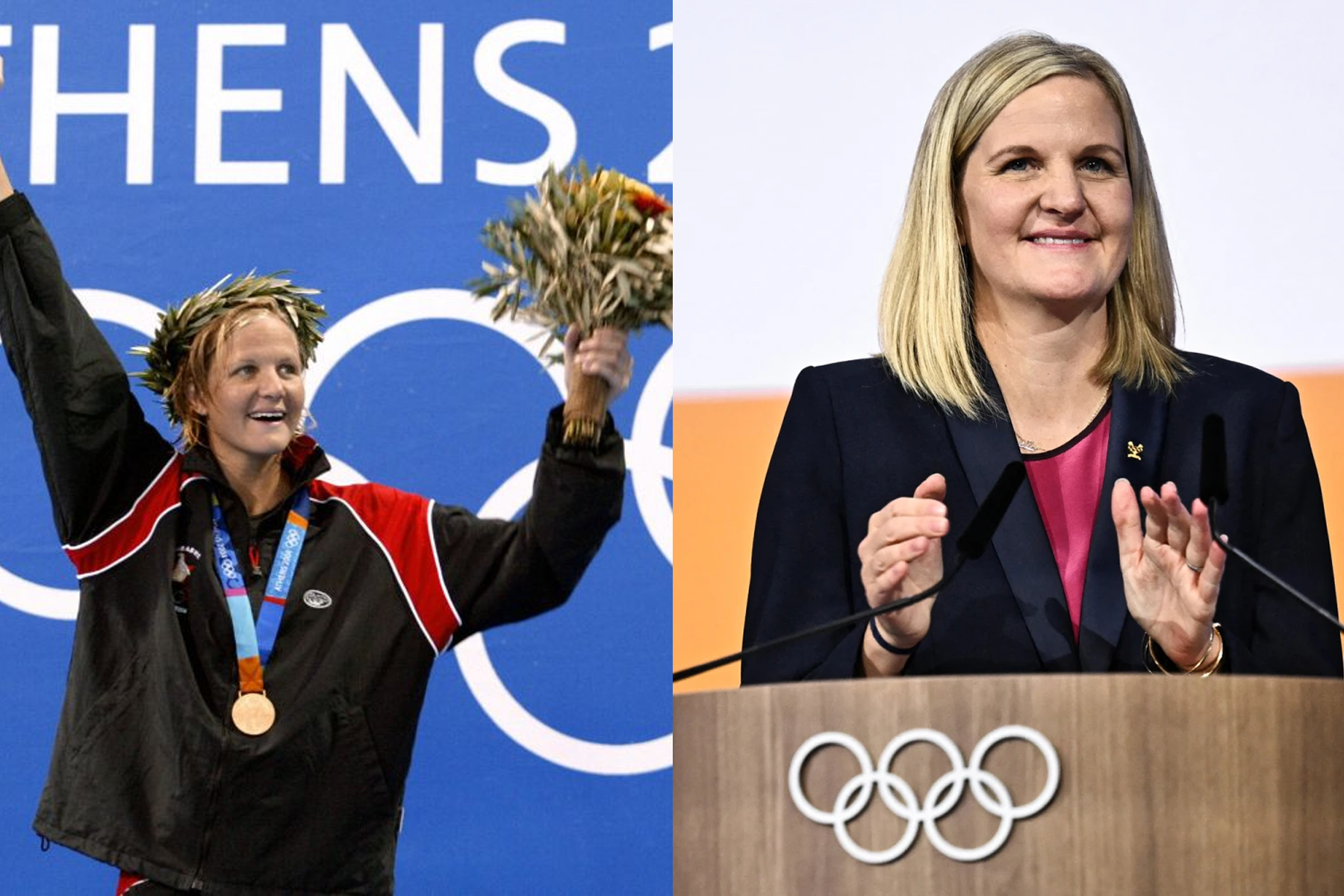
For the first time in its 131-year history, the International Olympic Committee will be led by a woman — and she’s African.
Kirsty Coventry, a seven-time Olympic medalist from Zimbabwe and former Minister of Youth, Sport, Arts and Recreation has been elected as the International Olympic Committee’s (IOC) new president — a moment that is as symbolic as it is seismic. In a space long dominated by White men, nine of her predecessors being so, Coventry’s rise signals a break in tradition that many argue is long overdue.
Coventry, at 40 years old, brings to the table more than just athletic excellence. Her career in the pool began humbly in Harare but culminated in Olympic greatness, with two golds, four silvers and a bronze across three Games. As Africa’s most decorated Olympian, she not only carried the hopes of her nation but also served as an example for aspiring athletes across a continent often overlooked by global sporting institutions. After her competitive years, she transitioned into politics, serving as Zimbabwe’s Minister of Youth, Sport, Arts and Recreation since 2018, where she gained a reputation for diplomacy and genuine advocacy.
But her election is not just about representation; it’s about reshaping an institution at a critical crossroads. The IOC has been under pressure for years to modernize, diversify and become more progressive.
As of 2023, women made up 41 per cent of IOC membership — double the percentage from a decade earlier. Yet, leadership roles remained stubbornly gendered until now. Coventry’s appointment could create a path for more inclusive leadership across sport, especially from the Global South.
She’ll inherit an organization in flux. The debate around athlete activism, transgender participation and political boycotts have intensified; the commercialization of the Olympics continues to clash with its conservative roots; and younger audiences are tuning out — only 41 per cent of Gen Z watched any part of the Tokyo 2020 Games, compared to 71 per cent of Baby Boomers.
Coventry’s track record suggests she’s well-equipped to navigate this terrain. Her leadership on the IOC Athletes’ Commission has been marked by efforts to centre athletes in conversations that in the past have been left out. She has publicly championed mental health funding, equal pay for Olympic medalists and increased investment in developing nations’ sporting infrastructure — a crucial move for a body accused of prioritizing elite markets.
Still, skepticism remains. Critics worry she may be a continuity candidate — someone who will preserve the status quo rather than challenge it. Her close alignment with former IOC president, Thomas Batch, who endorsed her candidacy, has raised eyebrows among reformists who hoped for a more radical shake-up. But even if she does tread carefully, the mere optics of her presidency represent progress.
This moment matters deeply, especially for young girls in Africa who’ve never seen someone with this closeness to their home in such a position of global authority. It sends an empowering message that Olympic dreams don’t end at the podium, even if you are a woman.
Coventry herself summed it up in her acceptance speech: “I know what it feels like to be underestimated, to be overlooked and to be counted out. That’s why I’ve spent my life proving otherwise, and that’s exactly what I intend to keep doing.”
As the Olympic torch passes to its newest bearer, Coventry will be tasked with navigating the tension between tradition and change. The Olympics have become more than just a stage for athletic excellence — they’re now a platform for global conversation and representation.
And for the first time, the conversation will be led from Africa.