

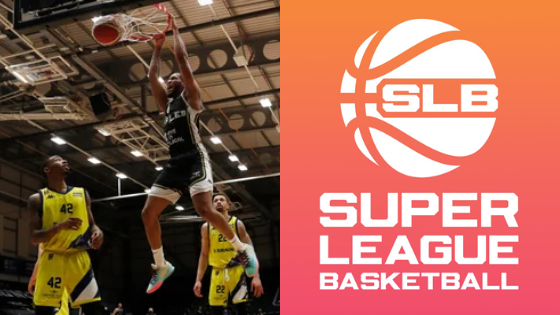
A dispute of considerable magnitude has engulfed British basketball, centering on legal claims between governing bodies and league operators. At its core, this revolves around employment rights, competition law, licensing procedures and the future governance of men’s professional basketball in Great Britain.
The British Basketball League (BBL) had long operated as the top professional basketball competition in the United Kingdom, overseeing its clubs, fixtures and commercial partnerships. In mid-2024, however, the license to run the league was transferred to a new entity, Super League Basketball (SLB). While SLB positioned itself as a fresh operator, it effectively inherited the same teams, competition format and league-wide sponsorships that had defined the BBL. This continuity has become central to the legal dispute now unfolding.
At issue are two overlapping legal actions: first, a group of 18 former employees of the old BBL has filed claims in a London Employment Tribunal against SLB. These employees allege unfair dismissal, breach of contract and unpaid wages in the millions. They maintain that their employment should have transferred to SLB under the UK’s Transfer of Undertakings (Protection of Employment) Regulations 2006 (TUPE), since SLB is said to have substantially taken over the same clubs, competition structure and commercial agreements — which include a league wide kit deal with Reebok. These dismissals are said to have occurred just two days after SLB obtained the license to run the top professional league in July 2024.
Second, there is a separate case between SLB and the British Basketball Federation (BBF). SLB has sued the BBF in the High Court, accusing it of violating UK competition law, abusing its dominant position as the governing body and failing to act fairly and rationally when awarding a long-term license for the men’s professional league. The BBF decided to advertise a tender process for this long-term license, which SLB ultimately did not participate in. SLB alleges that this tender process was unlawful and anti-competitive, in part because it ostensibly excluded or disadvantaged SLB’s existing clubs. SLB seeks remedies including damages and a possible forced reconsideration of the license award.
From the BBF’s perspective, they defined the process as properly conducted. In their dense file in the High Court, the BBF contends that the temporary (interim) license granted to SLB in July was always intended to be a stop-gap measure until a long-term operator was chosen via open tender. They argue that the tender process was transparent; involved independent evaluation and stakeholder input; and was carried out in accordance with their regulatory responsibilities under the FIBA (the International Basketball Federation) rules. Additionally, the BBF claims that the SLB made misleading representations of the process. Thus, it is SLB, rather than the Federation, that is acting anti-competitively by resisting oversight and holding onto old privileges without corresponding obligations.
In parallel, the employment claims under TUPE raise serious questions about what constitutes a “relevant transfer” of business. The former BBL staff argue that SLB has in practice continued the same enterprise: same clubs, same competition structure and same commercial partners. If the tribunal agrees, SLB could be held liable for obligation including notice pay, unpaid wages, holiday pay and other accrued entitlements. SLB denies that all legal thresholds are met to do so.
These legal actions have wider implications beyond the parties involved. The outcomes may affect how public funding is allocated — basketball in the UK receives millions in government support — and whether existing clubs can rely on the continuity of their operations and rights. Questions also surround governance, transparency and whether sport governing bodies like the BBF are following a fair process in licensing. The sport risks instability: clubs, players and staff need clarity about which league structures and contracts will endure.
As of now, the preliminary hearing for the employment tribunal claims is scheduled for mid-2026. The High Court action between SLB and the BBF is ongoing. Much depends on judicial interpretations of competition law, employment law (especially TUPE) and licensing regulations under both domestic and international sports law. The resolution of these cases will likely shape British professional basketball’s structure, its legal norms and possibly its financial sustainability in the years ahead.