

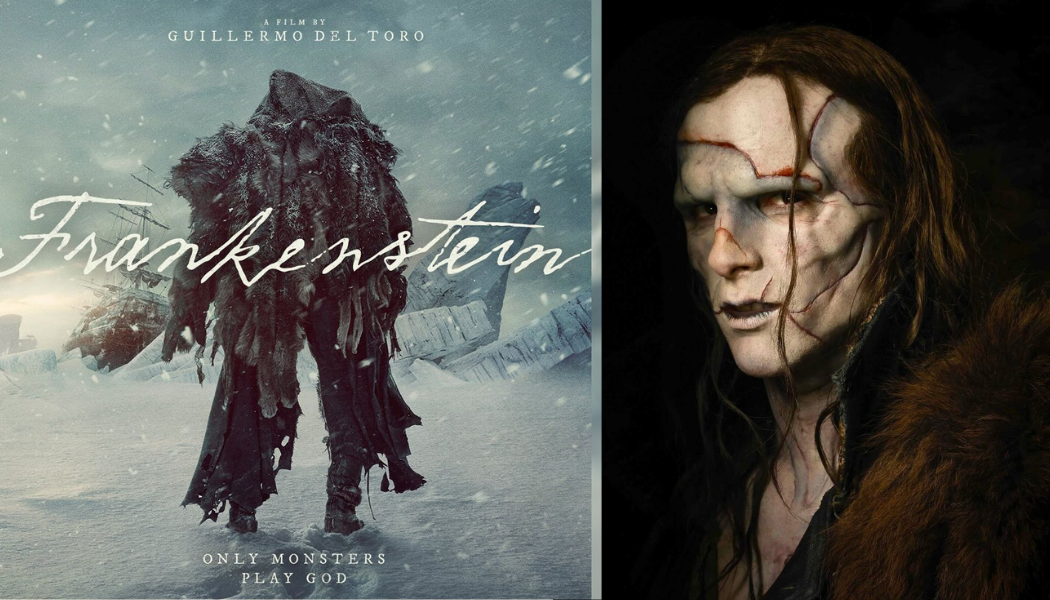
Released on Oct. 17, Guillermo del Toro’s adaptation of Mary Shelley’s 1818 novel Frankenstein was well received by critics and viewers alike — yet many fans of the classic novel walked away disappointed due to the numerous changes del Toro made to a story that many people love so dearly.
Here are just a few of the ways del Toro’s adaptation deviates from the original source material.
Victor Frankenstein’s Age
When one attempts to compare the character of Victor Frankenstein in del Toro’s film to that which is represented in Shelley’s novel, there are vast differences. Most obviously, Shelley’s original version of Frankenstein depicted him as a young man, just 17 years old, when he created the Creature. In del Toro’s film, Frankenstein is instead played by Oscar Isaac, who is in his mid-40s.
While this change might not seem to impact the plot to some, Frankenstein’s age plays an important role in the development of his character in the novel. In fact, the character’s youth when he creates the Creature provides context for his level of immaturity and unchecked ambition. These qualitieseventually result in Frankenstein failing to consider the ethical and moral responsibilities of his actions until it is too late.
By making Frankenstein a middle-aged man, the character’s driven, almost frantic impulse to achieve greatness and push the boundaries of science doesn’t make as much sense. This is the behaviour of a young person who is trying to prove themselves in a world that is new and exciting to them. If Frankenstein is supposed to be in his 40s during the main timeline of the film, his behaviour does not align with the emotional level of maturity you would expect the character to portray. Furthermore, his profound level of irresponsibility and impulsive decision-making are also traits that don’t align with the likeness of a man who has a more mature rationale.
Still, del Toro portrays Frankenstein as making many of the same mistakes as his written counterpart, suggesting that the character’s decision-making is not born out of youthful inexperience, something that the audience might be willing to forgive, but rather out of thoughtless and rash ignorance. This frames Frankenstein as the film’s villain rather than a morally gray protagonist who represents the dangers of scientific advancement without a guiding moral compass.
Victor Frankenstein as the Villain and the Creature as the Innocent
When one considers Shelley’s novel, the narrative clearly represents the interactions between two villains. The Creature is just as violent and destructive, if not more violent and destructive, as Frankenstein. While Frankenstein is guilty of the unethical behaviour that resulted in the creation of the Monster, in the novel, the Creature murders Frankenstein’s brother’s best friend and fiancée, Elizabeth, on their wedding night. While it wouldn’t be wrong to argue that the Creature has much to be angry about, it is clear that he and Frankenstein are both villains haunting each other’s narrative.
In del Toro’s film, there is no debating who the real villain is. In fact, the viewer is almost spoon-fed the message that Frankenstein is the real monster. Unlike in the novel, when Frankenstein creates the Creature, he initially loves and cares for it. It is not until Frankenstein decides that his creation is not progressing as he had hoped that he becomes abusive, beating the Creature with a stick and eventually trying to set it on fire. In the novel, Frankenstein abandons the Creature right away, taking off once he sees what he has created.
Throughout the film, the Creature is constantly portrayed as an innocent soul. He gives love easily and doesn’t understand the violence that is being directed at him. Instead of being born innocent and growing vengeful due to neglect and mistreatment, the Creature presented in the film is a complete victim of circumstance. By removing his evil actions, the narrative fails to represent the nature of evil and the factors that drive someone who was born good to become bad. Shelley positions this as a main theme in her novel, exploring what was, at the time, a controversial belief that a good person could become evil because of mistreatment. By ignoring this, del Toro is missing a hugely important and massively intellectual part of the novel, dumbing the story down for modern-day audiences instead.
The character of Elizabeth
One of the largest changes made in the film is the role of Elizabeth and her relationship to Frankenstein.
In the original version of the novel, Shelley presents Elizabeth as being Frankenstein’s cousin. In the following rewrites, Elizabeth becomes a child whom Frankenstein’s mother adopts and whom he eventually betroths. In the film, Elizabeth is the niece of Frankenstein’s benefactor, Igor Harlander, and engaged to Frankenstein’s brother, William Frankenstein.
While Elizabeth becomes a much more defined character in the film, the changes made to her role in Frankenstein’s life and her relationship to him greatly impact the story’s narrative. Most importantly, Frankenstein finds himself in a love triangle with not only his brother but also, seemingly, the Creature.
Although it is never clearly stated whether Elizabeth was in love with the Creature, it is implied that they share some sort of connection. Frankenstein himself is convinced of Elizabeth’s feelings for his creation, a factor that leads him to want to burn the Creature to death even more.
Elizabeth ends up dead in both the original and the adaptation, but it is Frankenstein who shoots her in the movie rather than being killed by the Creature himself. This furthers the narrative that del Toro is trying to impress on the audience that Frankenstein is the story’s real villain.
The articulation and appearance of the Creature
The articulation and appearance of the Creature is another change that exists in del Toro’s film.
In Shelley’s novel, there is a strong emphasis on the Creature being ugly, so much so that Frankenstein immediately rejects him because of his ugliness. While Frankenstein had envisioned a tall, strong and handsome equivalent to a human much like Biblical Adam, the thing he created was so ugly that no one could stand to look at him. The Creature’s ugliness is meant to represent mankind’s attempt to create perfection before inevitably falling short. This is all lost in the film.
In del Toro’s representation, Frankenstein doesn’t care that his creation is ugly, and while other characters do display a hostile attitude toward the Creature because of his appearance, the idea that the Monster is so ugly and unnatural that he is an affront to God is never clearly elucidated. It doesn’t help that the actor who plays the Creature is handsome and has a very gentle and kind face.
Furthermore, the Creature which is presented in the film lacks the same level of speech and intelligence that the Monster in the novel is afforded. In her work, Shelley tries to contrast the Creature’s emotional sensitivity, intelligence and introspective nature against his horrible appearance and monstrous behaviour. This is lost in the film, as the Creature is depicted as an intelligent but rather clumsy speaker, making his character less compelling and well-rounded.
A hopeful ending?
The ending of the film is truly where del Toro departs from the original source material and decides to take the story in a new direction.
In the novel, the endings for both characters are tragic. Frankenstein dies full of hatred for what he has created and the Creature discovers him once he is already dead. Mourning the death of his creator, the Creature decides he will travel to the North Pole and burn himself to death.
In the film, the Creature finally finds Frankenstein, who begs for forgiveness for what he has done. The Monster grants Frankenstein his wish and forgives him, leaving him behind to die. He then walks away, vowing to become human. The film ends with the Creature basking in the sunlight, something he did with Frankenstein when he was born. The last frame displays a quote from Lord Byron, which reads “Thus the heart will break, yet brokenly live on.” This suggests that while the Creature is devastated by his existence and the death of his Creator, he will continue to live.
When considering the film’s plot and Frankenstein’s role in the Creature’s life, this simply feels unrealistic. Frankenstein is even less worthy of the Creature’s forgiveness after his actions in the film, as he is an incredibly abusive person who has done very little to earn the Monster’s forgiveness. Not only does this ending clash with that of Shelley’s, but it also contradicts the tone of the rest of the film, which implies that the Creature, lonely and unable to die, will be miserable forever.
—
In conclusion, while I think the film was incredibly well done, I have to consider it as a completely separate entity in order to enjoy it without critique. I have little to say in terms of Oscar Isaac and Jacob Elordi’s performance, as I think both portrayed the characters they were given very beautifully.
Still, I feel much is lost from the original source material in del Toro’s adaptation, leaving me dissatisfied with the film as a whole.