

The United States’ escalation of the Venezuela conflict is more than distant geopolitics. Its effects will be felt across global oil markets, international law and human rights with consequences that extend far beyond Latin America.
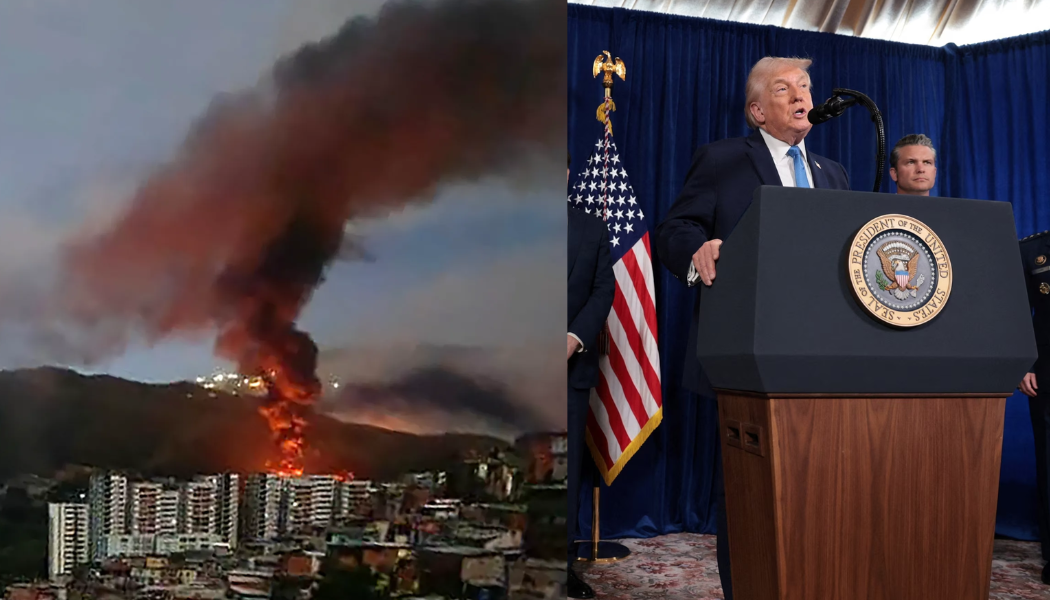
In the early hours of Jan. 3, the United States launched a military incursion into Caracas, Venezuela’s capital, successfully capturing President Nicolás Maduro and his wife, Cilia Flores. The operation marked one of the most direct U.S. interventions in the region in decades.
To understand why this matters, it is necessary to examine how this situation arose.
Venezuela is home to the world’s largest oil reserves. The first discovery within the Maracaibo Basin in 1922 triggered a rapid economic boom. Within a few years, Venezuela had become one of the largest producers in the world. The resulting export revenues financed rapid infrastructure development and modernization, while creating a deep dependence on oil.
Venezuela fell victim to what economists call Dutch Disease — a process in which a large resource boom attracts foreign capital and export revenue, causing the local currency to appreciate and imports to surge. This makes domestically produced goods from sectors like agriculture and manufacturing uncompetitive, pulling labour and investment away from them. Over time, the economy becomes structurally dependent on crude oil exports, leaving it highly vulnerable to price crashes and external shocks.
In 1976, President Carlos Andres Perez nationalized the oil industry — creating state owned Petróleos de Venezuela S.A. (PDVSA) — to oversee the exploration, production, refining and exports. The move replaced foreign operators with Venezuelan-controlled firms to ensure oil rents stayed in the country, driving government revenue and economic development.
By taxing foreign firms, the PDVSA allowed Venezuela to capture a greater share of oil revenue domestically. This provided a steady flow of foreign exchange and reinforced state control over crude oil production.
In 1998, Hugo Chávez was elected president on a socialist platform, promising to use Venezuela’s oil wealth to reduce poverty and inequality by expanding social programs and distributing resource revenue. Over time, he expanded executive power and weakened democratic institutions, consolidating control in an authoritarian regime that limited effective opposition. This concentration of power and dependance on oil made Venezuela the textbook example of the modern petrostate.
In 2007, Chávez nationalized the Orinoco Belt oil operations by requiring the state oil company PDVSA to take majority ownership of foreign run projects in the region, forcing multinational firms to agree to new terms. Several companies, including Exxon Mobil, refused and exited Venezuela. Others, such as Chevron, accepted new agreements with PDVSA, allowing the government to hold the bulk of control.
Over the course of Chávez’s regime — which lasted until his death in 2013 — oil reserves declined and government debt more than doubled. Venezuela’s reliance on tax revenue from foreign firms left them highly vulnerable to unpredictable swings in global energy prices.
Following the death of Chávez, his vice-president Nicolás Maduro succeeded him, winning the presidency by a narrow margin. Under Maduro, Venezuela has been characterized by an economic collapse, human rights abuses, staggering poverty levels, authoritarian rule, hyperinflation and sanctions, all of which has led nearly eight million Venezuelans to flee — many of whom migrated to neighboring countries in South America and the U.S.
A key consequence of Dutch Disease was Venezuela’s extreme dependence on imports at a time when GDP was contracting year over year due to declining oil output. Rather than cutting spending, the government increasingly financed its budget by printing money through the central bank. The money supply expanded by 20 to 30 per cent each month, leading to hyperinflation, and by the end of the decade, a GDP that had collapsed by 61 per cent.
Adding to an already suffering economy, the U.S. intensified sanctions on Venezuela’s oil sector after a contested 2018 presidential election, which many observers viewed as neither free nor fair and as further undermining democratic institutions under Nicolás Maduro.
On the morning of Jan. 3, the U.S. military launched a targeted strike in Caracas, capturing President Maduro and his wife Cilia Flores. Maduro and Flores were arrested on charges of drug trafficking and narco-terrorism. They pleaded not guilty in their New York court appearances on Jan. 5 before being remanded back into U.S. custody. Their next court hearing is set for March 17.
The pre-dawn raid was the culmination of months of intelligence work tracking Maduro’s movements and rehearsing his capture. The operation was carried out by an elite U.S. Army special operations unit known as Delta Force.
The incursion followed months of escalating action by the Trump administration, including the deployment of thousands of military personnel to the edge of Venezuelan territorial waters and striking boats in the Caribbean and the Pacific alleged to be transporting drugs to the United States. On Dec. 16, 2025, President Trump designated the Venezuelan Maduro regime as a foreign terrorist organization in a post on his Truth Social platform.
Trump has framed the raid as a law-enforcement action against drug trafficking networks protected by the Venezuelan state. However, the president has stated that Venezuela stole oil from U.S. companies with the creation of the PDVSA in other comments.
Lawmakers in Europe have had varied reactions to the Trump administration’s incursion in Caracas, with France’s foreign minister writing, “the military operation that led to the capture of Nicolás Maduro contravenes the principle of non-use of force, which underpins international law,” in a post on X.
Venezuela’s Vice President Delcy Rodríguez was formally sworn in as interim president on Jan. 5. Rodríguez was a long time Chávez and Maduro ally and has received the backing of the Trump administration, with Trump threatening that “she is going to pay a very big price, probably bigger than Maduro,” if she neglects to submit to U.S. demands.
In a press conference on Jan. 3, President Trump said that Venezuela will not be holding an election for a new president within the next 30 days and that the U.S. can run the country until a time where they can have a “safe, proper and judicious transition”. Secretary of State Marco Rubio later clarified that, the United States would assert control over the Venezuelan oil industry and will influence its political future rather than governing in an administrative capacity.
The Trump administration has also demanded unrestricted access to Venezuela’s oil, allowing American companies to invest heavily in Venezuelan oil infrastructure with the intention to control Venezuela oil sales indefinitely.
The Trump administration’s operation in Venezuela was billed as a plot to thwart narco-terrorism; however, given Venezuela’s history with U.S. oil producers, it’s clear that illicit drugs are a thinly veiled mask to the administration’s true intentions.
Given that Trump ran on an “America first” platform, the actions taken in Venezuela have led many Republicans — including Marjorie Taylor Greene — to express their distaste for the president’s actions, calling it a betrayal of MAGA.
President Trump may have removed Venezuela’s head of state, but much of the Maduro government remains in place including his second chair and trusted confidant Delcy Rodríguez taking over as interim president. Importantly, the people of Venezuela continue to face extreme poverty and one of the highest crime rates in the world.
The United States has stated that its goal is to restore a fair and functioning democracy in Venezuela. However, it remains unclear whether the recovery of Venezuela’s economy will receive the same level of attention. With Maduro-era authoritarian governance still exerting influence, opinions remain divided over whether any resulting democracy would reflect the will of the Venezuelan people or American dominance.
For all intents and purposes, the U.S. has taken control of nearly 300 billion barrels of oil, raising questions about how it may influence future trade negotiations with Canada and other oil producing nations.
More broadly, critics argue that the precedent set by the Trump administration’s incursion may prove to be more consequential than the operation itself. In a statement, the United Nations warn that interventions of this nature make all states less secure, citing concerns that bypassing formal extradition processes and asserting control over leadership and national resources erodes the foundations of international law and state sovereignty.
As global tensions rise, the implications could extend beyond Venezuela with Trump continuing to publicly float the idea of acquiring Greenland. Others fear global powers, including Russia or China, could point to the Venezuela operation as justification for similar actions elsewhere.