

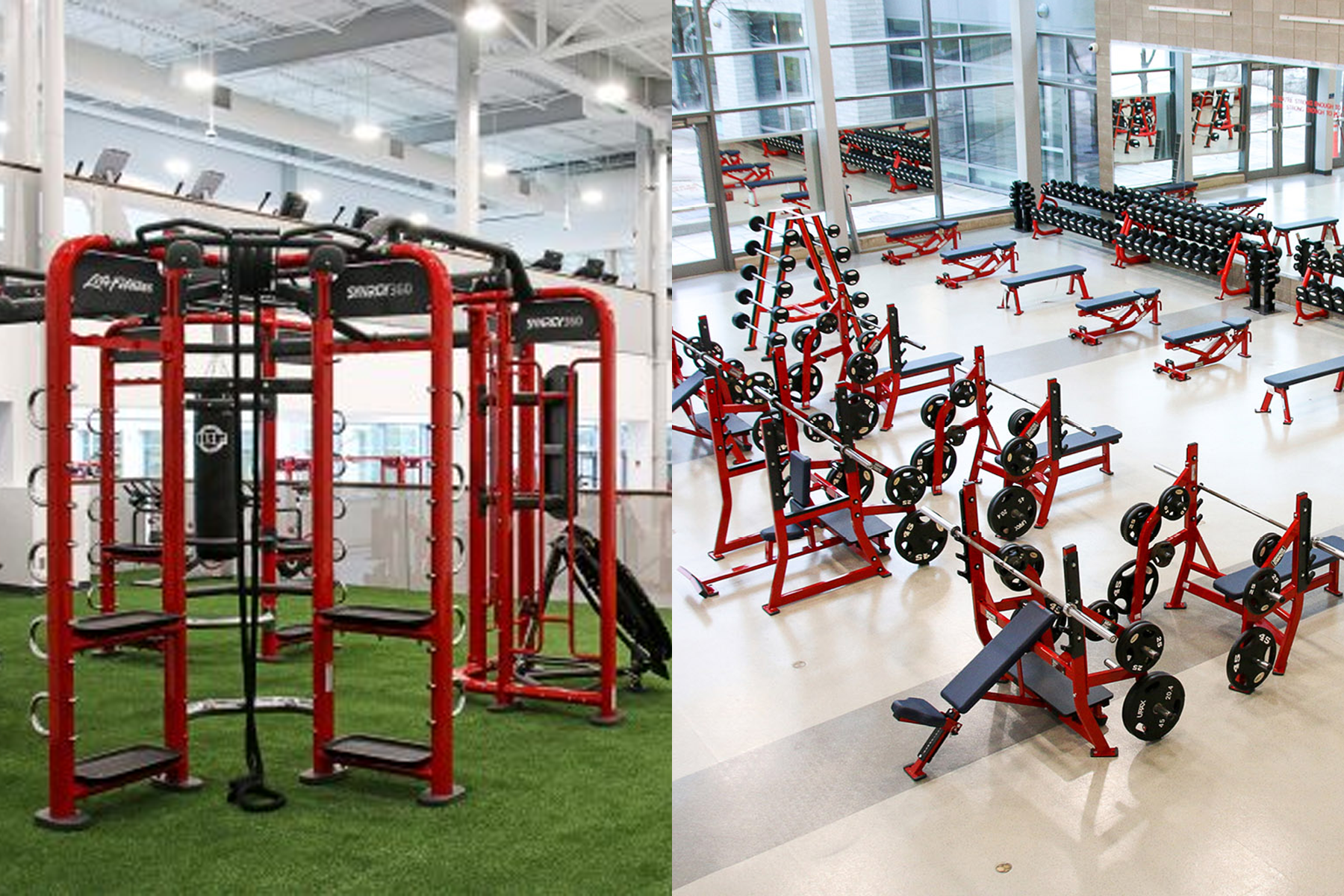
The Zone is one of the best amenities Brock has to offer, which makes it all the more frustrating that students increasingly can’t use it.
As New Year’s resolutions set in and a new semester of goals begins, students once again make their daily pilgrimage to The Zone, Brock’s premier recreation and lifting facility. But unlike past years, the crowds no longer fade after January; they remain packed throughout the term, regardless of the time of day.
As someone who began their fitness journey at The Zone, I have a genuine appreciation for what Brock has to offer. Compared to many gyms in the region, Brock’s equipment selection and quality is impressive. In 2021, renovations expanded the facility to roughly 15 thousand square feet, improving access to machines, squat racks and workout space. At the time, it felt like a meaningful investment in student wellness.
What no one fully anticipated was the culture shift that followed. Fitness content exploded, online gym culture became mainstream and working out became less of a daily routine and more of a personality trait. That change didn’t just increase gym usage, it fundamentally altered demand. The Zone is no longer only busy during predictable times; it’s crowded near constantly.
A packed university gym could be framed as a success story. It signals motivation and a student body that cares about its health. But when overcrowding becomes the rule rather than the exception, it stops being a sign of enthusiasm and starts to reveal a structural problem. At Brock, The Zone has reached that point.
The issue isn’t effort or quality. The Zone is well equipped, well maintained and staffed by people who keep it functioning even at its busiest times. The problem is scale. Brock is relying on a single centralized space to serve a growing student population whose habits have clearly outgrown that model.
That pressure is immediately visible on the floor. Machines are routinely unavailable. Benches and dumbbells are hard to track down. Open space, particularly at the front of the gym, is scarce. Workouts become exercises in waiting rather than moving. For experienced lifters, this means rushing sets, skipping movements or restructuring routines around whatever happens to be available. For beginners, it means something worse: the feeling that they don’t belong.
Overcrowding quietly undermines accessibility. New gym goers are given less room to make mistakes and learn. In a space where every rack is occupied and every misstep feels visible to a crowd of peers who seem to know more than you, intimidation becomes a real barrier to meeting your goals. A gym that discourages beginners is failing at its most basic purpose — being a safe space for all students.
Seasoned lifters aren’t the villains in this equation either. We aren’t trying to gatekeep the space; we’re simply adapting to a system that no longer works like it once did. As the number of experienced gym users grows, they are forced to compromise just as much as new gym goers. When everyone is making sacrifices just to complete a workout, the question becomes unavoidable: who is the gym actually serving?
Busy gyms bring quiet costs as well. Students with busy lives must plan their schedules accordingly to ensure they can access the gym when it isn’t at capacity. Over time, The Zone filters out students who don’t have flexible schedules.
While The Zone is free to access, it isn’t free in practice. Students pay for recreation facilities through tuition and ancillary fees every semester. If students are contributing financially to a campus gym, it’s reasonable for them to expect that there is enough space to use it effectively.
Solving this problem doesn’t mean squeezing more machines into the already cramped zone. While adjustments can be made to the flow of machines to mitigate the bottlenecks and crowds, the true issue with The Zone is space. As it stands right now, Brock’s gym has outgrown its footprint. To keep things running smoothly, The Zone must expand.
If Brock is serious about student wellness, it’s time to move beyond the single gym model. A secondary space wouldn’t be a luxury, it would be an acknowledgement that student needs have outgrown the current system. It could ease overcrowding, support more inclusive programming — such as expanded women’s only hours — and introduce alternative access models like timed bookings or extended 24/7 availability.
Students are clearly willing to show up for their health. It’s time for Brock to show up with the space to support them.