

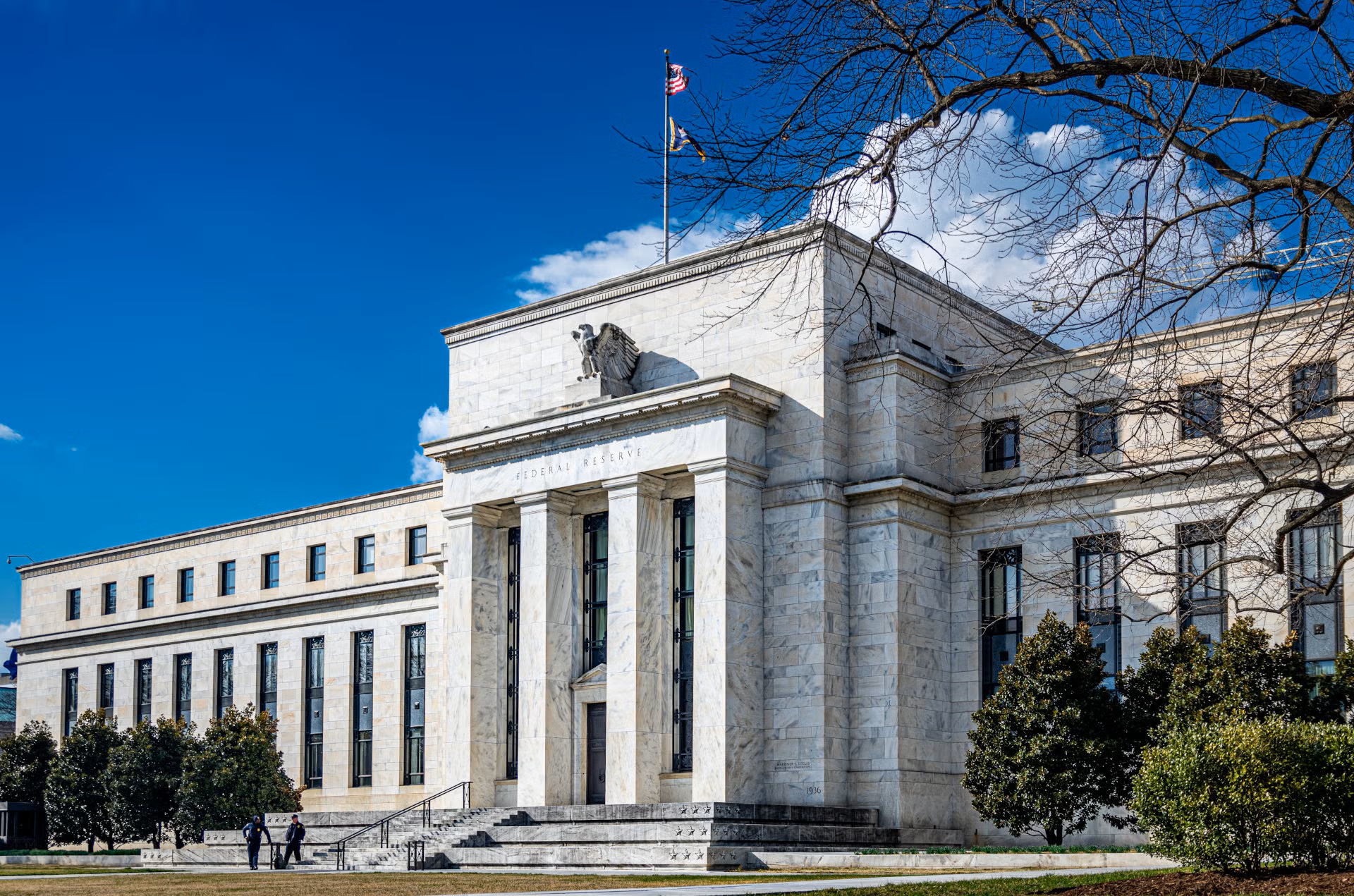
On Jan. 11, the chair of the United States federal reserve, Jerome Powell, released a video statement where he states that “the Department of Justice served the Federal Reserve with grand jury subpoenas threatening a criminal indictment” over the cost of renovating Federal Reserve buildings.
Powell goes on to state that “this unprecedented action should be seen in the broader context of the [Trump] administration’s threats and ongoing pressure.”
According to Powell, the investigation over the renovations is simply a “pretext,” as “the Fed, through testimony and other public disclosures, made every effort to keep Congress informed about the renovation project.”
“The threat of criminal charges is a consequence of the Federal Reserve setting interest based on [their] best assessment of what will serve the public, rather than following the preferences of the president,” said Powell.
According to Powell, the lawsuit will define whether the Fed will be able to set monetary policy indepedently in accordance with its mandate of price stability and maximum employment, either through political pressure or intimidation.
As of writing, the Federal Reserve is an independent organization not affiliated with the U.S. Federal Government that is tasked with overseeing U.S. monetary policy. Its main policy leaver is interest rates, which can be used to increase or lower inflation within the U.S. economy.
In simplified terms, the Federal Reserve makes borrowing cheaper by lowering interest rates while decreasing earnings for savings accounts, which serves to accelerate inflation. Conversely, increasing interest rates makes borrowing more expensive while earnings for savings account holders increases, slowing down inflation.
To better understand the situation, The Brock Press spoke with Robert Dimand, associate professor of economics at Brock University.
Dimand said that President Trump has clearly stated his reasoning for wanting to lower interest rates:
“Trump has wanted the Federal Reserve to reduce the federal funds rate [which] is their trend setting interest rate to 1 per cent, which is less than their target interest rate of 2 per cent, which means that their real inflation adjusted interest rate is negative.”
According to Dimand, this would result in borrowers paying negative real interest rates, which “would be nice for the borrowers, while on the other hand people with savings would be getting negative real returns,” culminating in “an initial expansionary economy with a delayed effect on prices.”
“It’s not unusual for presidents to want lower interest rates as monetary expansion before elections because an expanding economy is good for the party in power, but the hope is that the effect on prices will come in after the election,” said Dimand.
Dimand quoted the example of Richard Nixon pressuring Federal Reserve Chairman Arthur Burns to keep interest rates down prior to the 1972 presidential election. According to Dimand, this caused the economy to expand before subsequent inflation required President Nixon to impose wage and price controls.
Dimand commented that Nixon’s actions could hardly be classified as free market policy as “one would expect from Republicans.”
Dimand noted that there was a “second aspect to this apart from the question of expanding the economy for the election.” With the house of representatives having four-year terms, there’s always an election happening in the United States, says Dimand.
Additionally, he noted that President Trump’s background in real estate development predisposes him to view interest rates from “the standpoint of someone who’s paying interest and not receiving it.”
Real estate developers often take out large mortgages for development, and with interest being a critical part of paying back loans, they would naturally like to pay less interest — but people with savings would like to receive interest on their savings, says Dimand.
With Trump’s push potentially resulting in negative interest rates, Dimand noted that this would create a situation where, when purchasing power is borrowed, the purchasing power required to be paid back would be less than what was borrowed since prices will have gone up more than the interest rate.
When asked how rate changes affect the dollar as a global reserve currency, Dimand stated that “the U.S. dollar is already becoming sort of less prominent as a reserve currency with the establishment of the Euro and increasing return to holding gold in central banks.”
Dimand stated that “if there is more concern about the U.S. dollar retaining its value, that would tend to chip it away as a global reserve currency.”
Dimand does not believe that this will have a huge effect on global trade immediately, given central banks hold large shares of their reserves in Euros, Gold or Chinese Yuan, unless there is large inflation in the U.S.
On the importance of Federal Reserve independence, Dimand stated that “politicians would always like to have more monetary expansion if it’s going to be increasing employment in the short run, and then any effects of inflation happen a little later as with Nixon before the 1972 election.”
As Dimand explained, “the hope of the politician is to have the economy expand before the election and the consequences of inflation happen after the election, and you worry about that later,” which leads to a bias towards more inflationary policies.
With talks of potentially ballooning inflation, Dimand iterated that high inflation would have a social cost as it makes borrowing money more costly. High inflation would also increase the variability of the rate of inflation, says Dimand.
According to Dimand, high variability would mean that “every time somebody finds a contract whether for their wages, their salary or for selling goods they’re just guessing the real value of what they’re actually going to be getting.”
When asked about the last time a government has sought to exact power over its central bank to reduce interest rates, Dimand explained:
“The most recent case that happened was in Türkiye where the Erdoğan government ousted the governor of the central bank, put in their own appointee and kept interest rates and the rate of inflation went quite high there — certainly into the high double digits, though official numbers are being underreported.”
Dimand further explained that there “have been a number of rapid inflations where the value of people’s savings were undermined.”
Dimand noted the example of Israel in the 1980s, which experienced triple digit inflation that was finally brought under control and did something that Dimand said was noteworthy by “deliberately making the central bank unresponsive to political pressure.”
Dimand said that Stanley Fisher — who was the second in command at the International Monetary Fund who, at the time, was vice chair of the major bank City Group — was brought on as governor of the bank of Israel at an 80 per cent pay cut.
This resulted in Israel’s bank have a governor who did not feel like he had to be thankful to the politicians who brought him in. Fisher felt as though he did the politicians a favour by taking the job, re-establishing the bank’s political independence.
Dimand stated that central bank independence is crucial to maintaining stable economic policy because “otherwise, politicians have the temptation to cut taxes, spend more and just sell bonds to the central bank which creates money and they will give into that temptation.”
It was noted by Dimand that there was one attempt to interfere with the independence of the Bank of Canada (BOC). Dubbed the “Coyne Affair,” the Diefenbaker government politically slandered BOC Chair James Coyne while claiming as, Dimand explained, that it was “not in-fact to change their [The BOC] monetary policy but to avoid the government having to take responsibility for monetary policy [pension increase] that the governor had not objected to in 1961”.
The interference attempt occurred when the Diefenbaker government introduced a bill to declare the governorship of the BOC vacant in government to attempt to fire James Coyne, the BOC governor, according to Dimand.
The Bill passed the House of Commons but was rejected by the Canadian Senate after which James Coyne resigned. Dimand equated this incident with what’s currently happening with Jerome Powell and The Federal Reserve.
Dimand explained that Coyne was publicly politically targeted for misconduct, specifically for not vetoing an increase in his pension, to mask the government’s attempt to direct monetary policy. James Coyne favoured restrictionist economic policy which was at odds with the Diefenbaker governments expansionist economic policy.
The current case with Powell is similar according to Dimand. Powell has been charged on the weak grounds of having been untruthful to Congress about the cost of renovations to the Fed buildings.
This is a similar attempt to find a reason other than monetary policy for getting rid of the head of the central bank and it’s not a convincing reason,” says Dimand.
While it’s uncommon for governments to try and pressure central banks to lower interest rates, it is not unprecedented. However, a government attempting to fully take control has not happened in North America or Europe with the exception of the aforementioned events in Türkiye, according to Dimand.
Dimand described the situation with Powell as the Trump administration attempting to apply pressure but doing so “in ways that go beyond ways that administrations had previously tried to apply pressure.”
In defining what it means to “go beyond,” Dimand explained that the methods of applying pressure “opening criminal investigations into Powell and Federal Reserve Governor Lisa Cook for allegations that do not in fact sound terribly credible in themselves” makes things personal in a way that has not been seen before in North America.
Dimand explained that previous forms of pressure applied did not involve such personal attacks or criminal investigations.
As for what precedent could be set if U.S. monetary policy began to be decided by political pressure and threats, Dimand stated that “it certainly won’t be encouraging for central bank independence elsewhere.”
Dimand did note that he did not believe that it would affect Europe given the nature of the Euro and the European Central Bank “not being under the control of any one national government.”
Dimand stated that “even if one feels that central banks like the Fed should be paying more attention to employment and output relative to inflation than they have been doing […] it certainly does not in any way justify these actions against central bank independence.”
In particular, Dimand focused in on unsound criminal allegations against people in the central bank: “just as in the Coyne Affair in Canada, the Diefenbaker government tried to avoid directly talking about monetary policy by trying to make it all about Governor Coyne not having vetoed an increase in his pension which was not at all plausible as the real reason of the dispute.”
In returning to why departing from interest rates set by the Fed to President Trump’s preferred lower interest rates is potentially problematic, Dimand explained that to lower the interest rates, more treasury bonds need to be purchased and optioned and paying for that requires newly created money.
Creating more money will lead to an expansion in spending and eventually an expansion in prices. As explained by Dimand, if they have interest rates at less than the rate of inflation, people gain from borrowing and then buying real assets because those assets will increase in value beyond what they had to pay through interest on borrowed money.
“For example, housing prices are going to go up as mortgage rates go down and people who have savings which are invested in anything earning interest will find that money earned on their savings is going down,” said Dimand.
Dimand noted that wages tend to go up alongside inflation, though lags are always present as people find new contracts.
Regarding how this might affect Canada, Dimand noted that it may lead to an initial capital inflow into Canada that would “probably lead to the U.S. dollar going down in value against the Canadian dollar,” which would make Canadian exports more expensive, potentially reducing exports.