

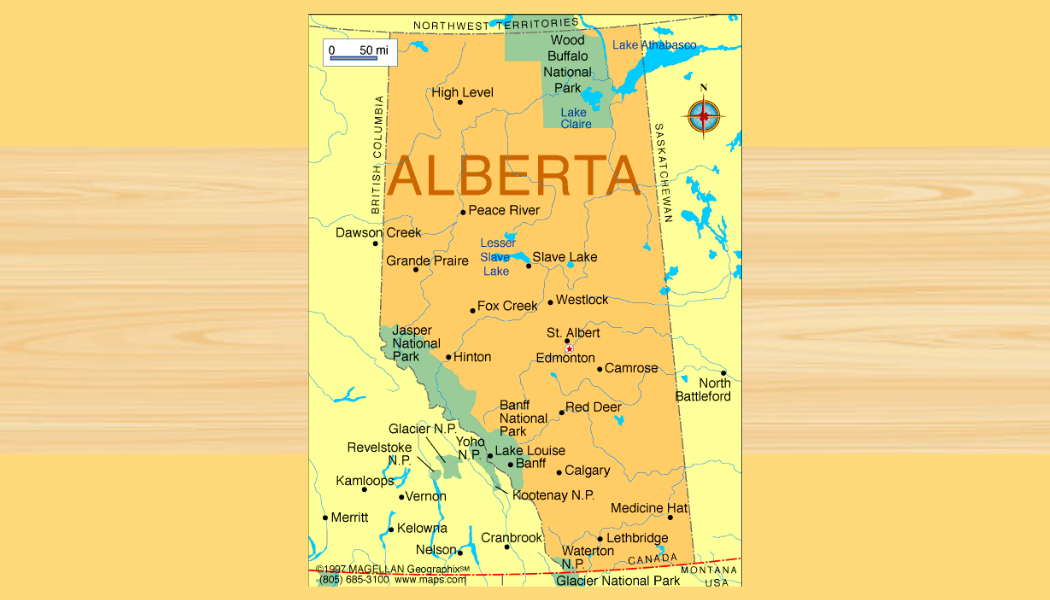
The Albertan separation movement has recently gained significant media attention following statements that separatists have been meeting with United States officials to request aid in the separatist movement. Fellow premiers have called upon Albertan Premier Danielle Smith to denounce the separatist movement, with British Columbian Premier David Eby calling them “treasonous.”
The idea of a potential Albertan separation is nothing new to Canadians, as Alberta has hosted several attempted separation movements dating back to as early as the 1930s. At that time, Prime Minister Lyon Mackenzie King refused to provide unemployment relief to non-liberal provinces, resulting in calls for Alberta — then governed by the Social Credit Party — to separate from the country.
Since then, there have been at least six other moments in Canadian history where Albertan separatism was active in the national psyche.
Following the 2025 federal election, Albertan separatism was renewed as sentiments in the province over the unexpected fourth term of the incumbent Liberal government. This fueled a sense of western alienation from the historically conservative province.
Premier Danielle Smith made amendments to Bill-54 following the 2025 election that significantly lowered the threshold necessary to trigger a referendum under the Citizens Initiative Act. Previously, petitions required 20 per cent of eligible Albertan voters or about 600,000 signatures within 90 days to trigger a referendum. Premier Smith changed the requirements to halve that number, with petitions now only requiring a minimum of 10 per cent of eligible Albertan voters who voted in the previous provincial general election to sign on, or 177,732 signatures within 90 days.
As it stands, Albertan separatists under the Alberta Prosperity Project (APP) have around 240,000 members and aim to launch a referendum on separation “around October or November”.
Angus Reid Polling conducted in May 2025 found that nearly 36 per cent of Albertans would support a vote to separate, though 51 per cent would vote to stay. The same polling also found that 65 per cent of UCP voters, the current governing party in Alberta, leaned towards separation.
Within the same time frame, the renewal of Albertan separation — a separate movement under the Forever Canadian banner — was successful in collecting 404,293 valid signatures. The Forever Canadian petition was a direct counter to the Albertan Separatist petition, asking Albertans the following question: “Do you agree that Alberta should remain within Canada?”
Organizers at APP have claimed that members of Premier Smith’s caucus have signed onto the separatist petition, with some claiming that Premier Smith has talked about leading an independent Alberta.
Members of the APP have reportedly held several secret meetings with Trump administration officials over the separatist movement, with at least three meetings taking place in Washington. The APP have stated that they hope to request a 500-billion-dollar line of credit to finance Albertan Independence.
Premiers David Eby of British Columbia and Doug Ford of Ontario, alongside Albertan First Nations have all commented on the APP movement. Premier Eby stated “to go to a foreign country and to ask for assistance in breaking up Canada, there’s an old-fashioned word for that, and that word is treason.”
Premier Ford described the APP as going behind Canada’s back to negotiate with the United Stated as “unacceptable” and “unethical,” stating that he was dead against it, calling on Premier Smith to denounce it.
A group of Albertan First Nations representing seven chiefs have stated that Albertan Separation is in direct violation of treaty agreements, saying that “the Treaties were agreed to by First Nations and the Crown before Alberta was created. Alberta is not a party to the Treaty and cannot make changes without First Nations consent.”
Premier Smith defended the APP by stating that she “won’t demonize” the separatist movement, though she iterated that the UCP supports “a strong and sovereign Alberta within a united Canada.”
Prime Minister Mark Carney in conjunction with Premier Smith stated that they “expect the U.S. administration to respect Canadian sovereignty.”
With the Party Québécois poised to win the next election in Québec and promising to hold a third separation referendum alongside the Alberta separatist movement, the topic of Canadian unity will be one that Canadians will be grappling with in the coming year.