

Black History Month offers an opportunity to look closely at how Black athletes have shaped sport not just through talent, but through moments of consequence. Their legacies are built on specific decisions, performances and risks that changed what was possible for those who followed. In this context, greatness is inseparable from pressure and the cost of carrying it.
Few athletes altered the relationship between sport and politics as decisively as Muhammad Ali. At the peak of his boxing career in 1967, Ali refused induction into the U.S. Army, citing religious beliefs and opposition to the Vietnam War. The decision cost him his heavyweight title, boxing license and nearly four years of competition during his prime. When Ali returned, he was slower, but his cultural stature had grown. His fights were no longer just sporting events: they were global moments where Black defiance, faith and pride were on full display. Ali showed that an athlete could lose everything but still shape history.
That insistence on self-definition echoes in the career of Serena Williams, whose dominance unfolded under relentless scrutiny. Williams won 23 Grand Slam singles titles, the most in the Open Era, while navigating a sport that consistently policed her body, tone and emotion. Incidents such as the 2018 U.S. Open final revealed how quickly her authority could be questioned, even as her record surpassed nearly everyone who came before her. Serena’s greatness lies not only in her statistics but in how she forced tennis, and its audiences, to confront who they allow to be powerful.
Decades earlier, Jesse Owens delivered one of the most symbolically charged performances in sports history. At the 1936 Berlin Olympics, Owens won four gold medals in front of Adolf Hitler’s regime, undermining Nazi racial ideology through performance alone. Yet upon returning home, Owens was denied endorsements and faced continued segregation in the United States. His story reveals a recurring truth: international celebration does not guarantee domestic justice.
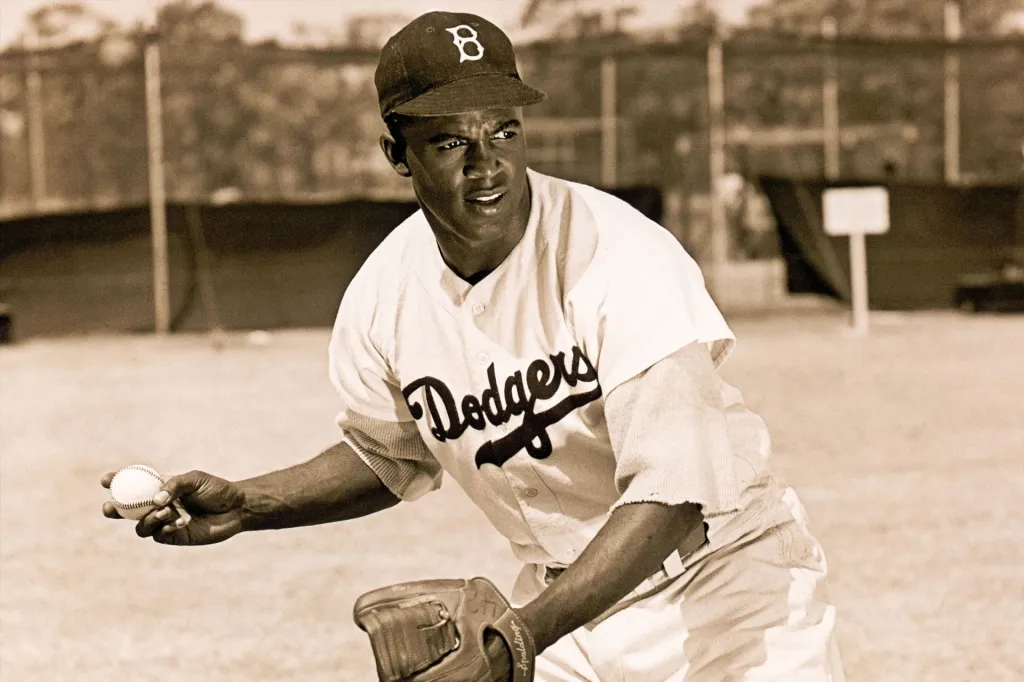
That contradiction was also central to Jackie Robinson’s career. When Robinson broke Major League Baseball’s colour barrier in 1947, he did so under explicit instructions to endure racist abuse without retaliation. He received death threats, was targeted by opposing teams and faced hostility from fans and teammates alike. Robinson’s ability to perform under these conditions, while knowing his behaviour would shape opportunities for every Black player after him, transformed professional sports in North America.
In the modern era, LeBron James has combined sustained excellence with institutional impact. His longevity championships place him among basketball elite, but his establishment of the I PROMISE School in Akron, Ohio signals a broader vision of legacy. James has consistently tied his success to access, education and public accountability, redefining what leadership looks like for contemporary Black athletes.
That redefinition reached a critical moment with Simone Biles, whose withdrawal from multiple events at the Tokyo Olympics challenged a sports culture that prioritized medals over well-being. Biles’ decision brought mental health into direct conversation with performance, particularly for Black women whose pain is often minimized. Her honesty expanded the definition of strength.
The greatest Black athletes of all time are remembered not simply for winning, but for what their victories demanded. Their stories are specific, difficult and unfinished, reminders that excellence has always carried weight and that Black achievement in sport has never existed without consequence.