

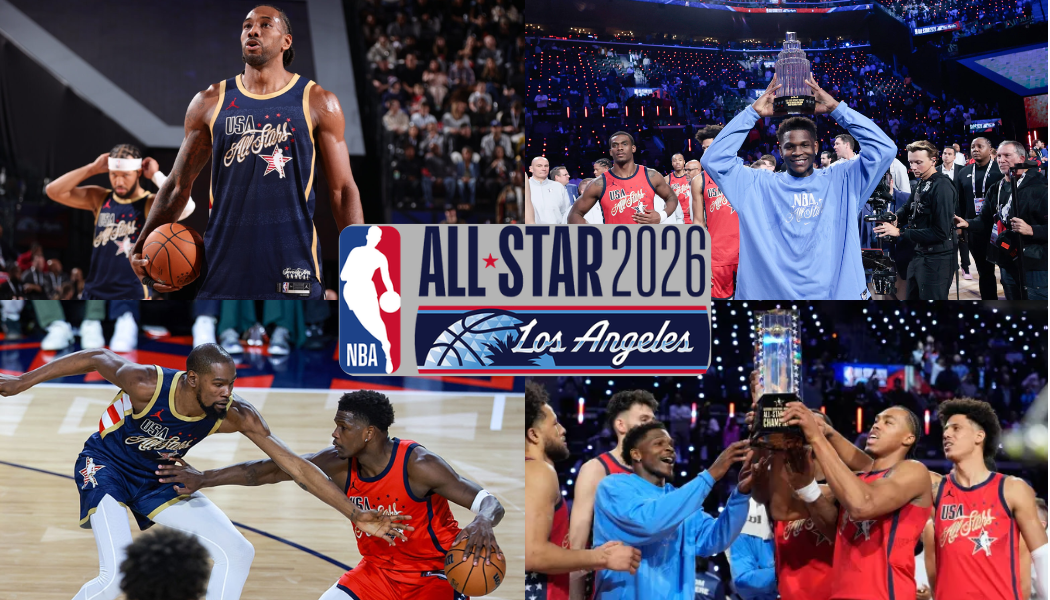
For more than a decade, the NBA All-Star Game has been fighting slow, but noticeable, rating declines. What was once a guaranteed television draw — regularly pulling between eight and 10 million viewers in the early 2010s — gradually lost traction as fan frustration grew over lackluster effort, inflated scores and minimal defence. By 2023 and 2024, the number had fallen to roughly 4.6 to 4.7 million viewers, marking some of the lowest audiences in the event’s history.
This criticism wasn’t subtle, with fans openly questioning whether the game still mattered. Social media conversations during recent editions were filled with complaints about players going through the motions, treating the showcase as a highlight reel rather than a competition. Final scores regularly soared past 180 points per team, reinforcing the perception that intensity has vanished. For many viewers, the All-Star Game had become entertainment without stakes.
That context makes the most recent All-Star Game particularly significant.
This year’s broadcast averaged approximately 8.8 million viewers across NBC, Peacock and Telemundo — the highest audience for the event since 2011 and an increase of roughly 87 per cent compared to the previous year. In isolation, that number looks like a dramatic revival. But the bigger story is what it represents: a short-term rebound within a longer-term decline.
The league introduced a revamped U.S.A. vs. World tournament-style format, designed to restore competitiveness and inject national pride into the matchup. Online reactions suggest that fans noticed a difference. Viewers commented on increased defensive effort and more authentic intensity. Rather than treating the game as an exhibition, players had to get used to the shift that resonated with audiences who had grown skeptical.
Still, the rebound does not automatically erase the broader trend. Over the last 10 to 12 years, All-Star Game viewership has clearly trended downward from its early-2010s peak. Media fragmentation, changing viewing habits and general criticism of the event’s competitiveness all contributed. One strong year does not guarantee long-term recovery.
There were also mixed reactions to the new format itself. While many praised the energy, others admitted confusion about the structure. Some fans expressed uncertainty about how the tournament system worked compared to traditional East vs. West formats. That suggests engagement has improved, but clarity remains an area the league may need to refine.
What makes this moment interesting is not just the ratings jump, but what it signals about fan expectations. The audience response indicates that viewers are not rejecting the All-Star Game concept outright — they are rejecting a version that feels unserious. When the product resembles real basketball, interest appears to return.
So yes, viewership has declined over time. But the most recent numbers show that decline is not necessarily irreversible. The NBA’s challenge now is consistency. If competitiveness remains central to future All-Star Games, the league may stabilize ratings rather than continue sliding. If intensity fades again, a long-term downward trajectory could resume.
For now, the All-Star Game stands at a crossroads — not fully restored, but no longer in free fall.