

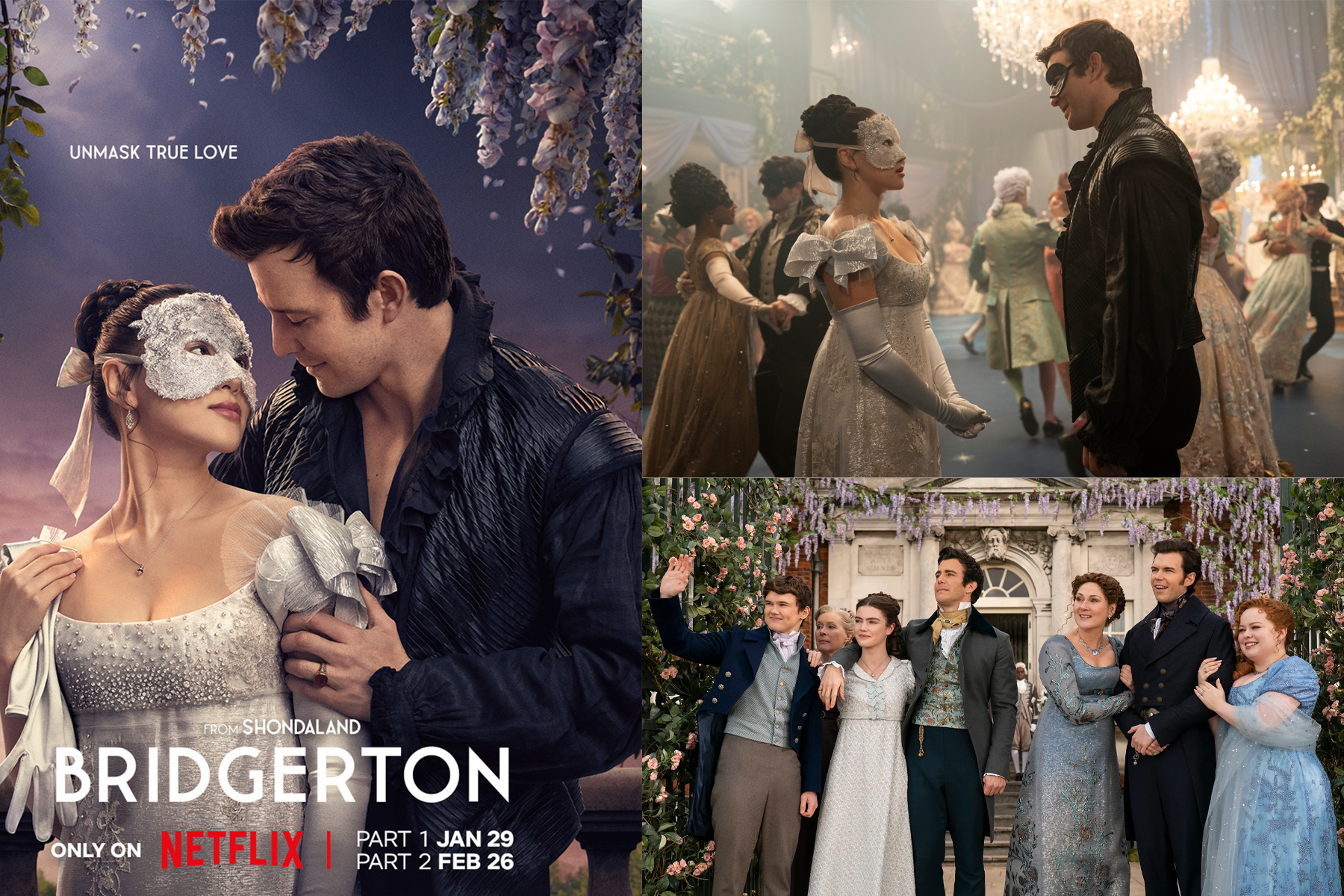
Content warning: this article contains spoilers for Part 1 and 2 of “Bridgerton” Season 4
4/5
Dearest Gentle Reader, the wait is finally over. After months of anticipation, Bridgerton has returned to our screens for its highly anticipated fourth season, thrusting the beloved bohemian Benedict Bridgerton firmly into the spotlight.
Fans have patiently waited for the second eldest Bridgerton brother to find his match, and the arrival of Sophie Baek brings the sweeping, Cinderella-inspired romance depicted in Julia Quinn’s third novel in the Bridgerton series, An Offer from a Gentleman. Season 4 delivers the signature opulence, scorching chemistry and string-quartet pop covers we’ve come to expect. Yet, for all its enchanting masquerades and emotional depth, the season’s pacing leaves something to be desired, specifically when it comes to the screen time allocated to the central couple.
Let’s begin with the triumphs, of which there are many. The undeniable highlight of the season is the electrifying dynamic between Benedict (Luke Thompson) and Sophie (Yerin Ha). Thompson has always imbued Benedict with a charming, aimless warmth, but this season demands a deeper vulnerability, which he delivers with aching precision. Ha’s Sophie is a revelation — resilient, grounded and captivating. Their first encounter at the masquerade ball is a masterclass in atmospheric romance. Bathed in silver light and shrouded in mystery, their initial connection feels both immediate and profound. The series leans into its fairytale inspirations without losing the mature, sensual edge that defines the Bridgerton brand.
Furthermore, Season 4 boldly tackles themes that previous seasons only danced around. Sophie’s precarious position in society introduces a necessary and compelling conversation about class and privilege within the rigidly structured world of the Ton. The cruelty she endures at the hands of her stepmother adds grounded emotional stakes to the narrative that go well beyond mere ballroom gossip. When Benedict and Sophie are allowed to share the screen, navigating the vast societal gulf between them, the show is at its absolute best. Their romance is built on genuine understanding and shared longing, making it easy to root for them against the formidable odds.
However, the season stumbles in its distribution of focus. Bridgerton has always been an ensemble show, relying on a sprawling cast of siblings, matriarchs and high-society schemers to flesh out its world. In the past, these subplots complemented the main romance, offering levity or thematic parallels. In Season 4, unfortunately, the sheer volume of side plots — even though they were interesting — begins to feel like a distraction. Between the ongoing machinations of the Ton’s fringe characters, the continued social climbing of secondary families and the various escapades of the younger Bridgerton siblings, the narrative becomes overcrowded.
As a viewer, I frequently found myself fighting the urge to skip through perfectly fine, but ultimately tangential, scenes just to get back to Benedict and Sophie. When a central romance is this compelling, dragging us away from it so often feels less like world-building and more like a frustrating detour.
This overcrowding directly leads to the season’s most flaring misstep: the pacing of its finale. After eight episodes of intense yearning, social obstacles and hard-fought emotional victories, the audience is naturally desperate for a satisfying payoff. We want to see Benedict and Sophie revel in their hard-won happiness. Instead, their ultimate union feels shockingly compressed. The culmination of their journey — a beautiful, intimate wedding at Benedict’s cottage — is relegated to a brief sequence right at the very end of the series, bleeding directly into the post-credits.
While the cottage wedding is undeniably sweet and aesthetically perfect, it arrives too late and is too short to truly satisfy the audience. The slow-burn romance is a staple of the series, but the “happily ever after” requires breathing room. By rushing their marriage to the final moments — unlike the other Bridgerton seasons, which include scenes of the happy couple after their wedding — the show robs us of the chance to see Benedict and Sophie exist as a united front, navigating the world not as star-crossed lovers, but as true partners. We wanted to linger in their joy, to see the aftermath of their societal defiance and to watch their romance transition from a clandestine dream into a lived reality.
Ultimately, Bridgerton Season 4 is a thoroughly enjoyable, swoon worthy addition to the franchise. It successfully adapts a beloved book into a visually stunning, emotionally resonant season of television. The chemistry between the leads is undeniable, and the deeper thematic explorations are a welcome addition to the glittering world of Mayfair. However, by getting bogged down in secondary character arcs and rushing the finish line, the season just barely misses the mark of perfection.