

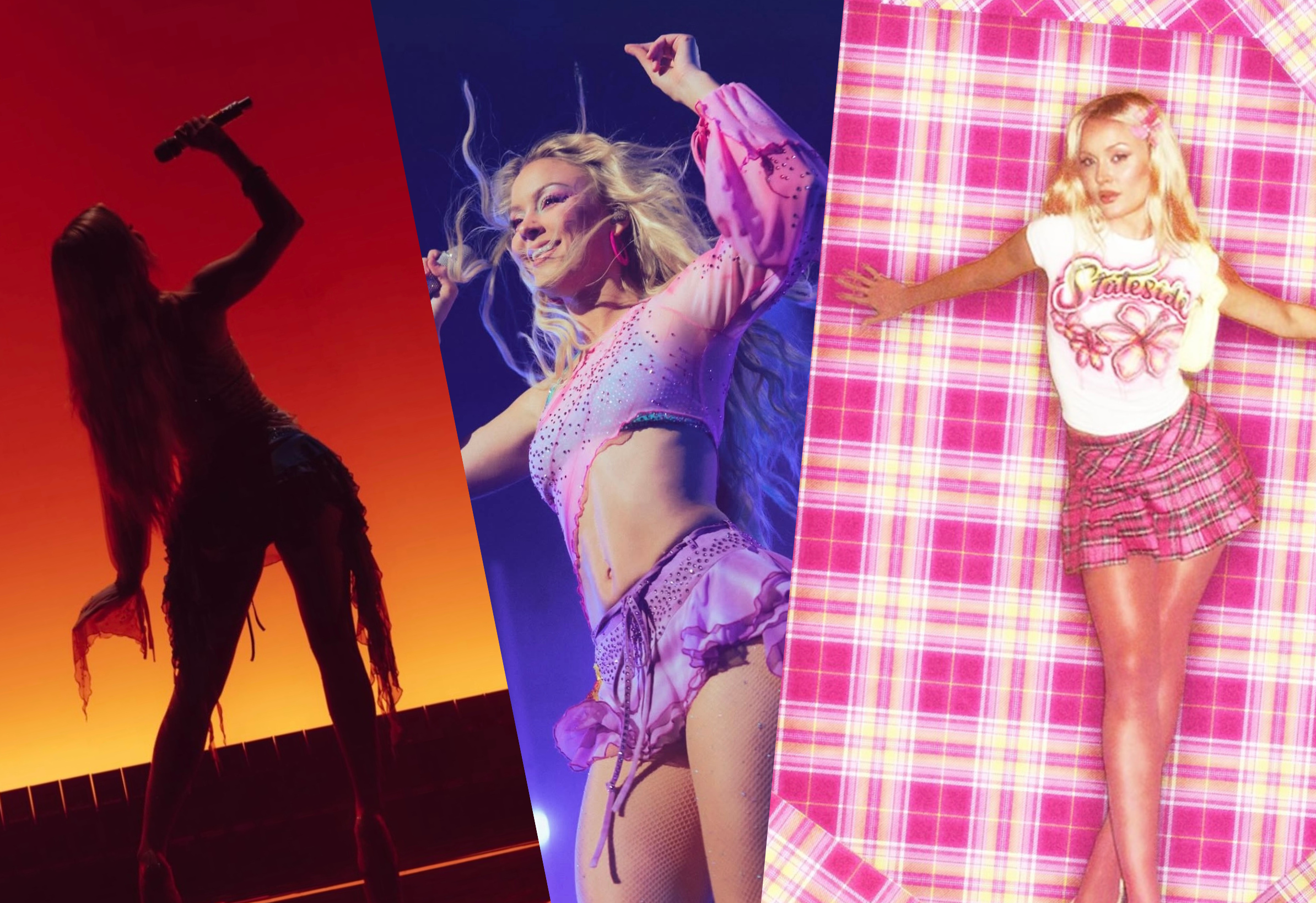
Zara Larsson isn’t staging a comeback — she’s becoming a popstar for the first time. At the core of her ascension has been a new pop persona crafted through online intimacy, nostalgic aesthetics and slow algorithmic momentum.
Pop stardom used to arrive fully formed: a carefully managed artistic image, a hit single, a chart-topping album and an eventual tour. “Overnight success” became the blueprint. Label-backed ventures for fans to fall in love with replaced true artistry. Songs of the summer defined entire eras, trends were chased and pop acts often burned bright before disappearing just as quickly.
Thankfully, the internet has quietly dismantled that model. In an era shaped by TikTok feeds and algorithmic discovery, listeners rarely meet artists all at once anymore. How an artist breaks into the mainstream has been defined by how users can shape their persona. Memes, reposted clips and rediscovered songs have the ability to carry artists further than a label or chart-topping song ever could.
Few artists illustrate this shift more clearly than Zara Larsson. Though the internet could recognize her decade defining global hits, no one could actually recognize her. Despite an album release in early 2024, Larsson was no longer topping charts and creating hits that dominated summer radios. By all accounts, her 2024 project Venus was a strong pop album, but catchy production, incredible vocals and stadium filling sound weren’t enough to give the album cultural impact or staying power.
No one could have expected a trend of dark, self-deprecating memes of Lisa Frank style A.I. dolphin artwork paired with her 2017 collaboration “Symphony” would cause such a resurgence in an artist everyone remembered, but no one truly knew.
The meme’s virality was hard to ignore and, for Larsson, it fueled an era of reintroduction. The internet was familiar with her work but had no fixed sense of her as an artist. Larsson was given a blank slate with built in recognition. A chance to define herself and the artist she has always set out to become.
In an interview with ABC News, Larsson said “this time around, I just have it planned out. […] But I’m allowing myself to have more fun (too) […] I’ve already had success and then my ‘flop era.’ And then it’s like, ‘ok, I flopped.’ So, it doesn’t scare me anymore.”
She quickly got to work creating a new body of music full of expression, allowing her to hone her ear for Swedish pop production while working with producers she loved all without the label polish that doomed her earlier projects.
In April 2025, Larsson released the first single off her new project, “Pretty Ugly.” The track was loud, brash, weird and polarizing. It wasn’t designed to be accessible or cater to radio listeners; it was crafted to announce a new tone and signaled a shift in her artistry.
Shortly after this, June saw the release of her upcoming album’s title track “Midnight Sun.” This track became a cultural touchstone. It was fresh, straying from mainstream aesthetics while remaining tightly constructed and carrying a strong aesthetic identity across both its sound and visuals. The track quickly gained momentum online, becoming a beacon for the joys of summer.
Having understood the power online relevance can have, Larsson leaned in to perfecting her internet persona. Reposting fan videos and unpolished TikToks allowed the world to connect with Larsson for the first time ever. Showcasing a fluency for meme culture and revealing an artist that’s chronically online, her chaotic humour and personality caught on.
For many artists, a push for online authenticity can appear strategic but online those lines blur. As authenticity becomes more about participation, visibility and persona, Larsson stopped presenting an image and started showing a personality.
This online persona translated to real cultural traction when she opened for Tate McRae on her “Miss Possessive” Tour. She not only exposed new audiences to her music but was able to show off her full popstar abilities. On social media, her performances gave fans the chance to create content showcasing where the online personality meets the on-stage persona.
From there, her credibility only increased with the feature on the remix of PinkPantheress’s hit song “Stateside.” Seamlessly mixing the two artists sounds and personas, Larsson’s verse is crafted in the canon of Midnight Sun allowing a cross over of audiences and her continued momentum both online and on the charts.
The later released music video further bolstered a streaming rise. Thoughtfully tailoring references to both PinkPantheress’s and Larson’s respective albums, the video embraced their joint 2000s era aesthetics.
As she toured in Europe, Larsson continued to make her social media presence known. Her 2017 hit “Lush Life” experienced a surge in streaming after videos of her inviting fans on stage went viral. The clips showed devoted fans flawlessly matching choreography, sparking a dance trend that fueled a renewed streaming boom for the song into the new year. In February, Larsson experienced her largest streaming day on Spotify in three years.
Amplifying the moment, Alysa Liu’s Olympic Gala routine set to the “Stateside” remix sparked a new global love for the track, allowing it to climb to number one on the global Spotify charts.
As Larsson brings her Midnight Sun Tour stateside, her candid online and interview presence has become just as central to her rise as the music itself. In a recent appearance on Cosmopolitan’s “Cheap Shots,” she discussed blocking artists that she refuses to support, saying, “there’s so many artists I have blocked on Spotify, and all of them are like abusers. You certainly wouldn’t find a Chris Brown song. Bye!” Rather than retreating from potentially polarizing statements, Larsson has leaned into the unfiltered honesty that now defines her public image.
In an era where audiences value transparency over polish, moments like these reinforce the persona she has been building in real time — one whose personality evolves alongside her audience while remaining grounded in the principles she trusts her listeners will share.
While initially receiving criticism for its September release, the Midnight Sun era wouldn’t have proved as successful with the traditional album rollout. As Larsson continues to see surges of her online relevancy, her audience continues to grow somewhat organically.
As her rollout continues into this summer’s music festivals — including a stop at Montreal’s Osheaga in August — she’s teased a forthcoming remix album saying to Elle, “It’s going to be a motherquake.” The announcement feels less like a calculated bid for virality and more like another testament to her online personality fans have come to know.
Through interviews, TikTok activity and fan interactions, Larsson has managed to stay visible without overexposing herself. Rather than chasing viral moments, she’s allowed them to accumulate naturally, building a sense of familiarity in a remarkably short amount of time.
For years, Larsson existed mainly as a voice attached to a handful of global hits. Now, within the unpredictable ecosystem of internet culture — and with a clear understanding of how to move within it — she’s becoming something far more endearing: a pop star whose identity has formed in public, shaped by audience interaction as much as by the music itself.