

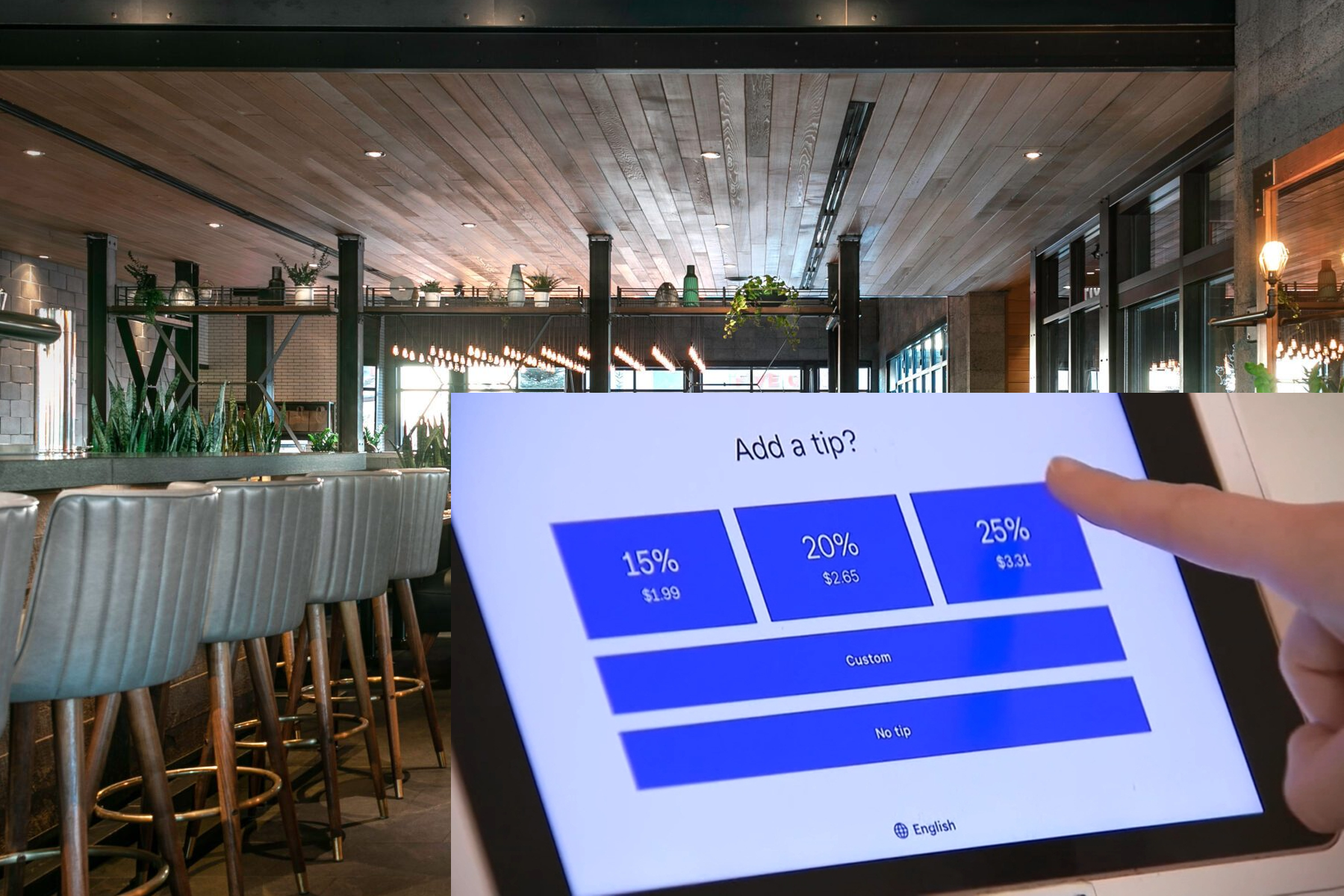
There is a specific, modern anxiety that occurs at the end of a coffee transaction or a quick service meal. It happens the moment a digital screen is swiveled toward you, displaying three pre-set percentages — often starting at 18 per cent and climbing towards 30 per cent — while a cashier watches in awkward silence. This “iPad flip” has become the symbol of a broken economic contract. What was once a gesture of gratitude for exceptional service has morphed into a mandatory social tax, designed to bridge the gap between a subpar minimum wage and a livable one.
As consumers, we have reached a collective saturation point. Most of us are feeling a “tip fatigue,” but our collective frustrations should not be directed at the employee behind the counter. It should be directed at an archaic system that allows employers to outsource their primary responsibility — paying their staff — directly to the customer’s conscience. We have reached the point where the consumer is no longer just a patron, they have been drafted into the role of a secondary human resources department, responsible for calculating and distributing the “bonus” that makes an employee’s lifestyle viable.
The fundamental problem with modern day tip culture is that it has begun to function as a moral shakedown. When you are prompted to tip 25 per cent for a takeout coffee or a sandwich from Subway, the software is not asking the consumer if the service was good, it is asking if you care about the person standing in front of you. It weaponizes empathy. We tip because we know that here in Ontario, the $17.60 minimum wage — which is what employees who receive tips are paid — is not a living wage.
In fact, the living wage for the Southwestern region of Ontario is $21.50 per hour as of November of 2025, not accounting for the Greater Toronto Area, which currently has a higher living wage of $27.50 per hour.
Historically, tipping was defended as a necessary bridge to a living wage because of “server minimums.” However, as of 2022, Ontario eliminated the lower liquor server wage, which at the time was $12.55 per hour, while the general minimum wage was $14.35 per hour. While this was a massive win for labour, the “expected” tip percentages have only trended upward. We find ourselves in a paradoxical loop: employees who receive tips are now legally entitled to the same base minimum wage as any other sector, yet the social pressure to provide a 20 per cent “top-up” remains higher than ever.
This, however, is sadly still an issue in the United States. Many states have what is referred to as “Tip Credit,” which allows employers to use credits from employees tips to pay them a wage lower than the minimum. For example, in the State of Arkansas, the minimum wage is $11 per hour, however, employers can pay their employees a minimum cash wage of $2.63 per hour, with a maximum tip credit of $8.37 per hour. This means that if an employee is making more than $8.37 per hour in tips, only $2.63 is coming out of the employer’s pockets each hour.
But why is the customer the one held hostage by this knowledge?
In almost any other industry, the cost of labour is factored into the price of the product. Like when you buy a new pair of boots or an iPhone, the company doesn’t ask you at the checkout if you’d like to contribute an extra $20 to ensure that the factory worker gets paid a living wage. They set a price that covers their overhead, including employee wages, and the customer decides if the product is worth that exchange.
By separating labour costs from menu prices, the service industry engages in a form of psychological pricing. It allows employers to keep menu prices artificially low to attract customers, while effectively adding a 15 to 25 per cent “silent surcharge” at the finish line. This lack of transparency is both deceptive and unsustainable. It forces the customer to take on the responsibility of making up the difference on employees’ take-home pay.
Beyond the economics, the onus on customers to pay salaries invites systemic unfairness. Research has found that tipping is rife with unconscious bias. In many cases, customers’ tipping behaviour is influenced by a server’s race, gender and age, rather than the quality of their work. By making a significant portion of an employee’s income dependent on the whims of a stranger, we subject them to a volatile and often discriminatory income stream.
An employee’s ability to pay their rent in an increasingly expensive society shouldn’t depend on whether a customer is having a bad day or holds internal prejudices. It should depend on a stable, predictable contract between them and the person who hired them.
The current “tip creep,” where prompts appear at self-service kiosks and retail counters, is the ultimate sign that the system is overextended. This expansion is not happening because service has improved, it’s happening because it is the easiest way for a business to offer “competitive compensation” without taking from their profits.
When an employer claims that they “cannot afford” to pay a living wage without the current tipping structure, they are essentially admitting that their business model relies on a public subsidy. If a business cannot survive while paying its employees a transparent wage that reflects the actual cost of living, it is not a successful enterprise — it is one that is propped up by the guilt of its customers.
The solution is a cultural shift toward “all in” pricing. Imagine a world where the price on the menu is actually the price you pay. The service is professional because the employees are treated as professionals with stable salaries. The “iPad flip” becomes a thing of the past because the transaction is a simple exchange of value, not a moral trial.
Moving to this model would mean that price of a sandwich or a cappuccino would likely increase, whereas a dine-in meal almost certainly would. And that’s okay. As consumers, we are already paying that higher price, we’re just doing the math ourselves at the end of our dinner under a cloud of social pressure. Bringing that cost into the light provides transparency. It allows employees to plan their lives with a predictable income and forces employers to take full ownership of their workforce.
The pressure we feel at the register is a symptom of a systemic failure to evolve. We have reached the tipping point. The responsibility for an employee’s livelihood belongs on the payroll, not in the tip jar. It is time to stop treating service workers like charity cases and start treating them like the professionals they are. It’s time to demand a system where “thank you” is a genuine expression of gratitude, and a wage is something guaranteed by an employer, not gambled on by a customer.