

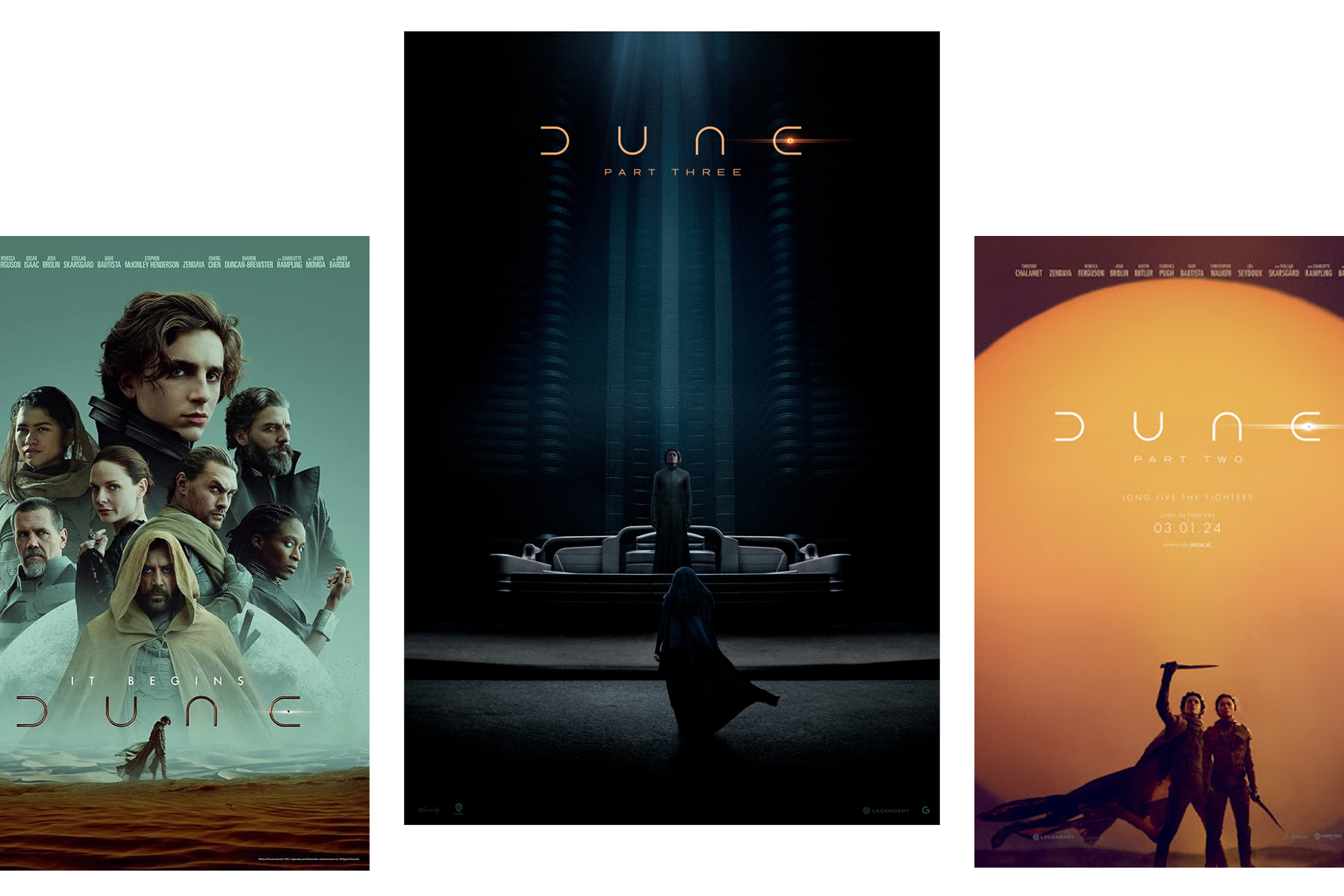
The first trailer for Dune: Part Three arrived with enormous anticipation — and an uncomfortable reality. For the first time, Denis Villeneuve isn’t fighting skepticism or expectation, but the limits of the story he’s adapting.
While I’m glad we’re getting the final installment so soon after Dune: Part Two, I’m beginning to question whether its conclusion can equal the epic it follows.
When Villeneuve’s Dune premiered at the Venice Film Festival in 2021, it carried decades of expectation. Frank Herbert’s 1965 novel had long been considered unadaptable for film, yet Villeneuve appeared to accomplish the impossible — or at least half of it.
The release of Part One made Villeneuve’s ambition clear even as audiences only saw part of a much larger story. The 2024 release of Dune: Part Two allowed Villeneuve to deliver the epic he had always set out to create.
Where Part One functioned as immersive and deliberate world-building, Part Two transformed the central story into a sweeping war epic, chronicling Paul Atreides’ ascension and the deeply uncomfortable consequences of that rise.
Taken together, the films represent one of the most ambitious undertakings in modern cinema, earning both critical acclaim and mainstream success despite the novel’s dense internal mythology.
Fueled by the demand generated by Part Two, Villeneuve began work on a third film earlier than expected. With the trailer’s arrival, the conversation around the franchise has reignited, yet it faces a more complicated situation than either previous film.
When Part One released, Villeneuve was working against decades of skepticism. Part Two had to surpass its predecessor while delivering a satisfying conclusion to the first novel. Dune: Part Three faces a different challenge entirely: the source material itself may not sustain the scale audiences have come to expect.
Set more than a decade after the events of Part Two, the next film will leap forward into a transformed world. Herbert’s Dune Messiah, the novel serving as Part Three’s foundation, is widely viewed as one of the more divisive entries from the original saga.
Smaller in scope and far more psychological, it functions less as an epic and more as a political tragedy, following a transformed Paul Atreides as he confronts the consequences of the religious war fought in his name.
The novel is an effective character study about the danger of heroes and the power they wield. Philosophically, it is essential to Paul’s arc. Yet it raises an important question: will audiences embrace a slower, more introspective political thriller after becoming accustomed to grand spectacle?
Ironically, that uncertainty is also what makes this conclusion so compelling. Having established the visual and thematic language of Dune across two films, Villeneuve now has more creative freedom than ever before. Rather than repeating what came before, he has the opportunity to reshape the story.
Still, this installment will face greater pressure than either of its predecessors. Attempting to conclude a cultural phenomenon while redefining its tone is a challenge that has undone more franchises than it has elevated.
Though Dune: Part Three may struggle to meet the immense expectations created by its predecessors, the fall of Paul Atreides represents the story Dune has been building toward from the beginning: the tragic conclusion to a triumphant story.