

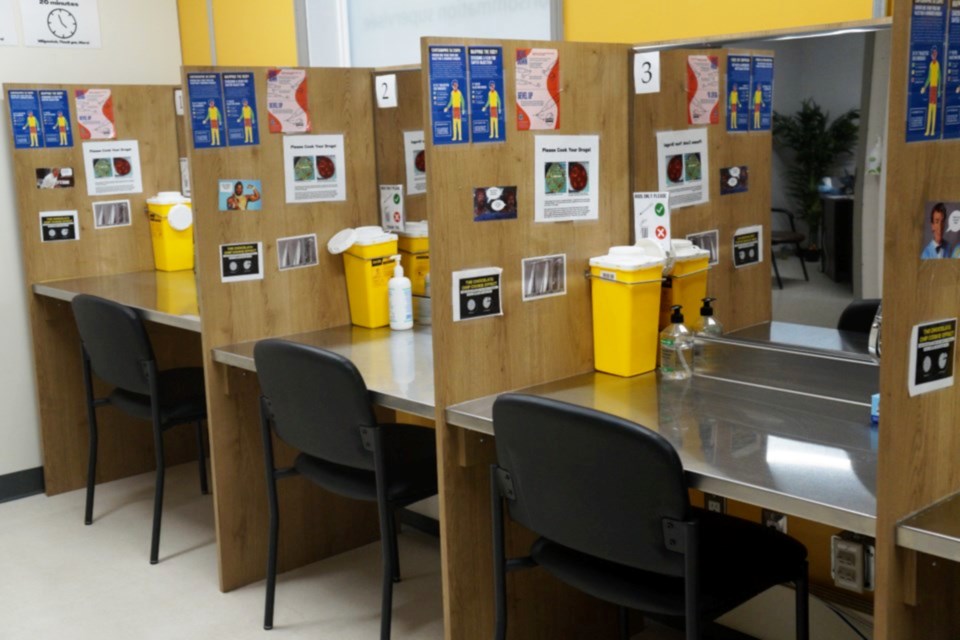
The Ford government is preparing to end the use of supervised consumption sites across the province, with an expected move to abstinence-based treatment options by June 13.
The Community Care and Recovery Act is a piece of legislation passed in 2024 that banned the use of safe consumption sites within 200 metres of schools and daycare centres.
The Act also prevented municipalities from acquiring funding for a supply of safe drugs or supporting another individual’s application in addition to blocking municipalities from seeking federal exemption for new sites.
At the time, the province claimed that the city of Toronto had a 113 per cent increase in assault and a 97 per cent increase in robbery in neighbourhoods near safe consumption sites compared to the rest of the city in 2023.
For Hamilton, the province claimed that there was a 195 per cent increase in violent crime in neighbourhoods with safe consumption sites compared to the rest of the city.
In the same announcement the province promised to invest $378 million to build “19 new treatment hubs.”
These sites will join the existing 27 Homelessness and Addiction Recovery Treatment (HART) hubs across the province. HART hubs will not provide needle exchange programs.
Critics of the move, such as the Women and HIV/AIDS Initiative (WHAI), have released statements expressing that plans to close safe consumption sites do “not align with research findings on harm reduction, health, community safety or drug policy.”
WHAI raises concerns surrounding cis and trans women as well as Two-Spirit and non-binary individuals in the province. WHAI notes that safe consumption sites serve marginalized communities “including sex workers and people from queer and racialized backgrounds.” They state that closing safe consumption sites will further isolate already marginalized groups.
WHAI notes that safe consumption sites have been critical tools in mediating health inequalities, citing how Black and Indigenous women are at “higher risk for HIV” after “opioid-related incidents.”
Health Canada notes that safe consumption sites save lives through harm reduction as they reduce risks associated with accidental overdose, serve as social service connection points, reduce public drug use and provide a place to discard drug use equipment, reducing the spread of diseases like HIV.
Data from Health Canada shows that from March 2020 to November 2025 across all safe-consumption sites in Canada, 51,858 non-fatal overdoses occurred compared to 0 fatal overdoses and 20,504 overdoses that required naloxone.
From January 2017 to November 2025, there were 5,637,853 total visits to safe consumption sites across the country.
The Canadian Civil Liberties Association (CCLA) has stated that the decision to end support for safe consumption sites will “make it harder to access essential, life-saving health services” during an “unprecedented toxic drug crisis,” in addition to a growing mental health and homelessness crisis.
The CCLA states that this decision will cost lives and place “vulnerable and marginalized people at greater risk”.
Cities across Ontario will need to be prepared for when the province ends support for safe consumption sites on June 13.