

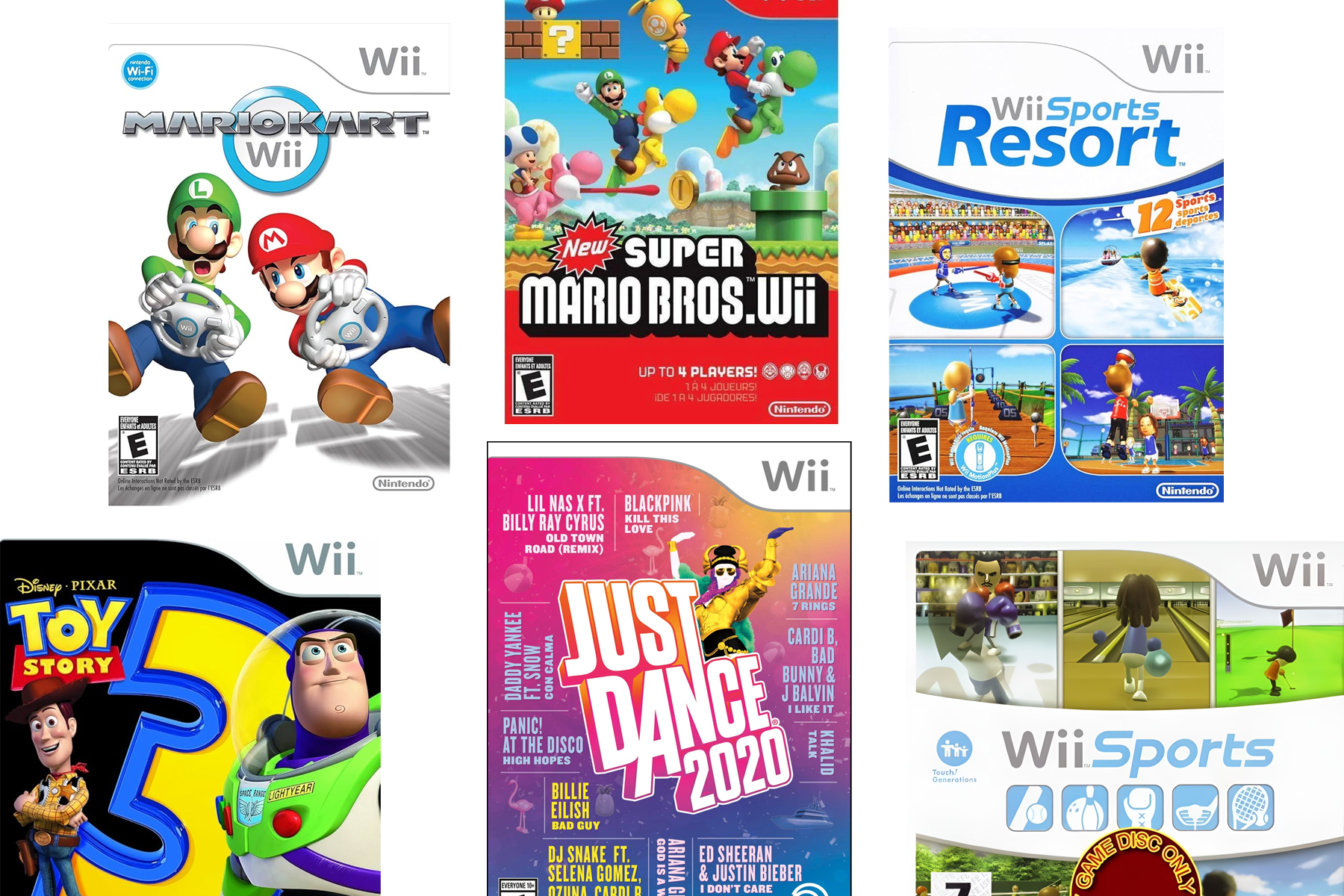
The production and commercialization of physical media is the only way to instill a true sense of ownership in consumers, which makes it incredibly disappointing that physical purchasing has never been more at risk.
As anyone who has spent more than 30 seconds browsing my collection of Brock Press articles will be able to tell you, I am an avid fan of Nintendo’s consoles and games. This has culminated in a personal collection of historical Nintendo products that has outgrown my bookshelf, including consoles, accessories, amiibo figures and strategy guides. Where my collection shines strongest, though, is in my actual selection of games, which covers a variety of console generations.
If there’s a GameCube title that I want to play, assuming I own it, I just search for its case on my shelf, spend a moment admiring its box art and manual, pop out the disc and click it into my system. It’s a basic yet beautiful process in which I get to enjoy the feeling of truly owning the game that I’m about to play.
It’s a shame that the next generation of gamers won’t be able to appreciate this feeling.
As more media turns toward subscription services and digital purchases, the concept of actually owning the media you consume is starting to erode.
Indeed, this issue is not unique to the world of gaming. Maybe you’ve been midway through a series on Netflix that suddenly became inaccessible or planned to read an e-book that magically disappeared from digital storefronts. What you’ve experienced is the downside of all-digital convenience — the idea that you don’t own the media you consume.
Nintendo, PlayStation and Xbox all offer some form of subscription service that allow players to enjoy games on their systems for a monthly or annual fee. For many players, this is an easy choice — rather than individually purchasing each game that they want to play, they pay a set fee that allows them to access a catalogue of fantastic titles that they can download or delete from their system on a whim. These subscription services provide access to tons of titles that players might not have tried otherwise, which also allows them to start (and quit) new games without the fear that they’ll spend their hard-earned money on a title that just isn’t for them.
Indeed, it’s impossible to blame the consumer for flocking to subscription services as a standard way to play games on their consoles. There’s a reason why Xbox Game Pass was once commonly referred to by gamers as “the best deal in gaming.”
The problem with subscription services is that they normalize the idea that you shouldn’t actually own your media; you should merely license it for temporary use at the behest of whichever company you’re paying for the privilege to enjoy it.
While Xbox Game Pass offers a much wider quantity of titles than my humble bookshelf, the two collections aren’t comparable. The selection of games on my shelf are mine to hold onto however long I please — I never have to worry that a Nintendo executive will march into my home and attempt to take those games from me. They’re mine now, just like they’ll eventually be my children’s when I choose to pass them on, and maybe even their children’s after that.
The same cannot be said for subscription services. If a company chooses to remove a title from a subscription service for any reason, there’s absolutely nothing to stop them from doing so. It doesn’t matter if you’re halfway through a game; that’s part of the trade-off you’re agreeing to.
This is also true for individually purchased digital titles. If you pay for a game on a digital storefront — which are usually priced the exact same as their physical versions — you still don’t truly own the title you’re purchasing, seeing as you’ve really only purchased a license to play it rather than the game itself, which can be revoked by the distributor at any time.
This is why it’s important to clarify that cartridges and discs usually contain the contents of the game on the cartridge or disc itself. Even if you’re somehow banned from playing that game on your console, there’s nothing to stop you from inserting the cartridge or disc into another console to play it again.
Someone who purchased a game digitally and has the content’s license directly linked to their console would not have the same benefit. That’s because the content isn’t actually yours; rather, the company is essentially just allowing you to access it.
This is why California enacted a law that requires companies selling digital goods to specify when the customer is purchasing a license rather than the product itself. The law aims to avoid false advertising by telling consumers when they’re paying for a digital product without actually receiving ownership over the content they’re about to purchase.
It doesn’t help that console manufacturers are now actively incentivizing consumers to buy digital by offering digital-only versions of their consoles, like the Xbox Series S or PS5 Digital Edition, both of which come without a disc drive at all. Each company hopes that saving some money on the hardware when you purchase it (compared to their more expensive counterparts with the disc drive included) will be enough to force you to go all-digital with your gaming. This, of course, allows them to make more money when you purchase games digitally since they won’t have to give a cut of the profit to the physical store that sold it to you.
But again, all of this comes at the expense of true ownership for the consumer.
Let’s be completely clear: for some people, this just doesn’t matter. Some players are adamant that they simply don’t care about physical ownership, and the convenience of all-digital gaming is worth the trade-off. It’s impossible to blame players for prioritising a cheaper console and the objective convenience that comes with not needing to swap discs every time you want to play a different game. If that sounds like you, I don’t blame you for it.
But this is still an issue worth educating consumers about so they can make an informed decision on how they want to play. No one should be misled into thinking they own their digital games if ownership is something they value. And for people who do value true ownership, it’s hard to see digital-only consoles as anything but a threat to the future of physical media.
Again, gaming is not the only industry that this affects. Whether you enjoy TV shows, movies or books, this is still something to consider in the way you consume media.
So, if you value ownership, consider buying your media physically instead of digitally. The next time you’re about to buy a book, movie, TV series or video game, ask yourself if it’s content you’d like to own forever. If having a collection is something you take pride in, then continue to support collecting in a time where it’s more at risk than ever before. Because if tech companies get their way, the days of cultivating beloved collections and owning what we love may soon be behind us.