

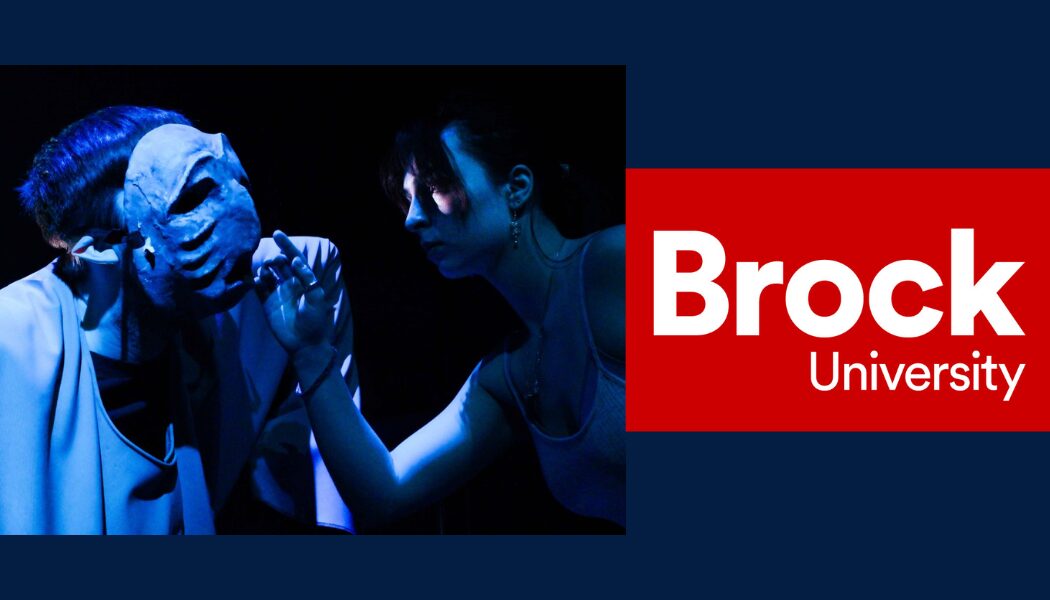
In an era of cinema polluted with remakes and theatrical sequels, there is a rare, electric energy found in a local theatre where students are building a world entirely from scratch. At the Marilyn I. Walker School of Fine and Performing Arts, the student-led company of DART 4D56: Collaborative Play Development didn’t just put on a play; they constructed a living, breathing nightmare. Their original production Enjoy Your Stay is a masterclass in atmospheric horror that leaves the audience “checking out” with lingering chills and a profound respect for the scrappy brilliance of student-led creation.
The DART 4D56 course, under the mentorship of instructor Alison Wong, is a unique incubator where students are tasked with operating as a fully functional theatre company. Since September, the group has lived and breathed this world, and that immersion was palpable the moment the house lights dimmed.
The play follows the staff of a mysterious hotel trapped under the influence of a malevolent spirit — a man living within the walls who exerts a terrifying level of control over the building and a woman he has enslaved for decades. The success of this premise relied heavily on the hotel feeling like a character itself.
Stewart Shaw, serving as the Technical Director and Lighting and Projections Designer, alongside Timothy Spencer Tozer, the Set and Props Designer, succeeded brilliantly in this world-building. From the eerie, flickering purple hues to the clinical, neutral tones of the staff’s environment, the visual language screamed “unsettling.” The technical execution was seamless.
During a post-show Q&A, director Leanne Brown revealed the grit behind the glamour: the company spent months rehearsing in a smaller studio, imagining the walls of the theatre before finally moving into the space in late March. The precision of the final blocking, managed by Stage Manager Emma Marcy and Assistant Stage Managers Sydney Bungard and Morgan Girard, is a testament to the discipline of the entire cohort.
The second half of the play is where the tension becomes nearly unbearable. This is a credit to the sound department led by Gianna Lupparelli Nash and assistant Katrina Orlowski, who also served as the production’s composer. The score used specific instrumental motifs — like the haunting clarinet for “The Man” (Henry) and the delicate violin for the Mother — to create a tether between the audience and the unseen horrors.
The eeriness was only amplified by the raw, piercing screams by the performers. Yet, even more chilling than the screams were the silences: the heavy, rhythmic sound of footsteps and the beautifully enacted non-verbal storytelling. A standout sequence involved a movement-based storytelling dance between Henry and the enslaved woman. It was a “show, don’t tell” triumph that communicated decades of trauma and obsession without a single line of dialogue. This sequence, bolstered by the vision of Movement Director Gianna Lupparelli Nash, bypassed traditional script constraints to strike a raw, emotional chord.
The aesthetic cohesion was rounded out by the Wardrobe and Makeup departments. Nav Brar (Head of Wardrobe), Morgan Girard (Costume & Makeup/Hair Designer) and Ella Martin (Costume & Mask Designer) managed the complex transitions of the “Gargoyles.” The use of masks to represent the loss of humanity was a striking artistic choice that added a layer of folk-horror to the production. These masks, combined with the timid, neutral browns and whites of the costumes, created a visual stasis that made the arrival of outsiders feel even more disruptive.
At the centre of the structural collapse is Edith, played with an overtalkative, anxious and brilliant energy by Sydney Bungard. Edith is introduced as the clumsy, shy and oversharing new hire, a character whose social awkwardness initially provides a lean-in for the audience. However, as the play progresses, Bungard masterfully tilts the axis of the performance, transitioning from a comedic disruptor to a tragic victim of the hotel’s cycle.
Bungard’s chemistry with Gabriela Queiros, who portrays the spiritually gifted Lilian, served as the production’s emotional anchor. A quiet moment where the two bonded over a pair of shoes offered a beautiful glimpse of girlhood and human tenderness in a world defined by its coldness, making their final confrontation and Edith’s tragic escape from the hotel’s clutches hit with devastating force.
The antagonism of the piece was handled with a chilling, slow-burn intensity. Colby Code portrayed Henry (The Man) with a menacing obsessiveness that felt heavy on the stage. Beyond his performance, Code also served as the Head of Stage Construction, quite literally building the world he sought to control.
This duality of roles was common in the company: Gianna Lupparelli Nash, who portrayed as the resolute Philomena, balanced her stage time with her duties as Movement Director, ensuring that the humanity of the staff’s tendencies was reflected in every twitch and robotic gesture.
Philomena serves as the production’s structural and emotional anchor, as the hotel manager, Nash embodied the “Lotus Inn” vibe perfectly, projecting a mask of professional hospitality that thinners to reveal a woman weary from decades of spiritual and psychological servitude. Central to the play’s tragic core, Philomena functions as a “capsule,” a vessel for Henry’s mother to inhabit in a grotesque attempt to preserve a memory at the cost of a life. Nash’s ability to pivot from the resolute authority of a manager to the warning, dying voice of a woman trapped in a cycle of obsession provided a chilling narrative payoff that underscored the play’s central thesis: that obsessiveness, even when born from love, is a destructive force.
Victoria Marshall as Nasta and Jaxson Schut as Kenneth portrayed a heartbreaking version of Stockholm Syndrome, bringing a tragic depth to the hotel’s permanent residents. Their performances captured the terrifying comfort of “home,” even when that home is a site of supernatural ruin. Marshall and Nasta embodied the quiet desperation of individuals who had forgotten — or never known — any reality outside of the hotel lobby.
Even the gargoyles and workers, portrayed by Leanne Brown, Emma Burnagiel, Erika Mouck and Timothy Spencer Tozer, maintained a rhythmic, timid neutrality that kept the audience on edge, reminding us that in this hotel, even the walls have eyes.
The complexity of the plot is a testament to the Scripting Team, comprised of Leanne Brown, Victoria Marshall, Emma Marcy, Erika Mouck, Katrina Orlowski and Jaxson Schut. Writing a cohesive horror story from scratch as a collective is a monumental challenge, they accomplished phenomenally.
Behind the curtain, Production Manager Emma Burnagiel and Assistant Production Manager Nav Brar, kept the “hotel” running, while Stewart Shaw doubled as the Technical Director to ensure the ambitious projection cues and lighting shifts went off without a hitch.
Enjoy Your Stay ends not with a jump scare, but with a lingering sense of melancholy. As the hotel falls apart, Nasta and Kenneth’s decision to stay because it is the only home they have ever known is perhaps the most horrific realization of all.
This production is a triumphant reminder of why we must continue to support original, local theater. The DART 4D56 students didn’t just pass a course; they proved that they are a formidable theatre company ready for the professional stage. If this show is any indication of the future of Canadian drama, the industry is in very capable, and slightly terrifying, hands.
To the entire company: thank you for the very enjoyable stay.