

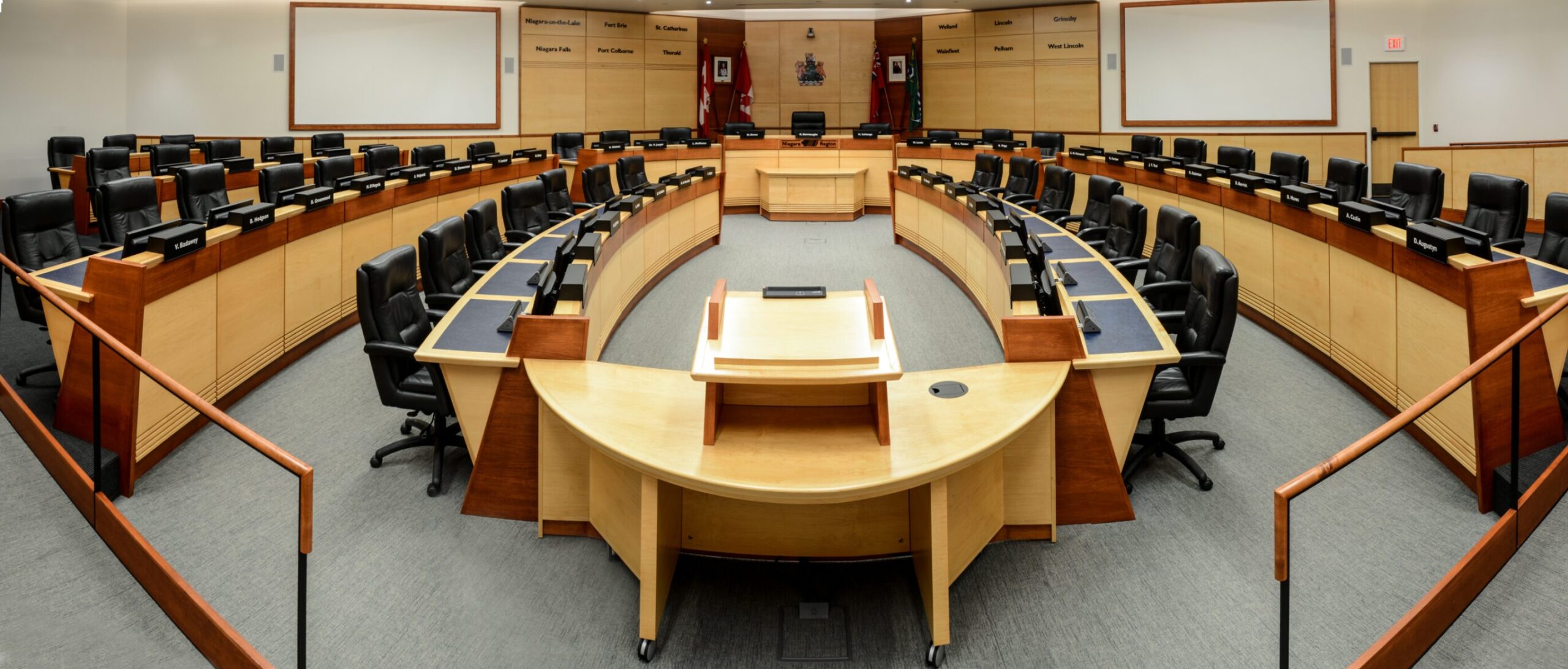
The 2026 municipal elections will take place across Ontario on Monday, Oct. 26 from 10 a.m. to 8 p.m.
Municipalities are made up of the elected mayor and councillors. Larger municipalities may also divide into wards, which are smaller geographic areas, granting specific neighbourhoods dedicated local councillors to represent their values.
Ontario is home to 444 municipalities, of which 12 are in Niagara Region, this includes Fort Erie, Grimsby, Lincoln, Niagara Falls, Niagara-on-the-Lake, Pelham, Port Colborne, St. Catharines, Thorold, Wainfleet, West Lincoln and Welland.
Who can vote?
Canadian citizens above the age of 18 who are residents, property owners, or the spouse of an owner or tenant in that municipality are eligible to vote. In other words, if you or your spouse rent or own property, you are eligible to vote for the municipality in that jurisdiction.
If you are a student, you can vote in every municipality where you fit the above criteria. If you reside in two different places — one when you’re attending school and one when you’re not — you are eligible to vote in both municipalities.
To vote for candidates in a specific ward, you must be a Canadian citizen, 18 or older and you or your spouse rent or own property within that specific geographic jurisdiction. You can only vote in one ward of your choosing.
How can you vote?
First and foremost, make sure you are registered and eligible to vote in your municipality. Click here for a link to registration
The actual voting process looks different across the twelve municipalities, but for a simple breakdown: St. Catharines, Lincoln, Niagara-on-the-Lake, Thorold, Pelham and West Lincoln accept advanced paper ballot and online voting or day of paper ballot; Grimsby accepts advanced paper ballot, by phone and online voting or day of paper ballot; Port Colborne accepts advanced paper ballot and vote by mail, or day of paper ballot; Fort Erie accepts advanced and day of paper ballot and online voting; and Niagara Falls and Welland accept advanced and day of paper ballot.
For more information regarding voting locations, candidates, advanced voting, and more, all of the municipalities’ voter information cites are linked below.
- Fort Erie voter information
- Grimsby voter information
- Lincoln voter information
- Niagara Falls voter information
- Niagara-on-the-Lake voter information
- Pelham voter information
- Port Colborne voter information
- St. Catharines voter information
- Thorold voter information
- Wainfleet voter information
- West Lincoln voter information
- Welland voter information
Why should you vote?
Ontario holds municipal elections every four years. The 2022 election saw a voter turnout of 32.9 per cent.
For comparison, the 2021 and 2025 federal elections had a voter turnout of 62.6 and 69 per cent, respectively. The 2022 and 2025 provincial elections in Ontario had a voter turnout of 43 and 45 per cent respectively.
This is a common trend throughout Canada’s voting history where the more localized an election is, the less people vote even though the actions of local governments directly impact their daily lives. As well, comparatively to provincial or federal governments, local governments are much more accessible and likely to have your voices heard in the decisions they make.
Municipal governments are granted authority through the provincial government to build, own and maintain the foundational systems of your local community.
Every time you drink water, flush a toilet, shower, that is the municipal government’s work.
Every time you’ve ran over a pothole, had access to the road after heavy snowfall, missed your bus and had to wait an hour for the next one, never had the chance to catch a bus because you live in Thorold or it’s Sunday, or had a relatively smooth journey, that is the municipal government’s work.
Every time you’ve passed a green light or stopped at a red light, that is the municipal government’s work.
The reason your house isn’t filled with garbage, compost and recycling is the municipal government’s work.
Every time you’ve eaten at a restaurant with an ease of mind that you will not be poisoned is the municipal government’s work. Or if you’ve ever had negative side effects from eating at an unhygienic place, that’s also the municipal government’s work.
Municipalities also manage and decide funding for local police departments, fire protection services and emergency medical response.
Every house, restaurant, café, park, library and museum that you have ever stepped foot in are located, funded, maintained and/or operated by municipalities.
The development and support for local social housing programs are the works of municipalities.
All of these decisions are funded largely by property tax, as well as user fees and service charges — this includes public transit fares, recreation center admissions, parking and water/wastewater utility bills — as well as provincial or federal grants.
You get to play a part in who makes those decisions by voting on Oct. 26.