

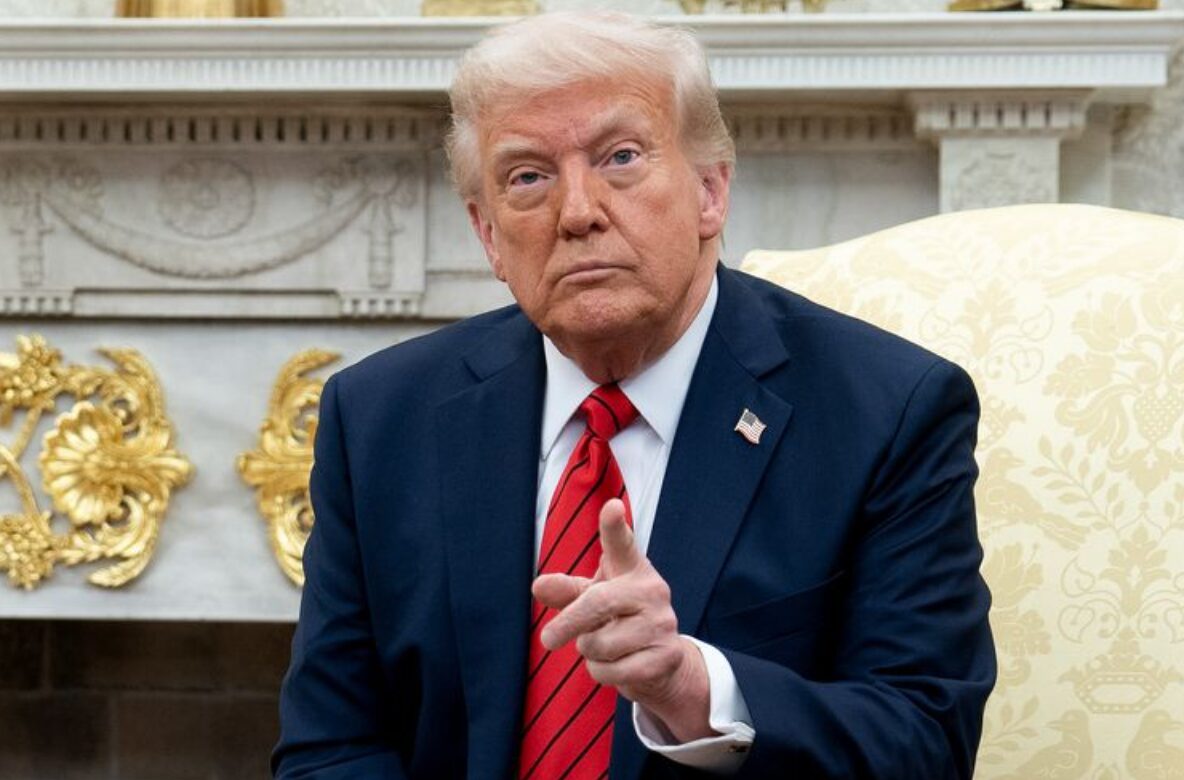
On Sept. 18, President Donald Trump announced that CNN, MS NOW and Politico would no longer be allowed inside the White House, sparking a dispute between the Trump administration and the news organizations that later led to a federal lawsuit and a judge involved to restore their access.
“I am proud to announce that, effective immediately, I am banning Fake News CNN, MSNOW (who recently changed their name from MSNBC due to lack of viewership and credibility!), and Politico […] from the White House as a result of their constant ‘reporting’ fake news!” Trump wrote on Truth Social on Sept. 18.
As Trump accused the three outlets of reporting “fake news,” his administration added that other news organizations could also face restrictions.
According to an article by ABC News, DOJ senior counsel Michael Velchik defended the decision, arguing that “Access is [to the White House] a privilege — not a right,” thus there should be authority over who gets in.
On Sept. 19, the restrictions took effect. CNN reporter Betsy Klein, MS NOW reporter Akayla Gardner and Politico reporter Cheyenne Haslett were the journalists who were denied entry to the White House. Their press credentials, which initially allowed them to get in, had been deactivated and some were confiscated.
In response, members from Politico and MS NOW stated they intend to “vigourously” defend the public’s First Amendment rights — which protect freedom of religion, speech and the press and the right to peacefully assemble and monitor the government.
In the meantime, the three organizations continued reporting from outside the White House while also challenging the administration’s decision legally.
On Sept. 21, CNN, MS NOW and Politico filed a lawsuit against Trump and the administration.
They argued the ban violated their First Amendment rights, as they were denied access based on their reporting. They added that the administration violated their Fifth Amendment due process rights by taking away their credentials without a warning and denying them the opportunity to respond.
“The Constitution does not allow a president or any other government official to deprive the press of their First Amendment rights and liberty and property interests with no notice or process based solely on his dislike of the content of their reporting,” said the media organizations collectively in a complaint filed for the U.S. District Court for the District of Columbia in an article posted by the New York Times.
The news outlets asked for a federal judge to restore their access while the lawsuit continued. The case was assigned to U.S. District Judge Timothy Kelly, who was appointed by Trump during his first presidential term.
On the morning of Sept. 24, Kelly ordered the Trump administration to restore the reporters’ access to the White House.
According to an article in Time, Kelly “ordered that journalists from the banned media outlets should have their White House access reinstated until further order of the court or the expiration of this temporary restraining order.”
The temporary restraining order would last for 14 days. Kelly found that the news organizations were likely to succeed in arguing that their First and Fifth Amendment rights had been violated, especially since their passes were taken away without proper legal justification.
However, on the same day as Kelly’s issued order, journalists from CNN, MS NOW and Politico were turned away from the White House again. They responded immediately, asking the judge for an emergency hearing.
According to a CBS News article, the White House said it had begun restoring the reporters’ credentials after receiving notice of the ruling. The administration began restoring the credentials at about 7:25 a.m.
The reporters were eventually allowed back onto the White House grounds around midday, but only partially.
An article by The Guardian reported that journalists from CNN and MS NOW were still denied access to the White House state dinner that was hosted that Thursday evening in honor of China’s president, Xi Jinping, despite the judge’s ruling.
“About an hour before Xi’s arrival was scheduled, the White House said CNN could cover the event, but only with a photojournalist and audio technician, notably excluding the network’s editorial team consisting of a reporter and producer,” said CNN representatives in that article.
An MS NOW reporter was also banned from covering that same dinner, despite using the restored credentials.
On Sept. 25, CNN restored their position in the five-network television pool after losing it earlier that week in the initial bans; however, the White House shared that CNN reporters would not be allowed to travel with Trump on Air Force One for his Saturday trip to Knoxville, Tennessee. CNN was instead replaced by conservative news networks Real America’s Voice and Lindell.
Kelly’s order specifically addressed the reporters’ access to the White House itself but did not address Air Force One or television pool details. For now, the lawsuit is still ongoing. Kelly’s temporary restraining order lasts for 14 days, meaning the court has not made a final decision about whether the administration’s actions were lawful.
Given Kelly’s ruling, CNN, MS NOW and Politico reporters can again enter the White House. Although, concerns remain over their access to certain presidential events and travel.
The court will continue considering whether the outlets should maintain access while the lawsuit moves forward.