

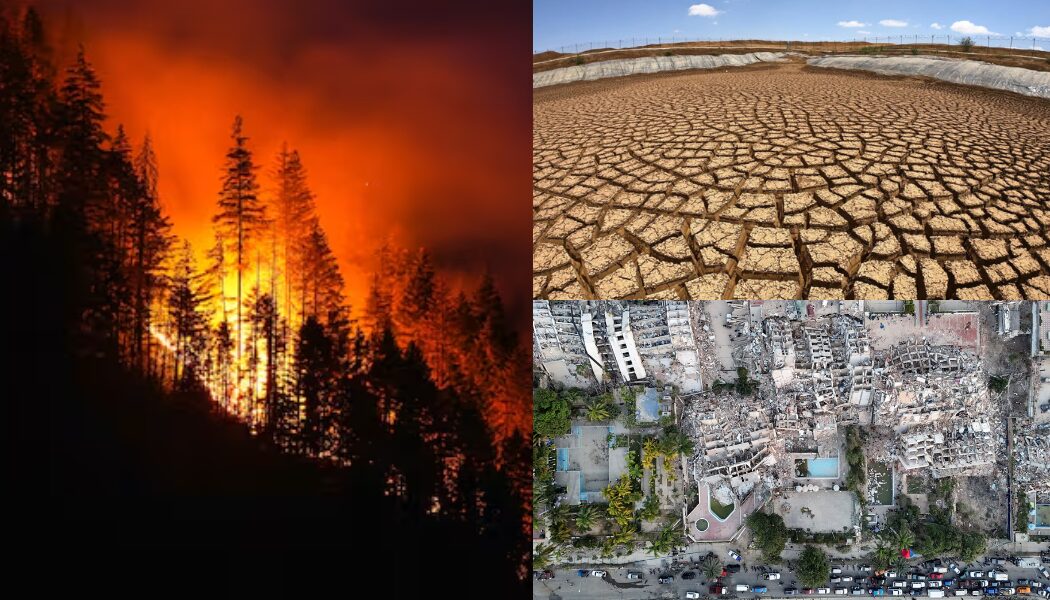
Himalayan glaciers collapsed, unleashing walls of mud and water across the Kathmandu Valley, which tore down infrastructure and caused the deaths of 1,453 people, with over 5,200 still missing as of Oct. 1, without waiting for diplomatic clearances.
Deadly heatwaves took over Europe, Asia, Africa and North America, with over 35,000 deaths recorded in Europe during the four back-to-back heatwaves this summer, without acknowledging borders. The prolonged dry season caused record breaking wildfires in Indonesia, burning 107,465 hectares of land between January and June and an additional 95,000 hectares of land in just July, without respecting political jurisdictions.
Yet, when the muddy floodwaters recede and surviving communities demand accountability, turning to global institutions designed to safeguard human dignity, they run into a rigid seventeenth-century legal barrier: the doctrine of absolute national sovereignty.
We inhabit a hyper-globalized world of borderless supply chains, instantaneous capital transfers and interconnected atmospheric systems. But while our problems, markets and ecologies are seemingly borderless, our accountability remains trapped behind iron curtains of sovereignty. What was originally conceived as a legal doctrine to protect self-governing states from foreign invasion has quietly mutated into a fortress behind which powerful nations externalize catastrophic physical and financial ruin onto vulnerable populations with total impunity.
You cannot have a globalized reality without global accountability. To pretend otherwise is to accept a predatory international order where powerful states privatize the benefits of global reach while retreating behind sovereign borders the second the invoice arrives.
The tragedy in Nepal lays bare the fatal asymmetry of this architecture. Nepal’s cumulative historical contribution to global greenhouse gas emissions sits at less than 0.1 per cent. The nation did not build its economy on centuries of coal-fired industrialization, massive automotive expansion or state-subsidized oil exploration. Those policy decisions were debated, funded and enacted thousands of miles away, in the legislative chambers, corporate boardrooms and treasury departments of the Global North and major industrialized powers.
A fraction of industrialized countries, concentrated predominantly in the Global North have produced the overwhelming bulk of historical carbon emissions since the dawn of the industrial era. Domestic energy choices are treated as sovereign prerogatives: internal affairs intended to drive domestic GDP, secure national power grids and preserve standard-of-living metrics for domestic voters. The economic benefits accumulate locally while the physical cost is exported mostly on the shoulders of the Global South.
It is mathematically demonstrated how “for every extra degree Celsius of warming, air can hold 7% more water.” In Earth’s atmosphere, this has translated to normal monsoon currents transforming into supercharged atmospheric deluges. There is a direct correlation between carbon emissions, global temperatures rising and the catastrophic weather disasters we are witnessing, yet there is no way to hold nations or corporations accountable.
The world’s major emitters take refuge behind the shield of state sovereignty. International climate summits are deliberately structured around “Nationally Determined Contributions,” a polite euphemism ensuring that emission cuts remain voluntary and non-binding. Any effort to establish enforceable loss-and-damage mechanisms with compulsory judicial authority is systematically blocked.
Instead of legal liability, high-emitting states offer modest humanitarian relief, small token checks accompanied by solemn condolences. By dressing up transboundary devastation as an act of God and framing their response as benevolent charity rather than legal compensation, wealthy states use their sovereign immunity to dictate the terms of survival, evading any precedent that might hold their domestic policies legally culpable for deaths outside of their jurisdictions.
This exposes the fundamental fiction of absolute sovereignty in modern geopolitics: it is an asymmetric privilege wielded by the powerful.
When a developing nation experiences a debt crisis, international lending institutions routinely demand structural adjustments that dismantle local public healthcare, privatize domestic water utilities and eliminate food subsidies. In those moments, the sovereignty of the indebted nation is treated as an inconvenience to be set aside. Yet when nations ask for an international tribunal to hold industrial giants accountable for washing away its hydroelectric dams and agricultural valleys, state sovereignty is suddenly resurrected as a sacred, untouchable constitutional barrier.
The defence for absolute sovereignty follows the argument that eroding state autonomy is a slippery slope toward international overreach. It insists that national sovereignty remains the only defence that weaker countries possess against foreign interference.
That defence misdiagnoses how power actually operates today. Domination in the twenty-first century rarely arrives via invading gunboats. It arrives through cross-border externalities, like transboundary environmental degradation, financial volatility and tax arbitrage, that cripple vulnerable states without firing a shot. Clinging to absolute sovereignty does not protect weaker nations from external aggression; it disarms and deprives them of any legal forum where they can hold the real authors of its disasters to account.
Moreover, the international community already routinely surrenders sovereignty whenever the interests of global capital demand it. Modern nations willingly tie their hands to join the World Trade Organization, submit their domestic regulations to investor-state dispute settlement (ISDS) panels and accept harsh sanctions if they violate international intellectual property rules.
If the global order can readily pierce the veil of national sovereignty to protect corporate profits and foreign investments, it is sheer cynicism to claim that sovereignty is too sacred to breach when human lives and the biosphere are on the line.
The illusion of the self-contained state has collapsed under the weight of a changing climate. So long as the carbon emitted in one capital can drown civilians in another, consequence-free statehood is simply a polite title for unchecked coercion. Until accountability travels as freely across borders as greenhouse gases, sovereignty will remain a myth only utilized to protect the powerful.