

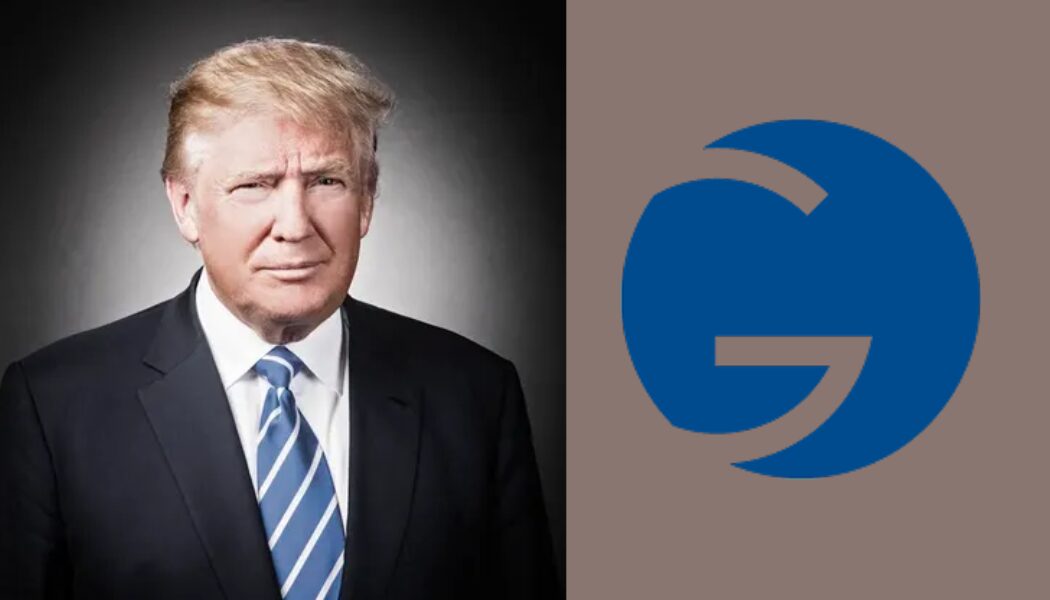
Donald Trump faced two new lawsuits in the span of three days, as a U.S. food importer challenged his 50 per cent tariff on Canadian goods and a shareholder of Circle Internet Group accused the president of illegally profiting from foreign investments.
Food importer sues Trump over tariffs on Canadian goods
Gellert Global Group, a New Jersey-based food importer, filed a lawsuit against the Trump administration on Oct. 20, challenging the president’s use of an old trade law to impose 50 per cent tariffs on Canadian goods.
Trump’s administration used Section 338 of a 1930 trade law to impose 50 per cent tariffs on Canadian goods, including cheese, wine, furniture, clothing and hockey equipment. Section 338 of the 1930 Tariff Act allows the president to impose tariffs of up to 50 per cent on goods from countries that discriminate against U.S. trade.
The tariffs took effect on Aug. 22 and initially affected about 20 billion U.S. dollars’ worth of Canadian products, with additional restrictions and import bans added later.
Sara Albrecht, CEO of the nonprofit Liberty Justice Center — the organization that filed the lawsuit on Gellert’s behalf — told CBC News that “using the Section 338 […] a dormant statute from 1930 that has never been used before […] we should do something about it.”
“This case is not about the president. It is about the presidency,” said Albrecht in her statement. “No president should have the power to pull a dormant statute off the shelf and use it to impose sweeping tariffs or import bans without the limits Congress required.”
Gellert has felt the impact of the tariffs, fuelling its need to win the lawsuit. Its Canadian division sells American-made cheeses in Canada, leaving the company exposed to tariffs in both directions.
“These tariffs disrupt those relationships overnight and create costs and uncertainty that ripple through the entire supply chain,” said Thomas Gellert, the company’s co-CEO, in a post by the Liberty Justice Center.
The tariffs have raised costs for U.S. importers of Canadian goods, including cheese that was previously exempt under the Canada-U.S.-Mexico Agreement. Gellert says it will absorb the extra costs until the end of the year, but the added expense is putting pressure on its finances and delaying hiring and investment. If the tariffs continue, the company may have to raise prices, lose customers and face supply disruptions.
“This has real world consequences on not just the importers but the consumers in both countries,” Albrecht told CBC News in an interview.
Importers in Canada may compensate for the new tariff costs by increasing their prices, while exporters could lose sales as their products may become more expensive or face restrictions.
For updates regarding the status of this lawsuit, Gellert Global Group Corp v. Trump, 26-cv-4636, U.S. Court of International Trade, details can be found on the Liberty Justice Center website.
Shareholder sues Trump for profiting from foreign crypto deals
Two days later, on Oct. 22, a shareholder of Circle Internet Group filed a lawsuit against Trump, his family’s cryptocurrency company World Liberty Financial and others over alleged financial deals linked to the United Arab Emirates (U.A.E.).
J. Benjamin Greenberg, a software engineer and former Circle employee, claims that Trump violated the Constitution by accepting benefits from foreign governments without Congress’ approval.
The lawsuit focuses on two deals that Greenberg argues allowed Trump to profit from foreign investments while potentially harming a competing company.
The first deal involved selling a 49 per cent stake in World Liberty Financial for 500 million USD to an investment firm allegedly backed by a senior U.A.E. official. Greenberg claims Trump-related businesses received more than $75.5 million USD from the deal after Trump took office.
The second deal involves a $2 billion USD investment in the cryptocurrency exchange Binance by a U.A.E. government-linked investment fund, using World Liberty’s USD1 stablecoin.
USD1 is a stablecoin, a type of cryptocurrency designed to maintain a steady value by being tied to the U.S. dollar. It competes with USDC, a stablecoin issued by Circle.
Greenberg highlights these in his lawsuit because Trump could benefit financially from foreign-linked investments while his family’s crypto company competes with Circle. He also claims that these deals diverted business away from Circle, potentially hurting the company and its shareholders.
“The President brazenly violated the Constitution in order to enrich himself, his family, and his business, at a direct cost to Circle,” Greenberg said in a Spectrum News article. “He needs to be held accountable.”
The case does not mean Circle itself sued Trump. According to a company spokesperson in this article, “Circle did not initiate, direct, authorize or participate in the filing.”
World Liberty spokesperson David Wachsman said the company is “compliant with all U.S. laws and regulations,” adding that the allegations lack merit. The White House also denied any conflict of interest, saying Trump’s assets are held in a trust.
Greenberg asked the court to make Trump return the payments from the deals, disclose any other cryptocurrency payments from foreign governments and pay other damages.
–––
The lawsuits concern different industries, but both challenge Trump’s use of presidential power. Though neither lawsuit has proven that Trump acted unlawfully, they test the legal limits of presidential power and raise questions about the relationship between government decisions and personal business interests.