

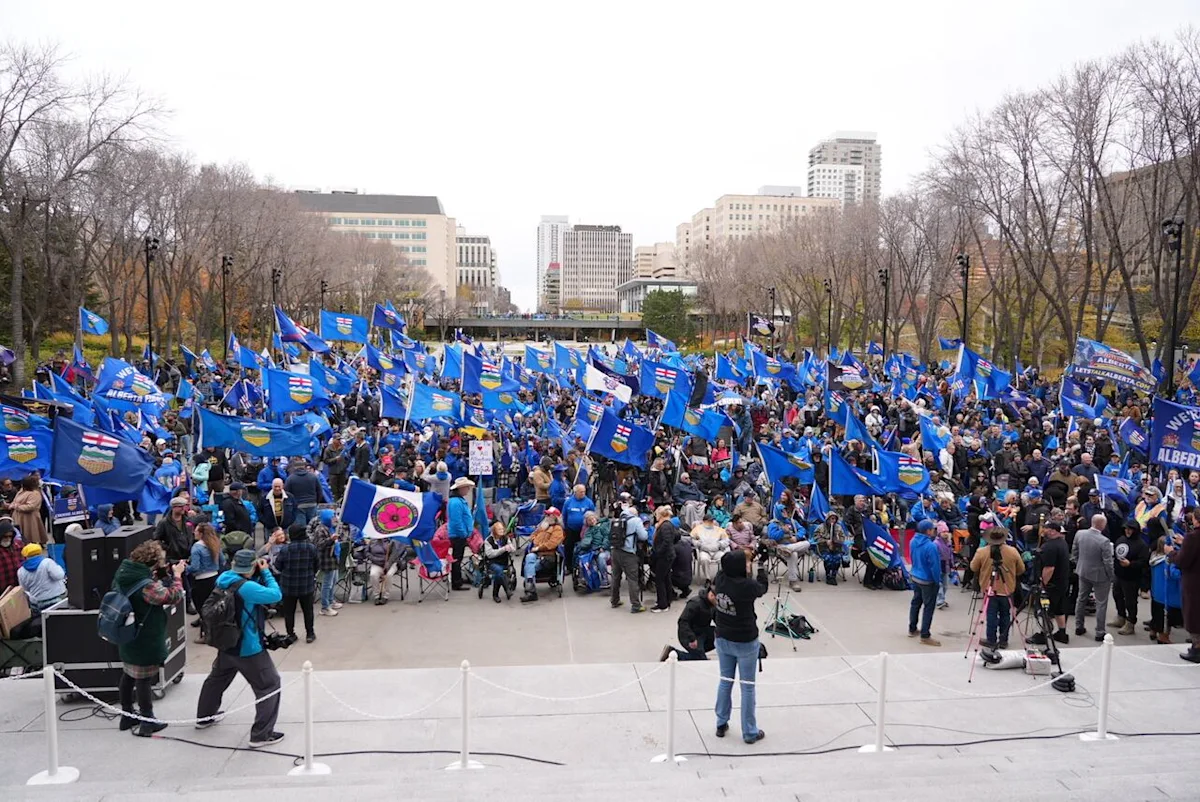
On Oct. 19, Alberta voters decided whether to hold a formal referendum gauging the public’s interest in separating from Canada as the province’s separatist movement continues to grow amidst long-standing tensions with the federal government.
Preliminary results showed that 75 per cent of voters opposed beginning the separation process and 15 per cent of voters supported it. If the proposal had been passed, Alberta would not have immediately split from Canada, but the result would have advanced the process toward a future vote on whether the province should separate from Canada.
“I’m really happy with [the result],” Alberta resident, Anthony Gellatly, said in a video from the Associated Press. “At the end of the day, we’re all Canadians, right? It doesn’t make any fiscal sense for Alberta to leave.”
Prime Minister Mark Carney also welcomed the result, describing it as a victory for national unity.
“It’s a great result for Canada, [I’m] thrilled that Albertans have chosen unity, they’ve chosen to build together, they’ve chosen to continue to take care of each other, [and] to move forward together with purpose [and] high ambition,” Carney said in a video posted by CPAC following the referendum results.
However, separatist leaders and members view the result differently, arguing that the campaign brought conversations of independence into broader political discussions, which supports their movement.
“As far as I’m concerned, you know, we’ve already won,” separatist leader Jeffrey Rath said in a video by the AFP News Agency. “We’ve created a massive movement in this province; we’ve dominated the conversation.”
Another separatist, Roger Hodkinson, added to Rath’s message in the same video.
“This is merely something to energize us to complete the process,” he said.
Alberta Premier Danielle Smith called the referendum on May 21, despite opposing the idea of provincial separation.
“I support Alberta remaining in Canada … I also believe Albertans deserve a say.” Smith said at a virtual assembly co-hosted by former Opposition leader and conservative elder statesman Preston Manning and former B.C. premier Gordon Campbell.
Following the results, she addressed the province and committed to respecting voters’ decision in a statement.
“Yesterday, Albertans voted overwhelmingly in favour of remaining a province of Canada,” Smith said. She added that she does not plan on holding another separation referendum while serving as premier.
However, despite supporting Alberta’s stay in Canada, Smith emphasized that defending Alberta’s interests against federal policies remains a priority, acknowledging past tensions.
“We will use every legal and political tool at our disposal to protect and advance the interests of Albertans,” she said. “And when Ottawa interferes with those rights, we will be unrelenting in our response.”
Smith’s decision to call the referendum follows years of disagreements between Alberta and the federal government, particularly over the province’s energy industry and its economic future.
Alberta’s economy has long depended on oil and gas. According to CBC News, the 2014 oil price crash contributed to economic hardship across the province, with unemployment rising substantially above the national average and some residents struggling with the cost of living.
Alongside the oil price crash, there have been numerous pipeline projects cancelled by the Canadian government — such as the Northern Gateway, Energy East and Keystone XL pipelines. These projects were seen to expand Alberta’s energy industry and support them economically. The project cancellations fuelled concerns among Albertans that federal decisions were now limiting the province’s economic opportunities.
Additionally, federal energy policies fostered more tension. In 2017, former Prime Minister Justin Trudeau angered Alberta politicians when he suggested Canada needed to “phase out” its dependence on oil sands and fossil fuels as part of Canada’s climate action efforts.
Alberta politicians pushed back, arguing that the fossil fuel industry was essential to the province’s economy and supported jobs across Canada.
“I am sick and tired of people attacking our oilsands,” Wildrose Leader Brian Jean said in an interview with CBC. “The economic benefits of the oilsands are immeasurable.”
Tensions continued as the federal Liberal government introduced climate policies, including a national carbon tax, that Alberta leaders argued threatened the province’s oil and gas industry.
Finally, decisions made by the government during the COVID-19 pandemic fostered more tensions between Alberta and Ottawa, as many in Alberta opposed the public health restrictions and vaccine mandates. Albertans feeling forced to take a vaccine they didn’t want caused protests on the streets. According to a CBC News analysis, some of these activists and protesters later became involved in Alberta’s separatist movement. The 2022 Freedom Convoy emerged at the time, which brought these groups together, with some eventually embracing the idea of independence as a way to challenge Ottawa’s authority.
Former Alberta Premier Jason Kenney told the Associated Press that the pandemic and the Freedom Convoy helped shift some activists toward separatism.
“They needed a new cause,” Kenney said. “And it naturally morphed into separatism.”
Together, these economic and political frustrations over the years fuelled the separatist movements that called for the referendum on Alberta’s future in Canada.
Despite the referendum result, separatist leaders say they will continue advocating for independence and greater provincial control.
For Smith, the next step is to continue defending Alberta’s interests through political and legal action. Carney and the government will emphasize maintaining national unity while addressing concerns that fuelled Albertans’ separatist movement.
Although Alberta remains part of Canada, the tensions behind the referendum remain. The future of the separatist movement will depend on how Alberta’s leaders, the federal government and separatists respond to these ongoing disagreements.