

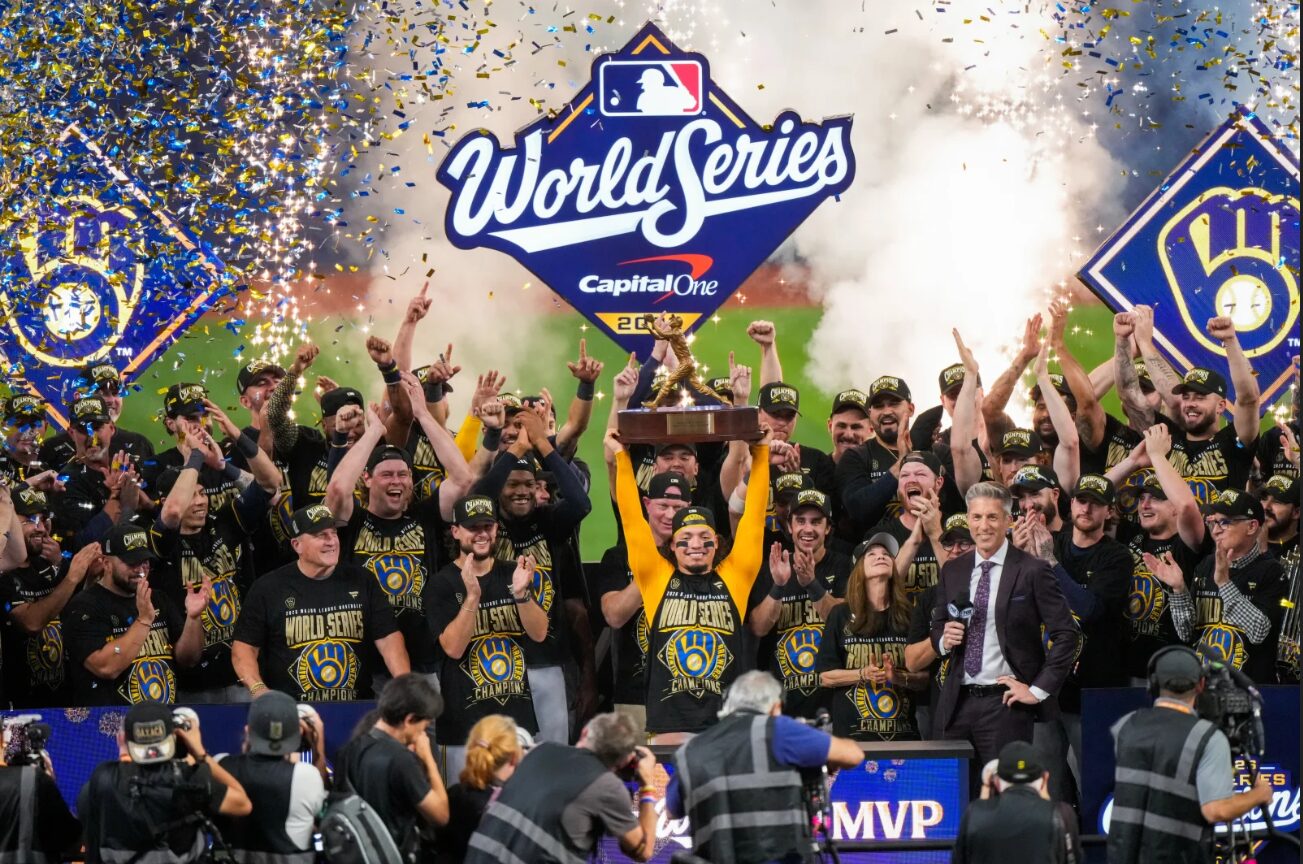
The Milwaukee Brewers and Tampa Bay Rays opened the World Series in a matchup that meant more than a chance to win a championship. With both teams among the MLB’s lowest spending clubs, the series came at a time when the league is preparing for a major labour dispute over how teams spend their money.
The Brewers took control early, winning the first three games by scores of 3-2, 5-4 and 10-1. Tampa Bay responded with a 4-3 victory in game four, but Milwaukee closed out the series with a 4-1 win. The result showed how a team built without one of baseball’s biggest payrolls can still put together a roster capable of winning it all.
With both franchises seeking their first World Series title, Milwaukee’s victory also gives the league another example of how player development and roster construction can compete with spending power.
According to USA Today via the MLB Labor Relations Department, Milwaukee’s payroll sits around $143.5 million, ranking 19th, and Tampa Bay with $98.3 million, ranking 25th. Both payrolls are well below the spending levels of some of baseball’s wealthiest franchises, like the Dodgers, who have a $338 million payroll, which is more than the two teams playing in the World Series combined.
The matchup is also the first World Series in which the lowest spenders will face each other since 1991, when the Minnesota Twins beat the Atlanta Braves.
Despite the financial gap between teams, the Brewers and Rays have shown that building a competitive roster involves more than signing the biggest names available. Both organizations have developed reputations for finding talent through scouting, making smart trades and developing players within their systems.
Milwaukee finished the regular season with a franchise record 103 wins before sweeping the Los Angeles Dodgers in the NLCS.
Tampa Bay finished with 97 wins, sweeping the New York Yankees in the ALDS and then defeating the Cleveland Guardians in the ALCS.
Neither team has won a championship before, adding to the excitement of the World Series.
The Brewers last appeared in the championship in 1982 when they lost to the St. Louis Cardinals in seven games. The Rays have reached the World Series twice in 2008 and 2020 but lost to the Philadelphia Phillies and the Dodgers.
A championship would give either franchise its first title, providing another example of how teams can compete without spending at the same level as baseball’s biggest markets.
However, the financial difference between the teams is at the centre of the MLB’s upcoming collective bargaining negotiations. The league’s current agreement with the MLBPA expires Dec. 1 and a lockout is a growing concern as both sides prepare for negotiations that could affect the 2027 season.
One of the biggest disagreements involves a salary cap. The MLB has proposed introducing a cap and a salary floor, arguing that spending limits would help create a more competitive league. Under the league’s initial proposal, the 2027 salary cap would be set at $245.3 million, a salary floor of $171.2 million, a 50-50 revenue split between clubs and players, and local revenues being centralized and shared equally.
The league argues that a cap would address the financial gap between teams and give more clubs a realistic opportunity to compete. The proposal would also require several lower-spending teams, including the Brewers and Rays to increase their payrolls to meet the proposed floor.
The players’ union opposes a salary cap, arguing against restrictions on how much teams can spend on player salaries. A cap could limit the potential earnings of players, particularly those who reach free agency and can negotiate large contracts. The disagreements reflect a larger question about whether spending limits would improve competitive balance or restrict players’ ability to earn what the market offers.
The Brewers-Rays matchup adds another layer to that debate.
Both teams have reached the sport’s biggest stage without spending at the level of the Dodgers, Yankees or Mets. Their success suggests that scouting, player development and roster decisions can help close the gap between teams with different financial resources.
At the same time, one World Series does not settle the argument. Higher payrolls can still provide advantages, allowing teams to sign established players and retain their own stars. The question is whether a salary cap would make the league more competitive over time or place unnecessary limits on teams and players.