

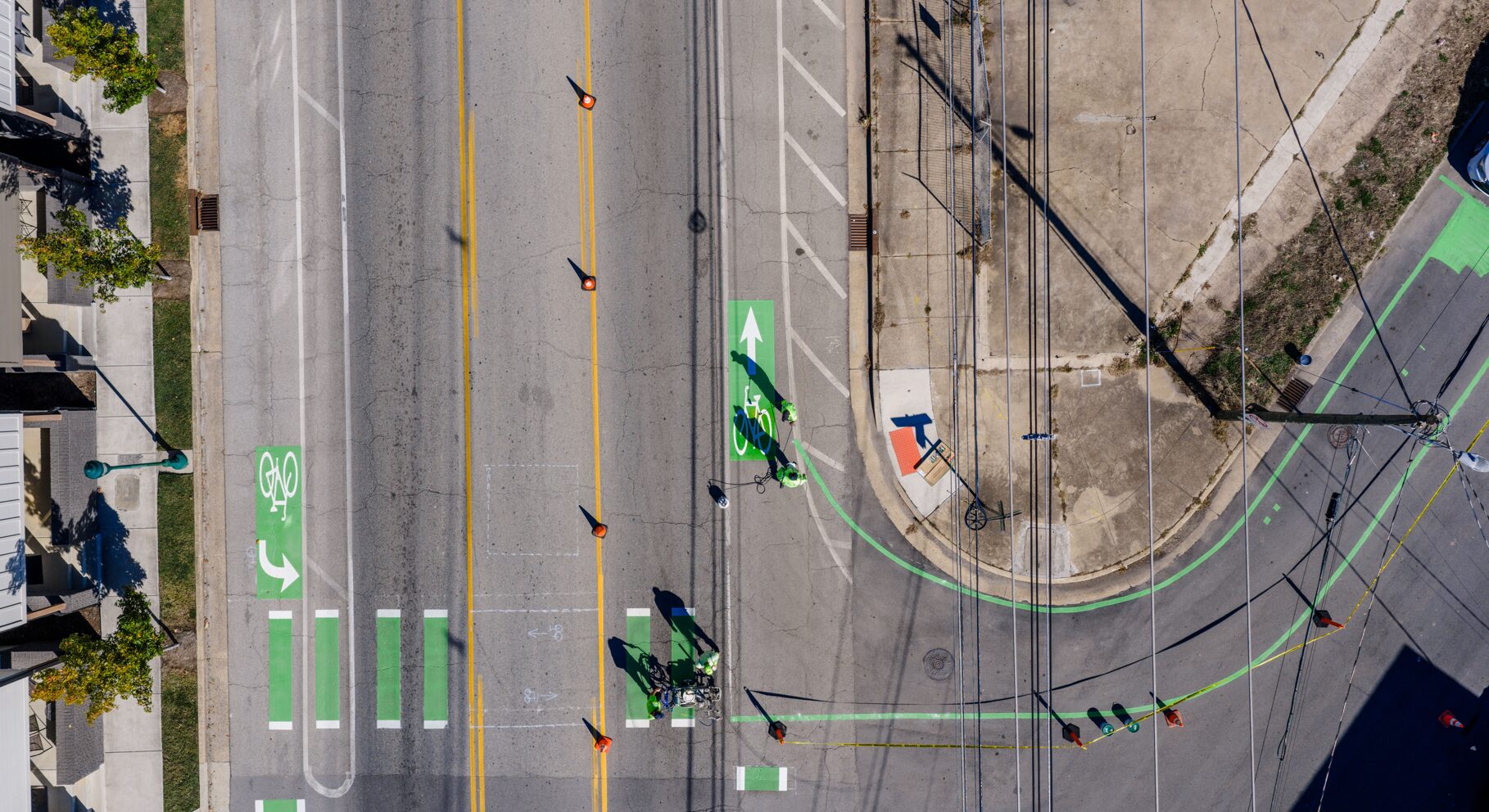
On October 13, hundreds of cyclists and community members in downtown Toronto mobilized to protest the removal of the 1.2-kilometre stretch of bike lanes on Bloor Street West. The removal is the first step in a larger plan from Premier Doug Ford to remove 20 kilometres of bike lanes in the city, in what Ford says is an attempt to ease traffic congestion.
Despite the news coming out of Toronto, community members in the Niagara Region say that this kind of rhetoric is nothing new, but they worry how this could impact the protection of cyclists locally.
Kurt Gwisdek is the owner of Liberty! Bikes, located in Downtown St. Catharines. The business has been operating since 1992, offering repairs, equipment and organizing group rides within the community.
In an interview with The Brock Press, Gwisdek emphasized the diversity of people who use cycling as a form of transportation and recreation, sharing just how vital bike infrastructure is in providing safety and security to cyclists.
“Car drivers appear to be more distracted while driving than ever before. […] Right now, cyclists take their lives in their hands when they mingle with cars on the roads,” Gwisdek said.
Distracted driving is one of the leading causes of fatal collisions and has been significantly on the rise in recent years.
“In collisions involving bikes/pedestrians and cars, the cars will always win. […] Bicycles are a reliable, environmentally conscious, and economically inexpensive tool for mobility. Why would we want to restrict that as an option for people? We should be promoting cycling, not making it hard or dangerous for people to ride,” he said.
Gwisdek doesn’t believe the Niagara region has the infrastructure it needs to protect cyclists.
“You cannot ride to downtown St. Catharines using bike lanes; cyclists need to interact with cars on the road. There are no bike lanes or even shoulders on Ontario, Lake, Geneva, Niagara, Bunting, or any north-south artery. It’s dangerous. What does that mean? It means that people will avoid riding bicycles within what should be a very bikeable city,” said Gwisdek.
For some, cycling is not a secondary mode of transportation, but instead a primary one, despite the lack of available infrastructure. With an estimated 4000 migrant workers every year, bikes have become a main avenue of transportation for seasonal workers — but they are not without their drawbacks.
The Migrant Farmworkers Project, based in Niagara, has worked with migrant workers in the region for nearly 15 years. Among the various support and advocacy offered by the organization, they also provide migrant workers with used bikes.
Reverend Peter Ciallella of the Migrant Farmworkers Project emphasizes that the lack of biking infrastructure distinctly impacts migrant workers.
“Unlike urban cyclists who may have access to alternative routes or public transportation, many migrant farmworkers travel along rural roads characterized by narrow shoulders, higher vehicle speeds, poor lighting and limited cycling infrastructure,” Ciallella said.
Since 2019, at least seven migrant workers have been killed or seriously injured in the Niagara Region, according to the Migrant Workers Alliance. Just this past June, Sinhue Garcia was killed in a hit-and-run in Niagara-on-the-Lake. Ciallella says that this is more than an issue of transit, but a public safety issue too.
“For these workers, access to safe cycling infrastructure is not a luxury; It is a matter of personal safety, independence, dignity, and justice. As a society, we cannot celebrate the contributions of migrant agricultural workers while overlooking the dangers they encounter travelling along our rural roads.”
While the Ford government proposes the removal of bike lanes as a way to stop traffic congestion, existing research does not support their plans. On the contrary, internal documents revealed that the Ford government is aware that collisions could increase by 54 per cent for all road users.
Despite this research, there have been no plans to halt the bike lane removal process in Toronto. While Niagara already lacks the bike infrastructure community members advocate for, they worry about the implications Toronto’s removal will have on the rest of the province.
“If it can happen in Canada’s biggest city and is orchestrated by the Premier, no other place is safe from bike-lane removal,” Gwisdek said.
For Niagara’s cycling community, the debate unfolding in Toronto is a reminder of just how precarious the situation can be.