

Walk into any family home over Thanksgiving or holiday break, and you will likely encounter a fascinating cultural paradox.
On the stereo in the living room, Pink Floyd’s Another Brick in the Wall, Part 2 might be playing — its iconic, rebellious children’s choir chanting, “We don’t need no education, we don’t need no thought control.”
Sitting right across from the speakers are your parents or grandparents, nodding along to the groove. These are the exact same adults who spent the last decade warning you that your university degree isn’t practical enough, grilling you about your retirement portfolio and demanding that you conform to strict corporate standards to secure a mortgage.
There is a profound, hilarious irony embedded in the fabric of generational aging: the counterculture generation that once sang anthems against institutional control somehow grew up to build the most exhausting, rigid and risk-averse systems we are currently forced to live in.
To understand how we got here, we have to look at the soundtrack of their youth. The late 1960s and 1970s rock scene was defined by a rejection of the status quo. Bands like Pink Floyd, Led Zeppelin and The Who wrote entire albums warning against the deadening weight of corporate bureaucracy, societal conformity and mindless compliance.
“Us and Them” wasn’t just a catchy tune; it was a biting critique of the invisible walls we build between people in the name of power and money.
The young people buying those records in droves believed they were tearing down the walls. They were going to reinvent society, live freely and reject the soul-crushing suburban rat race of their own parents.
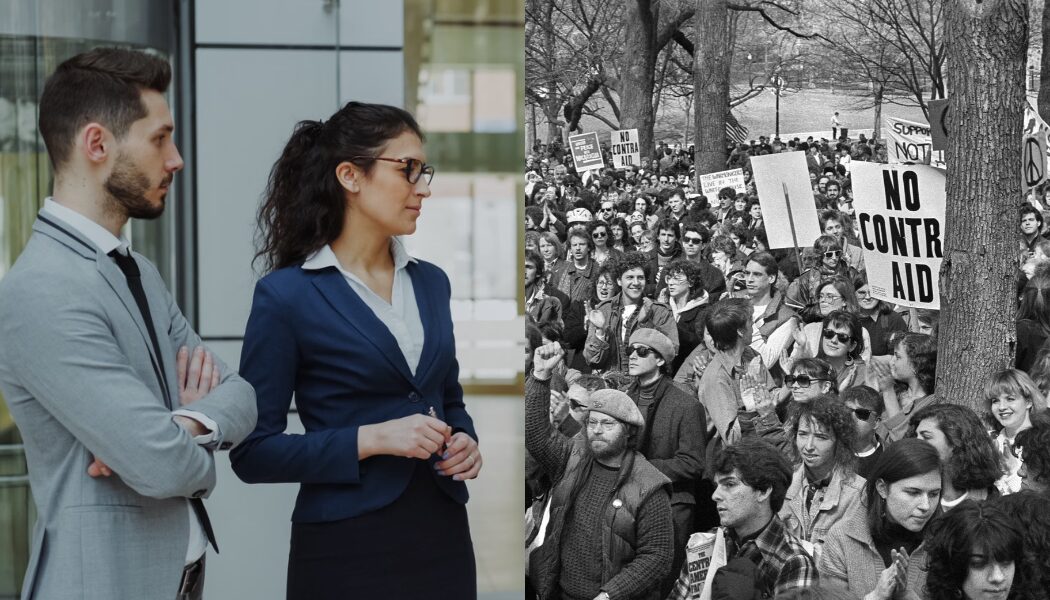
Except, somewhere along the way, the script flipped. The hippies got mortgages. The rebels became middle managers. The fierce critics of institutional control suddenly found themselves running the universities, banking institutions, corporate boardrooms and the political offices.
Today, Gen Z inherits a world shaped entirely by those former counterculture kids. We are drowning in a system of hyper-regulated education, impossible housing markets and an economic landscape that values continuous corporate output above human well-being.
And when we express burnout, frustration or a desire to step off the hamster wheel, who is standing there telling us to pull ourselves up by our bootstraps? The exact same people who dropped acid at music festivals in 1974.
It makes you wonder: did they actually listen to the words, or were they just enjoying the guitar solos?
Did Roger Waters’ furious warnings about capitalist alienation just become background noise for backyard barbecues?
It seems that human beings have a terrifying capacity to compartmentalize their art. You can’t scream along to an anti-establishment anthem on a Saturday night and spend your Monday morning enforcing rigid, bureaucratic protocols on a group of stressed-out interns.
This isn’t just about pointing fingers at our parents for hypocrisy; it’s a warning flare for our own generation.
Every generation believes that their music, their art and their cultural awakening make them fundamentally immune to selling out. We look at current social movements, indie playlists and campus protests and assume we are cracking the code of a better future.
But history suggests that the system has an infinite capacity to absorb our outrage, digest it and turn it into comfortable background music for middle age.
50 years from now, university students will be looking at the music we cling to right now, wondering how our generation could scream so loudly about the world burning while quietly setting up the exact same traps for our kids.
Maybe the ultimate lesson of ‘70s rock isn’t that music can magically overthrow the establishment.
Maybe it’s a reminder that rebellion has a shelf life — unless you actively choose to live it, rather than just streaming it in the background while you sign away your principles for a dental plan.