
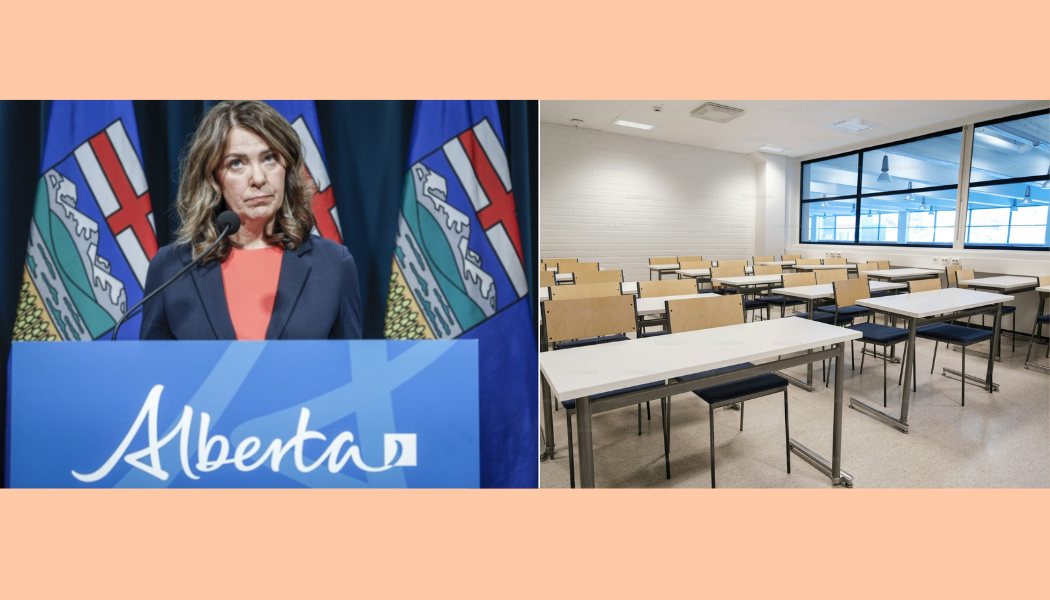
On Oct. 28, Premier Danielle Smith and the government of Alberta passed Bill 2 in response to the ongoing strike between the Alberta Teachers’ Association (ATA) and the continued negotiations of new contracts. The bill imposes the province’s most recent offer — one that nearly 90 per cent of teachers rejected — as a binding agreement.
The move follows weeks of failed talks with 51,000 teachers walking off the job on Oct. 6. Bill 2 legislates a province-wide collective agreement for all teachers from Sept. 1, 2024, through Aug. 31, 2028. Within the agreement, there is a 12 per cent general increase in salary over the next four years (three per cent per year); 3,000 new teachers and 1,500 new educational assistant appointments as well as strict back-to-work orders beginning Oct. 29. Teachers who defy the order face fines of up to $500 per day, while organizations could face $500,000 per day.
“Our intention is to pass this legislation immediately and end the strike by the Alberta Teachers’ Association,” Smith said during a press conference on Oct. 27. The government fast-tracked the bill through the legislature that evening, with Government House Leader Joseph Schow moving to limit debate.
In a press conference later that night, Jason Schilling, president of the ATA, denounced the fast tracking of Bill 2 as a “travesty for democracy” and released plans to pursue “all legal alternatives to challenge the bill’s egregious assault on the collective bargaining rights of teachers, and by extension, all workers” the following morning.
Bill 2 marks the first time in over three decades that Alberta has invoked Section 33 of the Charter of Rights and Freedoms, known as the notwithstanding clause. The clause allows provincial and federal governments to override certain Charter rights for up to five years when enacting legislation.
Richard Mailey, director of the Centre for Constitutional Studies at the University of Alberta’s Faculty of Law, told the Calgary Herald that governments often turn to Section 33 when they believe their justification for limiting rights would not withstand judicial scrutiny.
Recent uses of Section 33 include Saskatchewan’s 2023 parental-consent bill for students under 16 using preferred names or pronouns, and Quebec’s 2019 ban on religious symbols for public workers, which the province renewed in 2024. The federal government has never invoked the clause.
Bill 2’s use of Section 33 suspends local bargaining until 2028, enforces back-to-work fines and overrides teachers’ right to freedom of association, meaning the imposed agreement did not require the approval of the ATA.
The decision has drawn intense criticism. Leader of the opposition, Naheed Nenshi, called the use of Section 33 a “nuclear option.” Additionally, Gil McGowan, president of the Alberta Federation of Labour, has started to gauge interest in a general strike under the banner of the Common Front coalition to oppose the bill and its implications for workers’ rights.
The province defends Bill 2 as a necessary measure to protect students’ education and minimize classroom disruptions. However, critics argue that less extreme options were available and that invoking Section 33 to end a labour dispute sets a dangerous precedent.
Political observer Rachel Gilmore warned in a video on TikTok that Alberta’s move could embolden other provinces to override collective-bargaining rights in future disputes, further testing the limits of Canada’s Charter protections. Ontario’s 2022 attempt to use Section 33 in a similar education-worker strike was retracted after widespread public backlash.
Public reaction to the use of Section 33 has been mixed. CBC reported parents are happy to see their kids back in school but conflicted about the way in which back-to-work legislation was brought forward.
Though Bill 2 succeeded in ending the strike, its broader implications remain uncertain. It is yet to be known if legal challenges will arise and observers warn that Alberta’s decision to invoke Section 33 in a labour dispute could reshape how constitutional rights are interpreted across the country and how province-wide strikes are dealt with fundamentally.