
Friday, December 5, 2025
Brock's Only Independent Student Newspaper
One of the only worker-managed newspapers in Canada

Conflicting weather reports for this upcoming winter  

|
|

Climate change doesn’t mean that there will be no more snowfall; rather, it leads to more unpredictable weather in general. As the air begins to cool, experts have started logging their annual predictions for winter weather on the eastern continent, and there’s no clear consensus between meteorologists and weather gurus on social media.  

Predictions for this season have been all over the place as climate change means the weather has become more extreme than ever before. On top of difficulties created by climate change, cuts made to the U.S. National Weather Service and the National Oceanic and Atmospheric Administration (NOAA) have reduced the total available data for weather models.  

These cuts have been linked to inaccurate weather predictions or delayed severe weather alerts, contributing to sudden weather disasters in Texas and more recently in Alaska.  

These cuts have also affected Canada, as the country makes substantial use of NOAA data for weather predictions.    

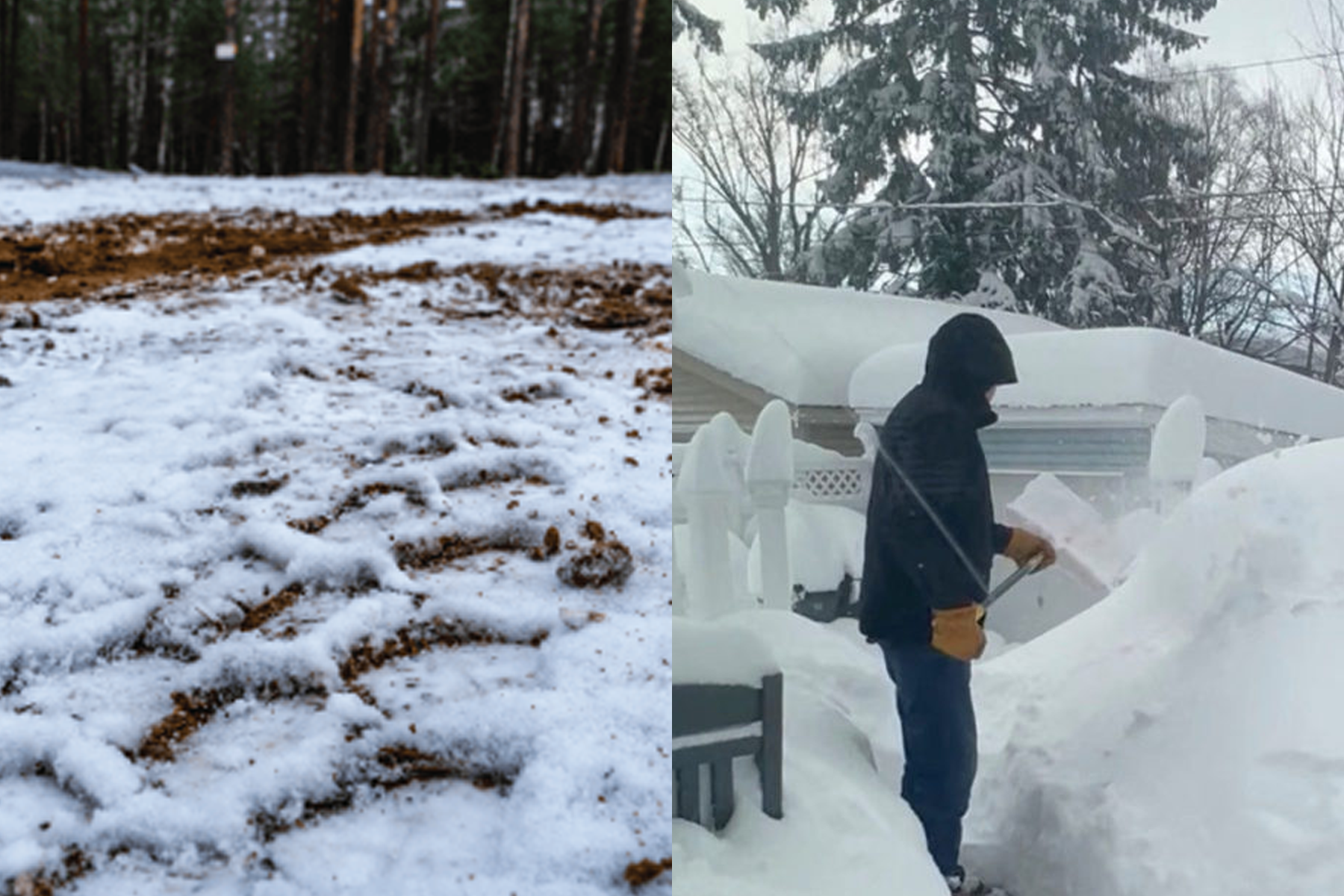
Predictions for winter weather this season have, for the most part, provided snapshots of a colder, wetter and more snowy winter than average, though not all sources are in agreement.  

For Southern Ontario, The Weather Network predicts a stretch of milder weather during the middle of winter (December to February), while a dominant storm track is expected to be in the Great Lakes region and up into the St. Lawerence.  

Much of this prediction is based on whether a La Nina weather pattern is officially declared, which generally means colder weather across Canada, with a harsh winter climate in Western Canada due to Pacific Ocean currents.  

Social media, however, has its own growing group of weather gurus who have made some predictions for the upcoming winter in North America.  

Degreed meteorologist and weather influencer Max Velocity has created several predictions for this winter that indicate an extremely wet season with more snowfall in the Great Lakes region. 

In a reel that has around 50,000 likes at the time of writing, Velocity compares currently observed weather patterns — such as a suppressed hurricane season in the Atlantic — to weather patterns that were seen 12 years ago in the winter of 2012 to 2013.  

The winter of 2012 to 2013 was particularly prone to storms, with several outbreaks occurring on the eastern side of the continent. During this time, many Canadians experienced an ice storm that hit Southern Ontario.  

With slightly conflicting weather forecasts for this winter compounded by a weakened continental weather service, expectations are mixed.  

Experts recommend that pedestrians dress accordingly for the cold weather, exercise greater caution when crossing the road in snow and wear adequate footwear.weather, exercise greater caution when crossing the road in snow and wear adequate footwear. 

For those who drive, ensure you have proper winter tires and above all to avoid driving in adverse weather conditions to begin with.  

In Ontario it isn’t illegal to not have winter tires, but it can be more hazardous, especially in low temperatures as regular tire compounds tend to stiffen and can lead to poorer performance even without snow or ice being on the ground.  

If these experts are to be believed, Brock students could be in for a more intense winter than years past. 

More by this author

RELATED ARTICLES

A “travesty for democracy,” Bill 2 and the notwithstanding clause 

On Oct. 28, Premier Danielle Smith and the government of Alberta passed Bill 2 in response to the ongoing strike between the Alberta Teachers’ Association (ATA) and the continued negotiations of new contracts. The bill imposes the province’s most recent offer — one that nearly 90 per cent of teachers rejected — as a binding agreement. 

CUPE 4207 bargaining with Brock University  

On Oct. 23, a rally and barbeque in solidarity with CUPE 4207 took place at Glenridge A as the labour union continues engaging in collective bargaining with Brock University. 

Air travel woes as U.S. government opens following nation’s longest shutdown 

The United States government shutdown created travel woes for passengers travelling to or through the country. As a result of the shutdown, there is currently a lack of air traffic controllers, creating serious travel issues for would-be fliers.

Dr. Emily Grafton discusses her book “Divided Power: How Federalism Undermines Reconciliation” 

Dr. Emily Grafton — professor at the University of Regina and author of the newly released book Divided Power: How Federalism Undermines Reconciliation — delivered a lecture at Brock University on Nov. 11, encouraging Canadians to rethink the constitutional foundations that shape Indigenous and state relations. 

Amazon cuts 14,000 corporate jobs as A.I. reshapes the workplace  

Amazon has announced that their company will reduce approximately 14,000 corporate positions globally with plans to eventually reduce up to 30,000 positions altogether, calling the move a strategic shift towards greater efficiency and innovation in an increasingly A.I.-driven environment. The initial phase of cuts affected white-collar and middle-management functions, while warehouse and frontline logistics jobs remain largely untouched.  

Exploring modern masculinity: Brock’s new reading club takes on a cultural crisis 

Associate Professor in the Political Science department at Brock University, Dr. Stefan Dolgert, has started a small but growing initiative to create a safe and welcoming space for young men to discuss issues they may be facing today: loneliness, emotional isolation and the influence of harmful online ideologies. Spearheaded by Professor Dolgert, the Men’s Reading Club at Brock, has undergone its first official meeting with a second in progress.

What the federal budget means for students 

The 2025 federal budget announced on Nov. 4 has made waves across Canada. Ballooning deficits, spending cuts, major investments and infrastructure dominate headlines. But behind the chaos is one question: What does this budget actually mean for students and young Canadians? 

Concerns of fraud push feds to seek visa cancellation powers, singling out India and Bangladesh 

India and Bangladesh have been singled out as “country specific challenges” by the Canadian government in Bill C-12, which seeks mass visa cancellation powers for circumstances such as pandemics, wars and “country-specific visa holders.”