

Consumers of music need to become producers of music to unlock the full potential of art as a mechanism of change. This article seeks to explore the connection between music and politics through the culture industry and the role that musicians, consumers and the industry itself play in that connection.
Music is often a source of comfort, meaning, empowerment and defiance for a multitude of people. It acts as a source of internal inspiration that can drive real world political or social change. The role of music in human expression and organization dates back to the first person to make a tune, and the first to listen to it.
From about the early 20th century, the role of music, and the arts in general, began to change, with music and art becoming more accessible. As Walter Benjamin, a German philosopher and media theorist noted, it lost its “aura.”
What Benjamin refers to by “aura” is a sense of separation between art and its viewers, leading to a notion of art that has no deeper connection to contemporary conditions.
When music became widely accessible and common, it became infused with politics as it shifted from the idea of art-for-art’s sake (“aura”) to rapidly bridging the gap between the viewer and composer.
Music and arts are now closer to the everyday person than they have ever been in human history because of more accessible technology.
So, why do we still feel a disconnect between music, art and political action?
Oftentimes, music fans feel as if the message in a musician’s lyrics are not seriously put into practice by musicians themselves. Specifically, some musicians have been criticized for not using their platforms to their fullest potential to spread the message that their music claims to support.
This often results in bands and musicians being labeled as “sellouts” when it occurs en masse, but when it occurs on the individual level, it can lead to a jaded perspective where one views music as a comfort at best and a societal pacifier at worst.
These feelings arise at the intersection between an individual’s internal feelings and external actions, where internal values uplifted by musicians’ music do not translate to external political action by those musicians.
When musicians fail to do this, fans become upset, usually sparking controversy.
One of the most recent examples of this would be the controversy surrounding Chappell Roan’s refusal to endorse a political candidate during the 2024 lead up to the U.S. presidential election. The reaction surrounded the perceived betrayal of the American LGBTQIA+ community, though Roan expressed her personal views:
“There are so many things that I would want to change. So, I don’t feel pressured to endorse someone. There are problems on both sides. I encourage people to use your critical thinking skills, use your vote.”
This example is not unique, and many musicians have come under fire for how fans perceive the connection between internal messaging in music and the real-world actions taken by the musicians themselve.
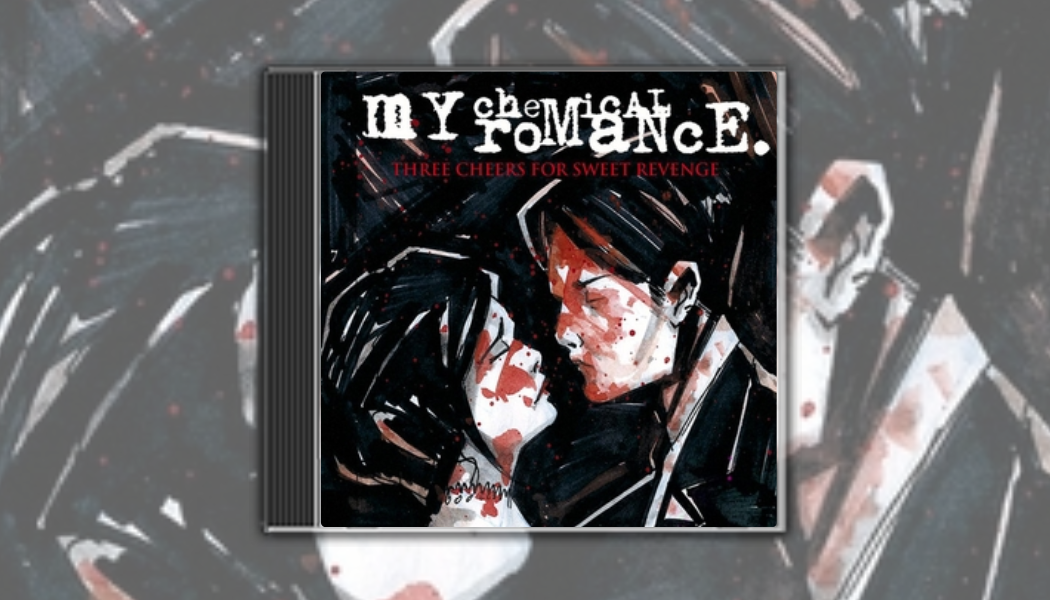
I have felt this same way with my favourite band, My Chemical Romance (MCR). MCR was at the heart of the Pop-Punk movement back in the early 2000s — a movement which championed anti-authoritarianism in the wake of 9/11, the imposition of Western surveillance states and the Iraq war.
MCR was influential amongst LGBTQIA+ youth at a time where LGBTQIA+ rights were not yet established in even the most basic form. MCR’s first wave of activity was from 2001-2013, spanning a time when marriage rights were finally granted to LGBTQIA+ individuals in 2005 for Canada and in 2015 for America.
MCR has since reunited for a second wave of activity spanning from 2019 to the present and has made some changes to their messaging. They’ve taken on a more visible anti-authoritarian message in their on going tour Long Live the Black Parade.
The band has taken to more overt theatrics by leaning heavily into the concept of a Rock Opera and adopting acts such as having the audience vote yes or no on the execution of four members, with the catch being that regardless of a yes or no vote all four members will be killed anyway.
I had the privilege of attending the Toronto tour date in 2025 and while I thoroughly enjoyed the performance and felt that I got to express my anti-authoritarian feelings that night, a few months of reflection have left me feeling that this was just a form of societal catharsis for our collective internal selves that did not actually lead to any external change.
This jadedness was not helped by the choice to use surge-pricing on concert tickets, the unexplained shifting of Asian tour dates, the seeming lack of acknowledgment towards current politics in comparison to other musicians and, as of writing, the continued connection to Wasserman, a talent agency whose CEO is connected to the Epstein files.
MCR is not a small band, and their music has helped define an entire genre and provide significant amounts of hope and uplifted countless people. Yet, to what extent could a group like MCR be expected to drive change? What is the current connection between culture and politics?
The culture industry is a critical theory that can be of use here. It centres around the idea that culture is manufactured, like goods are in a factory.
It’s worth exploring the culture industry through a famous debate between philosopher Theodor W. Adorno and Walter Benjamin. Their debate helped to define the role that the culture industry played in music, specifically in the 1930s, and the accompanying analysis by Ryan Moore who brings these concepts into the early 21st century.
The following discussion is based off an academic journal.
As previously mentioned, prior to the early 20th century, art was far removed from the everyday lives of the masses, in the sense that it was not a consumable good. Technological advancement opened art to mass consumption and in doing so, art lost its “aura” and adopted politics.
The nature of this technological revolution was becoming centralized in the early 20th century, with only a handful of large corporations dominating what became known as the culture industry. Unlike the situation today, the cost of equipment and mass products helped to further cement the power of these corporations.
The reason why a handful of corporations holding this much control over cultural production is problematic is because this amount of power acts like a muzzle on the vast swath of human expression. This can be seen through the historic silencing of the thousands of different cultures on the film screen until a profit motive appeared; it’s simply undemocratic.
Fundamentally, the disagreement with this system of organization is based on the belief that human expression should not be under a profit motive or dictated by a wealthy few, as the world is better organized democratically.
Given this context, Benjamin chose to formulate an optimistic viewpoint of technology and art. Benjamin believed that “technologies of reproduction were closing the distance that traditionally separates people from culture while also enabling audiences to become involved as participants and producers.”
He also believed that capitalist production of culture was contradictory, as media technology “would allow people to appropriate, de-contextualize and re-contextualize culture forms in ways that had been undertaken by the avant-garde.”
Benjamin points to a few examples of technology bringing consumers closer to producers, noting that “for centuries it was the nature of literature that a small number of writers would confront thousands of readers. But this began to change toward the end of the past century […] it began with the space set aside for ‘letters to the editor’ in the daily press.”
Benjamin was optimistic and believed in the Marxist idea that capitalism would inevitably create the conditions and tools necessary for its own end.
When interpreted, I look at how technology has advanced to the point where the creation of human art is at the fingertips of anyone who wishes to make art, while global platforms exist to disseminate it.
We appear to be reaching a split between corporations and humanity over art and, given the incessant desire on the end of corporations to adopt A.I., it appears that art will fall solely to humanity.
Ultimately, Benjamin argued for the socialization of the means of cultural production to turn “authors into producers” and eliminate the risk of art being co-opted to represent the ideals of mega-corporations.
Adorno, on the other hand, takes a more pessimistic approach to art and technology. It’s important to mention here that Adorno’s ideas contain racist overtones that he has since acknowledged.
Adorno argued that popular music standardization was inevitable, music would become commodified, and “all forms of mass culture effectively pacified their viewing or listening audiences.”
He was also heavily against jazz music and viewed all popular music as not truly “serious music.”
As Moore puts it, Benjamin focused more on the “technical aspects of reproducibility,” while Adorno focused more on “the relations of domination and control embedded in culture industry.”
Moore finds that both views are correct in their own ways and that neither is the true view.
Adorno’s view has merit when analyzing the development of music over the last century.
As Moore explained, between the 1930 and 1960s, there was not much musical development. Large corporations, which owned most music production, only produced what was deemed “profitable,” investing mostly in covers of existing songs.
Only with technological advancements such as cheaper distribution formats and the opening of hundreds of radio stations did things begin to change.
Labels which made up around 80 per cent of all music production still cornered the market and made vast fortunes off of rock and the British Invasion. However, the types of music being represented had begun to shift as what was considered profitable began to change.
Rock is an interesting example because, while it was scooped up by the music industry, it became defanged and began to lose any meaning of dissent that it once had, leading to the punk explosion.
Punk music fans accused rock music of becoming what Adorno identified as “social cement,” stating that Rock had become “complacent both aesthetically and politically, in the process of attaining commercial success within the culture industry.”
Punk music fans ended up forming an “alternative network of independent media” through a D.I.Y. ethic, making use of formats like college radio stations.
While technology was advancing, bringing the introduction of tapes and CDs, the new ability to record on these formats led things began to shift. Ultimately, it was the turn of the century that really shook up the music industry.
MP3 files and the internet made it incredibly easy to pirate music from the big four producers: Universal, Sony, Warner and EMI.
This is largely credited with the growth of sampling and remix genres of music, but it also came with a failed attempt by these corporations to stop MP3 pirating.
Interestingly, there were a series of lawsuits where companies sued people for $750 USD per “stolen” song, in conjunction with a lawsuit against Napster, which at the time was a sharing platform that enabled piracy.
Unsurprisingly, this was a public relations disaster as consumers already disliked corporations to begin with, based off of artist treatment. The “example” being made of random consumers did not help their public images.
At present, independent musicians have become more common. Moore’s article is a bit dated, but even at his time of writing (2015), groups like Arcade Fire had found success without needing the help of the music industry.
This trend can be extended to note “TikTok made” musicians who found success by independently sharing their music on social media, though major labels still play a strong role in signing these musicians once they’ve become known.
Nevertheless, a stronger independent artist presence has formed, and it is easier now than ever before to find success while maintaining independence from major labels. Technology has also resulted in a massive growth and uncovering of dozens of new genres of music.
In addition, new forms of art like Instagram or TikTok edits add new meaning and, in many ways, separate music from artists and allow consumers to begin to add their own spins to music.
Pierre Bourdieu, as Moore explains, identifies “a field of cultural production where economic capital and symbolic capital are diametrically opposed. […] Symbolic capital accrues for artists who appear disinterested in commercial success by taking an approach of ‘art for art’s sake,’ while conversely those who take a mercenary approach to artistic production […] are symbolically devalued because their art is suspected of compromise.”
Bourdieu’s analysis is based on 19th century literature, but Moore connects it to modern music, noting that commercially successful artists are often described as sell-outs, whereas less popular artists are seen as having symbolic capital “through their eccentric creations conceived on the margins.”
Ultimately, Moore notes that the Adorno-Benjamin debate is one over “the socialization of the productive forces through technological development and the centralization of ownership in the social relations of capital.”
In other words, the production of art and music has become common to the masses and is no longer locked to an artisan class as a result of technological development, but new artists no longer own their actual products, and for the most part, the very means of making and distributing their art — the capital class does.
Though technology has made it easier to operate independently, large corporations still have a massive influence on culture and can shape it to their desire, which in turn makes the human expression a vehicle of profit production that reduces that expression to that of just a handful of wealthy people.
MCR was once at the cutting edge of cultural change, and in many ways, the band’s music continues to be a major inspiration to lots of different people.
At the same time, MCR is owned by Warner Bros. and is firmly part of the culture industry. In some ways, they have begun to become social cement as the political climate changes and the band brushes up against those very controversies.
As Bourdieu’s theory suggests, MCR in 2026 appears to have lost some symbolic capital in its commercial success. Yet the very reason society deals in social capital when it comes to human expression is the lack of socialized means of cultural production.
I’m not yet sure if “I’m watching all my heroes sell a car on T.V.,” but there is a limit to what the politically interested can expect from cultural movements, so long as artists don’t directly own their music.
Music and art are still inspiring and can contain elements that are counter-cultural, and as Marx predicts, create the very circumstances and tools by which capitalism brings about its own ends.
It is however important to keep the limitations of culture in mind when thinking about politics. Don’t allow artistic expression to be the sole end as it drives complacency and non-action.
People should not idolize cultural figures as sole bringers of change but instead remember that everyone can bring change as inspired producers and change makers.