

Wednesday, January 21, 2026
Brock's Only Independent Student Newspaper
One of the only worker-managed newspapers in Canada

Cynicism today is not helpful, no matter how much you like Van Gogh

|
|

Cynicism today is not helpful.

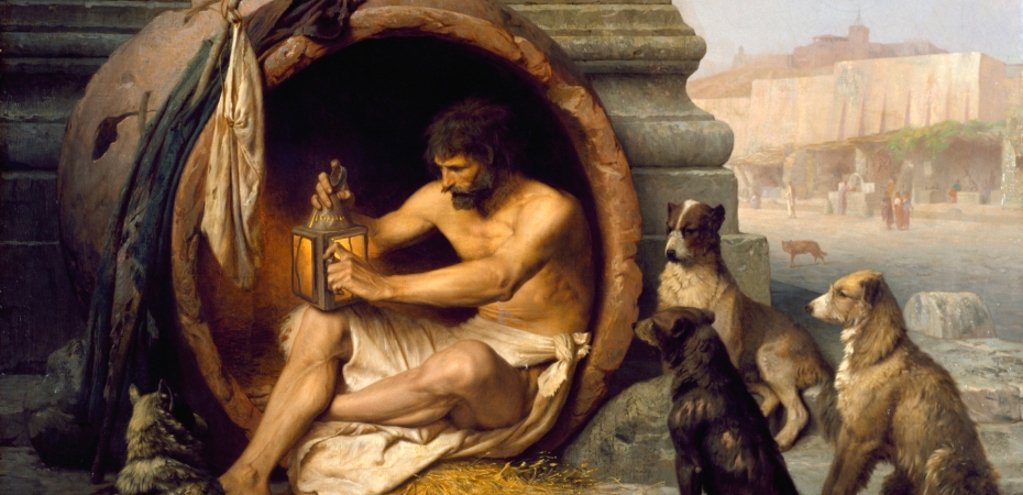
In ancient Greece, the foremost cynic philosopher lived in a massive ceramic jar in the streets of Athens. He criticized the largest idealist philosopher of the day, Plato, and preached poverty and action over theory and a lifestyle accustomed to nomos (social custom).

Diogenes as a historical figure is interesting in his own right; even his rebellion against social custom could be seen as admirable in certain respects. For example, he disdained the economic system of slavery in Athens. However, cynicism functions today in a much less active and dialectical way.

Recently, a video emerged of two young Just Stop Oil climate activists throwing soup cans on a famous Vincent Van Gogh painting to bring awareness to the impending climate disaster. In the video, they appeal to the fact that climate change will be felt especially by their age cohort. Many immediately came to the defense of art, politeness and more proper tactics of activism. The story made it to the New York Times, essentially fulfilling the goal of spreading the activists’ message. Meanwhile the painting was hardly damaged as it was covered by a glass pane.

The activists’ actions quickly fomented broad cynicism online. Twitter user @ShellenbergerMD tweeted:

“two activists just threw tomato soup at Van Gogh’s original masterpiece, ‘Sunflowers’ to protest natural gas and oil. With millions at risk of dying around the world from energy & food shortages, this isn’t climate altruism, it’s anti-human nihilism.”

What’s fascinating about this tweet is that this was not meant to be “climate altruism.” Altruism implies notions of selflessness and a care for others. What was clear in the video was that these young activists were speaking about the dismal future prospects that they themselves and their age group are facing down the pipeline.

This kind of cynical judgment on decorum was also seen in the response to Greta Thunberg’s climate activism. Many commentators felt Thunberg was too militant and rhetorical; playing at people’s heartstrings instead of being quiet and polite like a young person “ought” to if they want a seat with the adults in the room.

Cynicism does nothing for our future. We collectively face the prospect of life on earth as we know it ending. The youngest generations alive today and their kids are going to be enmeshed in climate catastrophe, the prospects of which we’re already seeing in places like Pakistan where monsoon rains have caused flooding that has displaced over a third of the population.

The philosophical school of cynicism that Diogenes preached was one of action over thought. If a lick of that sentiment connected with today’s cynics then perhaps kids wouldn’t have to take such desperate measures to get their voices heard.

More by this author

RELATED ARTICLES

How “It’s a Wonderful Life” characterizes community as a combatant of capitalism 

It’s a Wonderful Life (1946) is commonly received as a sentimental narrative about personal meaning, yet its central conflict is also legible as an argument about political economy. The film juxtaposes two institutional logics through the rivalry between Henry F. Potter and George Bailey: one in which housing and credit are treated as instruments of extraction and control, and another in which those same instruments are organized to stabilize ordinary lives. 

Return-to-office mandates are a mistake  

Return-to-office mandates are a public policy failure on nearly every imaginable front. They serve to placate the feelings of an older voting and managerial class that are simply out of touch with the functions of the modern workplace.

Sorry to break it to you, but cats are better than dogs 

Upon reading the title of this article, I know what you’re inevitably thinking: another internet treatise demanding allegiance in the great “cats vs. dogs” war. But indulge me, because the light-footed, whiskered aristocrats of the pet world deserve some serious appreciation — especially since you may have read otherwise.  

Brock has outgrown The Zone 

The Zone is one of the best amenities Brock has to offer, which makes it all the more frustrating that students increasingly can’t use it.

It’s time to shut up about opting out of the compulsory bus pass fee because you own a car 

Owning a personal vehicle doesn’t make your argument against a compulsory bus pass good. In fact, this grievance tends to be deeply classist. 

Niagara Transit could do a better job with public communication  

Niagara Transit (NT) is scheduled to undergo some rapid changes over the next 10 years as part of a strategic growth plan. This is great news, as there is plenty of room for optimization and growth in the region’s transit system.

Identities aren’t something that can be sold 

In the age of doomscrolling and rampant consumerism, identities are becoming increasingly centred around products and online aesthetics. Despite the fact that one’s identity can’t be boiled down to a “type,” your social media feed might try to convince you that, with the right products, you can try on pre-conceived identities until you find the right match. 

Why are we so obsessed with self-improvement? 

The rise of the “winter arc” trend isn’t anything new. The internet is obsessed with self-improvement messaging, reinventing a lifechanging trend to leave us feeling unproductive and inferior with the come of each new season.