

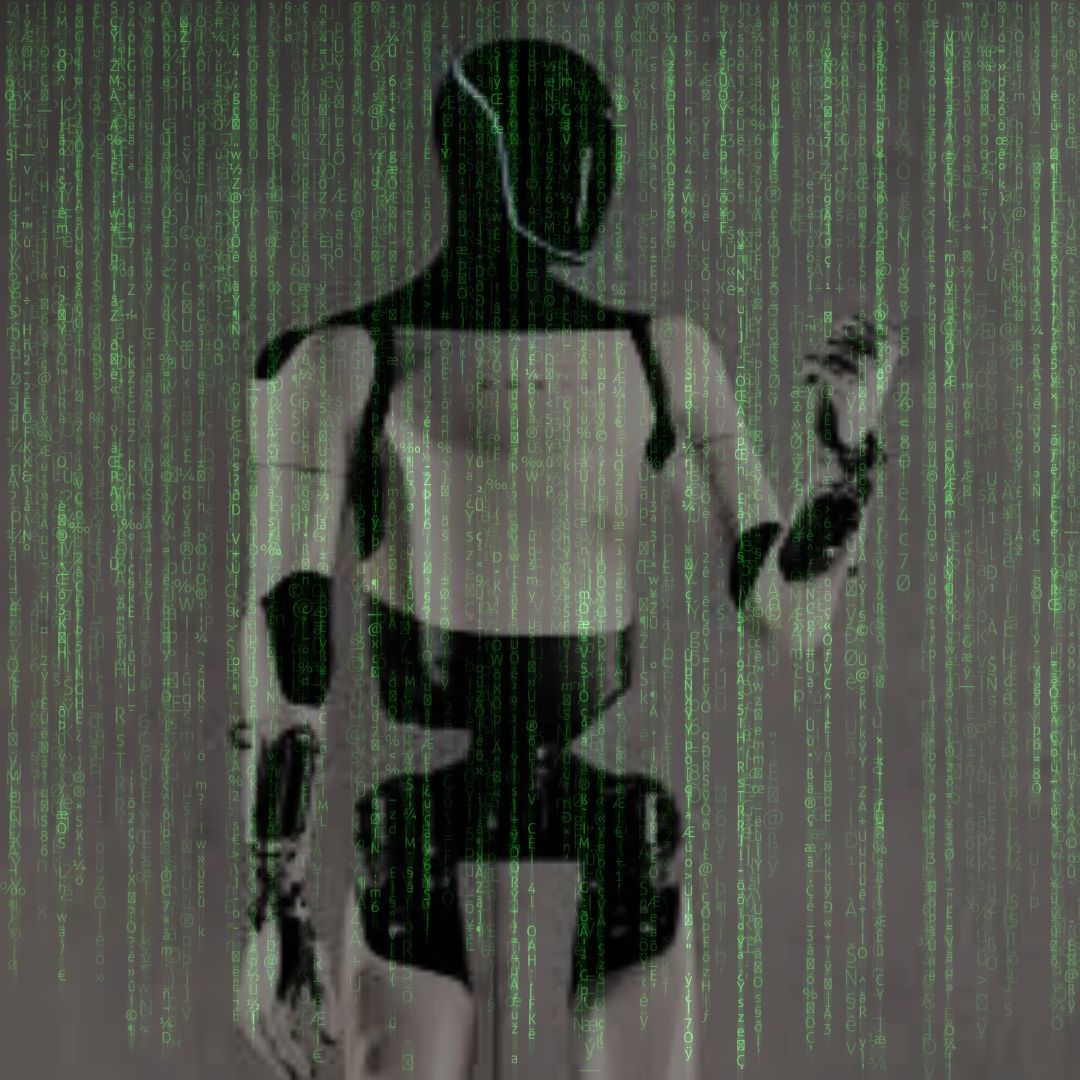
Tesla’s Optimus robots pose a threat to human society and reveal Elon Musk’s twisted vision of a world where artificial intelligence walks among us.
On Oct. 10, Elon Musk took the stage at a major Tesla keynote to reveal the company’s new Robotaxi vehicle and updates on their humanoid robots, called Optimus.
A video posted by Tesla on X shows Optimus walking through a factory, physically navigating itself around obstacles and locating a charging station. The video also shows the robot interacting with humans, handing out drinks and lifting heavy objects.
Musk says the robot will eventually become commercially available and priced around $20,000 to $30,000 USD, referring to it as “something anyone could own.” The idea is that the robot will be able to do “anything you want,” Musk says, which includes doing chores around the house, babysitting your kids, mowing your lawn, serving drinks and — perhaps most interestingly — it will “be your friend.”
This is a sentiment echoed by the tagline on the promo video shown during the keynote: ‘autonomous assistant, humanoid friend.’
Let’s be perfectly clear: nothing good can come from this.
“I think everyone of the 8 billion people of Earth, I think everyone’s gonna want their Optimus buddy,” said Musk.
Musk’s subsequent attempt at a joke revealed the first major concern with inviting Optimus into our homes.
“I predict, actually, provided we address risks of digital super-intelligence — 80% probability of good, of good outcome [sic], look on the bright side. The cup is 80% full,” said Musk with a nervous chuckle.
Judging by the lack of laughter, the audience didn’t seem to connect to the joke.
Digital super-intelligence is a legitimate concern and one that Musk should be taking incredibly seriously. Artificial intelligence (AI) has been in the public eye for a few years, with many fearing the risks of what autonomous and supposedly “sentient” computers would be capable of if they decided to rebel against their masters.
Here’s the thing: a chatbot on a Google Chrome tab can only do so much. If it gets upset or irate, simply refresh the webpage and you’re good to try again. Give AI a physical body capable of real strength, and we might have a real problem.
There’s no saying what a humanoid robot could do if it acted out of the ordinary. Even something as simple as a glitch in the bot’s code could hypothetically result in serious problems for anyone owning an Optimus.
But even if we could somehow guarantee that these robots would never rebel, the concerns with Optimus shouldn’t end there.
Optimus doesn’t represent something to make humans’ lives easier, it represents a future defined by laziness, entitlement and an overdependence on technology unlike anything we’ve seen before.
Imagine raising a family with young children exposed daily to the Optimus robot, and perhaps consider it a part of the family. These children will almost certainly be raised expecting the robot to do everything for them, without needing to lift a finger themselves.
They want a can of soda? They just snap their fingers and Optimus has them covered.
They want the TV remote but it’s just out of reach? No problem, just call Optimus and it’ll take care of that too.
What if they feel lonely? Fear not, because Optimus will lend an ear.
At some point, we have to ask ourselves if this is what we really want. Do we want to live in a world where people become so dependent on technology that they’re no longer willing to get off the couch? Do we want to live in a world where we don’t feel the need to make real friends, simply because we can buy an emulated one on Tesla’s website?
Besides, wouldn’t it feel wrong to have a humanoid being appear to do as you command every time you snap your fingers? This kind of relationship would create a master-slave mentality for humans, except without the guilt of commanding a real person. The entitlement that would come with it, though, would likely be real.
The more Musk talks, the more this seems like an episode of Black Mirror, a show specifically meant to show the risks of hypothetical technology that might seem ‘cool’ at first. The implications of the Optimus robot are reminiscent of the episode of the series “Be Right Back,” in which a mourning woman lamenting the loss of her boyfriend replaces him with a robo-doppelganger, filling the place of a real person with a cold, robotic machine not capable of true emotion.
To think that Elon Musk is leading us toward a world where we rely on robots to be our “friends” is unbelievably scary and leads humanity closer to a terrifyingly technological future.