
I was one of those kids who didn’t have a gaming console growing up. While it was a blessing to have friends with a Wii or an Xbox 360, it made me jealous that I couldn’t play Mario Kart or Castle Crashers at home. For years, I begged and pleaded with my parents to let me have my own console so I could finally play all my favourite games that I’d played at my friends’ houses. In elementary school, playing video games was just about the only thing I wanted to do besides hanging out with my friends and playing sports.
But all that arguing came to no avail.
It feels just like yesterday when I was being called upstairs by my mother because I had been grinding Commando Assault for far too many hours on my family’s basement PC. While the thrill of sitting down on my cousin’s couch and playing co-op games on his Wii was awesome, I never truly appreciated what I had downstairs on that computer.
Flash games were a product of their time, no doubt, but for fellow Gen Z computer gamers who relied on their PCs for online fun, these games created some of the fondest memories for young people exploring the internet.
While many flash games were simple 2D platformers or low-quality combat games, it was their charm and unique style that set them apart. The whole point of these games was that they were easily available through your web browser, so the endless amount of hidden gems you were able to find on different websites was fascinating to a young gamer.
Take Miniclip, for example. It was one of the most talked-about flash game websites and once hosted hundreds of games across all genres. It was a specific racing game I remember playing on this site that fueled the idea for this article in the first place. I would play it for hours, even after beating the game.
What made these games so popular with young gamers was their accessibility. Most flash games weren’t particularly complicated or long, so once you finished or got bored with one, it took about five seconds to either find a new site or scroll around the one you were already on to play a new game. I fell victim to this trend quite often, as some games didn’t manage to hold my attention for long enough. This actually helped me stay connected to flash games because I was more likely to stumble upon a new, improved game on the next site.
The next step in the endless saga of computer gaming was the online portion of flash games. When I found out I could play flash games online with my friends, I felt like I had won the lottery.
When 3D computer flash games were introduced to me, it was a whole new ball game. These online games were a step up from the regular, shallow 2D platformers I had been grinding for ages. Now I was able to talk with my friends and share online experiences with them for the first time.
For a kid who was late to the show in terms of online gaming, this meant the world to me.
Tanki was one game we played for days and nights together, much to our parents’ displeasure. Back in 2014, the game looked a whole lot different than it does today. While it can still be played on your browser, the graphics and gameplay mechanics were more suited to the times. It featured more pixels and slower loading speeds, but that meant nothing to a kid who was basically in heaven with the game.
While some websites had the right to and created their own flash games, the majority relied on populating their sites with as many games as possible.
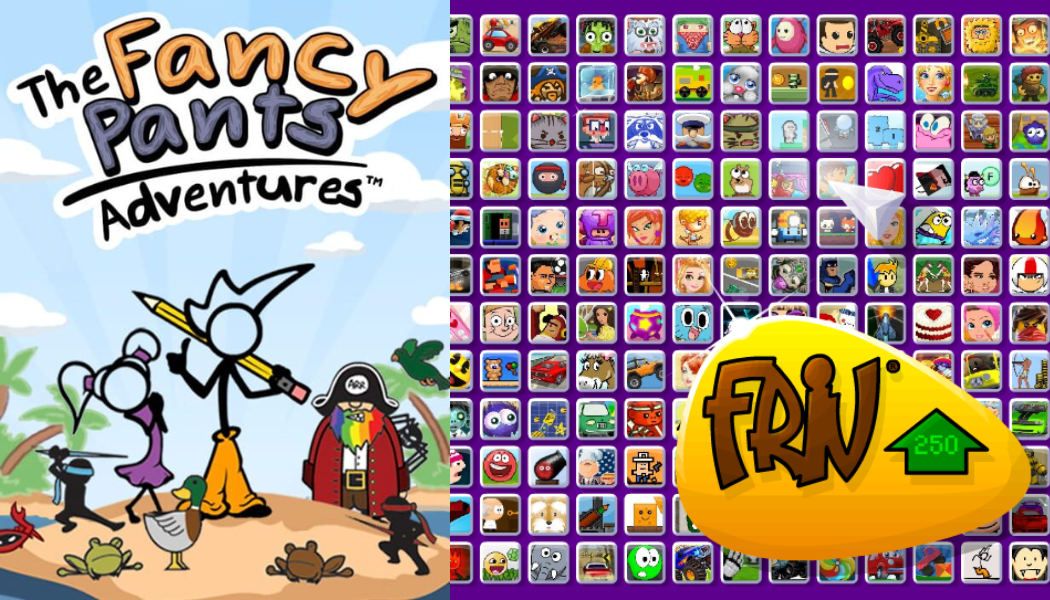
Take Friv, another well-regarded flash site that even those who didn’t spend hours playing these games may recognize. The entire site is a full-screen menu with thumbnails of its games laid out in a huge square, so users can endlessly click through after finishing each game.
Another component to the massive appeal of these flash games was the pop culture draw some of them possessed. Whether it was SpongeBob, The Simpsons or Scooby Doo, media-branded games were always some of the most beloved due to the players’ previous connection to the franchises.
When Adobe Flash announced it would be shutting down its services in late 2020, it marked the end of an era. Times were changing, and the evolution of gaming simply didn’t fit the mould of flash games anymore. For countless Gen Z kids who grew up without a console, flash games were an escape into a video game world of our own. From Cactus McCoy to Fancy Pants and beyond, the most iconic games now remain a key part of video game history, representing a space where people without a console could spend hours playing the games they loved.