

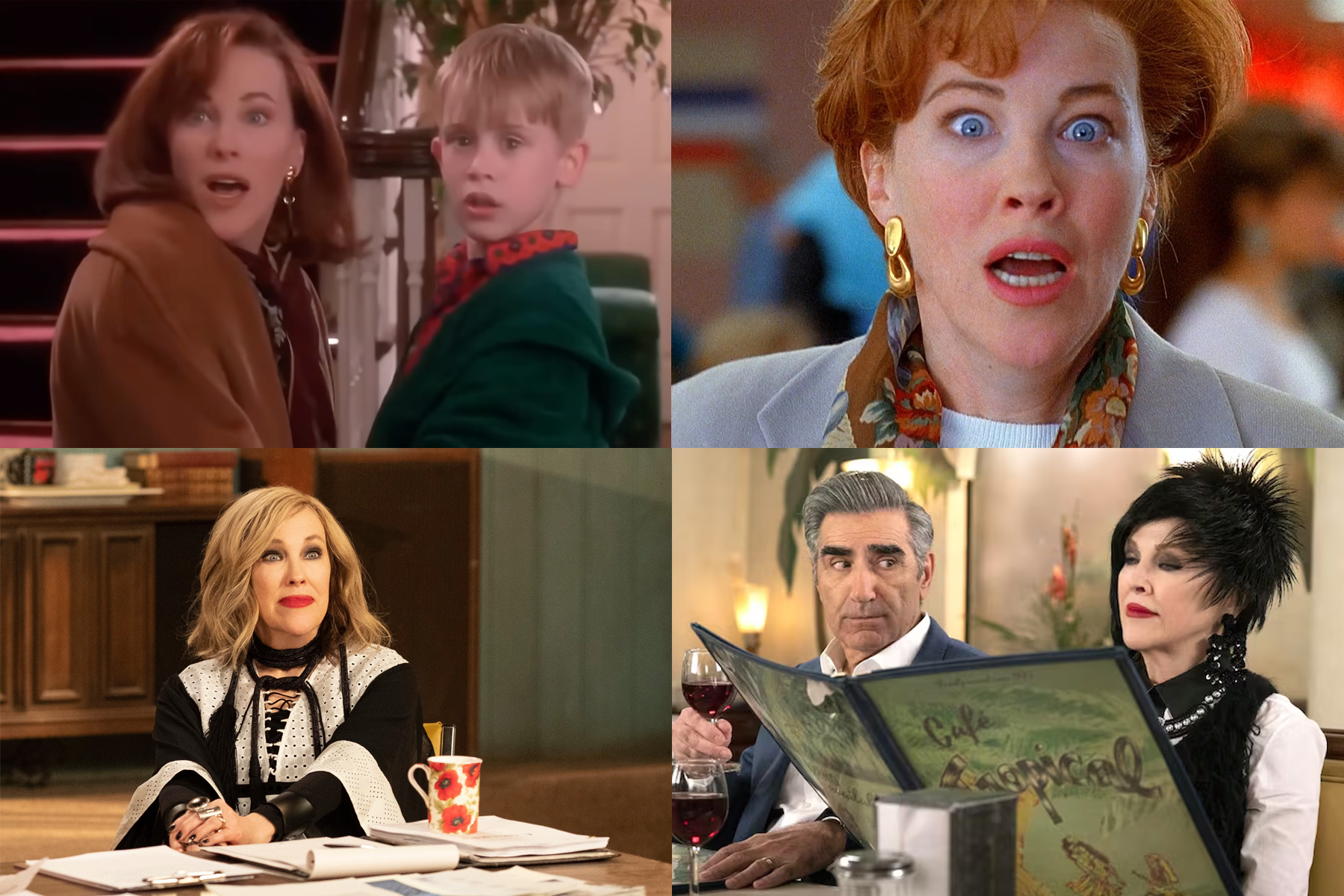
When I hear the name Catherine O’Hara, a very specific kind of comedy comes to mind. It’s bold without being careless, eccentric yet fully in control. Few performers have managed to balance those instincts as consistently as O’Hara did throughout her decades in film and television.
O’Hara first emerged as a defining presence on Second City Television (SCTV), often described as Canada’s answer to Saturday Night Live. Like many great comedians, she got her start in improvisation and sketch comedy, a space where timing and adaptability are essential. In the 1970s and 80s, SCTV became known for shaping some of the era’s most memorable performers, including John Candy and Martin Short — and O’Hara was no exception. She quickly became a Canadian household name. Her sharp sense of character, command of a crowd and ability to push a joke to its limits without losing control made her stand out even among an exceptional ensemble.
Mainstream audiences likely recognize O’Hara from larger studio films such as Beetlejuice and Home Alone. Interestingly, both roles rely on the same range that came to define her career. She embodied heightened, often flamboyant characters while grounding them in emotional truth. Even at her most exaggerated, her performances never felt like caricatures but read as real people whose actions were grounded if not campy.
It was on SCTV that O’Hara met longtime collaborator Eugene Levy. Together, they would go on to create some of the most beloved cult classics of the early 2000s, particularly through a run of mockumentary-style films including Best in Show and A Mighty Wind. These performances function as detailed character studies and O’Hara is a standout in both. She never approached these roles purely for laughs. In A Mighty Wind, a film centered on eccentric folk singers, there is a genuine emotional core that requires sincerity as much as comedy. O’Hara not only portrayed these performers convincingly but also played her own instruments and sang, delivering a performance that is technically impressive as well as emotionally grounded.
More recently, O’Hara and Levy reached a new generation with the hit television series Schitt’s Creek. In the show, O’Hara plays Moira Rose, a larger-than-life former soap opera star whose presence dominates every scene she’s in. What makes Moira so memorable is how deliberately she was shaped by O’Hara herself. Her voice, vocabulary, cadence and idiosyncratic delivery were all conscious decisions that transformed the character into one of the most distinctive figures in modern comedic television. Even years after the show’s conclusion, Moira’s mannerisms continue to circulate online, a testament to O’Hara’s ability to create comedy that’s timeless because it’s unique to her.
Outside of scripted performances, O’Hara’s live appearances further exemplified her instincts as a performer. Whether hosting Saturday Night Live or presenting awards at the Emmys and Golden Globes, she demonstrated an effortless ability to hold a crowd. At the 76th Emmys, while presenting the award for Outstanding Comedy Series, she famously tore up the envelope containing the winner’s name, sending the audience into laughter before revealing a second envelope moments later. O’Hara’s comedic approach emphasized that simple physical comedy that requires no punchline, only confidence and timing, can garner control over an audience’s anticipation.
When paired with other comedians, particularly longtime collaborators, O’Hara’s improvisational strengths shine even brighter. Her on-stage chemistry with Seth Rogen at the 82nd Golden Globes is a masterclass in comedic exchange; both comics were quick, responsive and fully engaged, all while keeping the audience laughing without directly addressing them.
When I think of Catherine O’Hara, I don’t just think of her individual roles. I think about her taste, commitment and longevity. I think about a performer who understood that comedy isn’t about volume or speed, but about control. Revisiting her body of work — whether it’s Schitt’s Creek, Best in Show, A Mighty Wind or even Home Alone — is less about nostalgia and more about appreciating an artist who helped define modern comedy and will continue to influence it.