

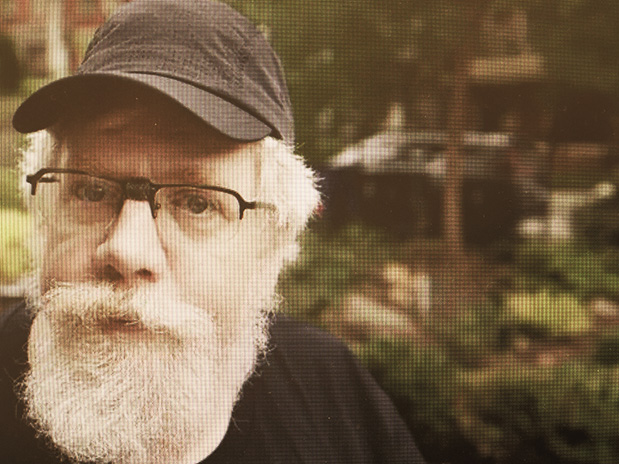
Notorious video game hacker Gary Bowser deserved to be punished for his actions, but Nintendo’s response to the situation was too severe with Bowser’s life being ruined as a result.
At one point in his life, Bowser had an innocent love of electronics. He ran an internet café and completed additional work repairing devices. Much of his life purpose, it would seem, revolved around his understanding and love of electronics.
The ironically named Bowser would eventually join Team Xecuter, a notorious group that created hardware able to circumvent anti-piracy measures on popular video game consoles such as the Nintendo Switch. The group would illegally create and sell this hardware for profit, allowing them to make money by stealing the work of legitimate, hardworking video game developers.
At first, Bowser was mainly responsible for keeping their website updated, but thanks to his extroverted nature, his role in the group would become more widespread as time went on.
“I started becoming a middleman in between the people doing the development work, and the people actually owning the mod chips, playing the games,” said Bowser in an interview with The Guardian. “I would get feedback from the testers, and then I would send it to the developers… I can handle people, and that’s why I ended up getting more involved.”
Despite functioning as a middleman for a group with several members, Bowser would eventually become a scapegoat for Team Xecuter and, to a large extent, everyone involved in video game piracy. While many of Team Xecuter’s members continue to walk free, Bowser has seemingly taken on the brunt of the group’s punishment.
Nintendo is aware of this, and it appears their harsh punishment for Bowser is an attempt to make an example out of him.
Indeed, Bowser’s actions were wrong. While there’s a case to be made for the ethicality of emulating retro products no longer available on store shelves, there’s no justification for stealing the work of developers whose work is easily accessible and available on store shelves. It’s not much different from shoplifting, albeit in a more roundabout way.
The problem is that Bowser has still taken on a punishment that should be shared across Team Xecuter, not placed on only his person. It appears Nintendo has ruined his life in an attempt to scare others away from engaging in piracy, but it is still unethical to impose such heavy consequences upon one person in a criminal organization.
On the night he was captured, Bowser was in his bed when he awoke to several rifles pointed at his head. He was promptly put in the back of a pickup truck and sent to the Interpol office before being sent to a series of prisons to serve his 40-month sentence. He served 14 months before being released for good behaviour, but those 14 months were anything but easy.
Nintendo and Bowser came to an agreement that – after paying for personal necessities like rent – Bowser would have to pay Nintendo 20 to 30 per cent of everything else he made as part of the $14.5 million he’s been sentenced to pay. As such, when he was paid morsels to counsel his distraught fellow prisoners, he was already paying Nintendo around $25 per month.
Bowser’s medical situation was also being neglected during his time in prison, a situation worsened by the ongoing COVID-19 pandemic, which required him to spend time in isolation. His left leg has elephantiasis, but because of the pandemic, he couldn’t leave his cell often and spent most of his time sitting down. At one point, he couldn’t get his shoe onto his foot, so he would walk around barefoot.
Now, after his release from prison, Bowser lives in relative misery. He goes to physical therapy to treat his disability three times a week, but that comes with a financial cost, and Nintendo’s likely keeping a careful eye on his payments. He’s also estranged from his family and relies on his friends to keep him clothed and fed. He’s landed a few coding jobs since his release but hasn’t found anything long-term – and of course, any reputable company performing a background check would likely throw his application away immediately given his infamous legal history.
Again, this is an interesting scenario because Bowser does deserve punishment for his actions, but it’s hard to deny that the severity of his consequences is unfair and cruel. There are murderers who have gotten off more easily than Bowser.
Nintendo understandably wants to scare people away from committing piracy, but in doing so, they’ve effectively ruined Bowser’s entire life.
One might argue that Bowser ruined his own life through his illegal choices, but again, the consequences far outweigh the crime here – especially when they’re burdened upon one individual on behalf of a group of criminals.
In case it’s not obvious, Nintendo doesn’t actually need the money they’ll be getting from Bowser. Yes, Team Xecuter cost Nintendo quite a lot of money – about $65 million to $150 million in Nintendo’s estimation – but as the richest company in Japan with $11 billion of value and no debt, they’ll clearly be fine whether or not they get their $14.5 million from Bowser.
With this in mind, it’s easy to surmise that this settlement’s main purpose wasn’t to save the company or even recoup losses; it’s purely to punish Bowser into oblivion and destroy his life in a way that no one would ever want to risk following.
The severity of Nintendo’s punishment for Bowser is unethically extreme. While he did deserve punishment for his actions, he didn’t deserve to have his life entirely destroyed.