
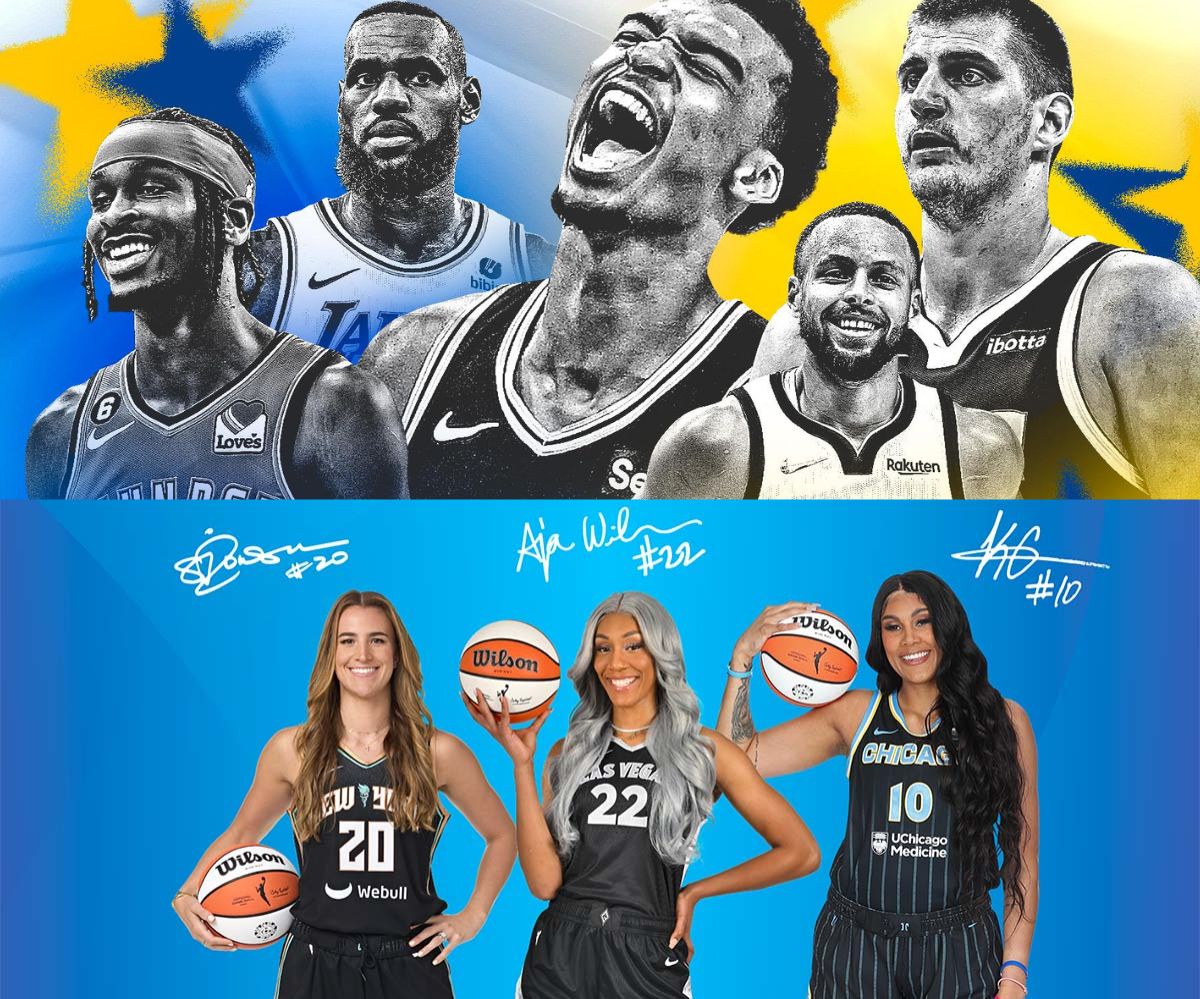
Financial disparities between women and men athletes are continued proof of systemic inequities existing in the world of professional sports.
Despite growing advocacy for equality, the gender wage gap in sports remains a glaring issue, with women’s league athletes consistently earning a fraction of their gender counterparts despite comparable skill, dedication and achievements.
One of the most visible examples of this disparity can be found in professional basketball. The average salary of a WNBA player is around $120,000 while NBA players earn an average of over $9 million. Top-tier WNBA players like Breanna Stewart or A’ja Wilson, who dominate their league, make significantly less than even mid-level NBA players. In contrast, men’s league superstars like LeBron James and Stephen Curry command contracts worth hundreds of millions of dollars, not including lucrative endorsement deals that further widen the income gap.
The inequality extends beyond basketball. In soccer, the U.S. Women’s National Team (USWNT) has long outperformed their men’s league counterparts on the international stage, winning multiple World Cups and Olympic gold medals. Yet, for years, their pay lagged behind the U.S. Men’s National Team (USMNT), which has struggled in international competitions. It wasn’t until 2022 that a collective bargaining agreement secured equal pay for both teams — an achievement that required years of legal battles and public pressure.
Tennis, often seen as one of the more progressive sports regarding gender pay equity, still faces disparities. While the Grand Slam offers equal prize money, lower-tier events do not. Serena Williams, one of the greatest athletes of all time, has frequently spoken out about the challenges of being a women’s league athlete, not only in terms of pay but also in how women are perceived in sports. Meanwhile, men’s league counterparts like Roger Federer and Rafael Nadal have enjoyed higher overall earnings due to larger endorsement deals and higher prize pools at various tournaments.
Endorsements play a significant role in exacerbating the wage gap. Men’s league athletes dominate the sponsorship arena, receiving more high-profile and lucrative deals compared to women’s league athletes. For instance, Cristiano Ronaldo and Lionel Messi have inked endorsement deals worth hundreds of millions, whereas women’s league soccer stars like Alex Morgan or Sam Kerr receive only a fraction of that amount despite their global impact and success.
The gender pay gap in sports is not just a financial issue — it reflects deeper societal biases about the value of women’s sports. Media coverage plays a crucial role in this disparity, with women’s sports receiving significantly less airtime, sponsorship investment and fan engagement than men’s sports. This lack of visibility creates a vicious cycle where lower revenue generation is used as justification for lower salaries, despite the untenable talent and achievements of women’s league athletes.
Progress is being made, but slowly. Organizations like the WNBA, FIFA and various Olympic committees are taking steps towards narrowing the wage gap, but true parity remains a long way off. Until women’s league athletes receive the same level of investment, media attention and opportunities as their gender counterparts, the fight for equal pay in sports will continue.
The conversation surrounding the gender wage gap in sports is not just about salaries — it’s about respect, recognition and the long overdue acknowledgement that women’s league athletes deserve to be valued just as highly as their men’s league peers.