
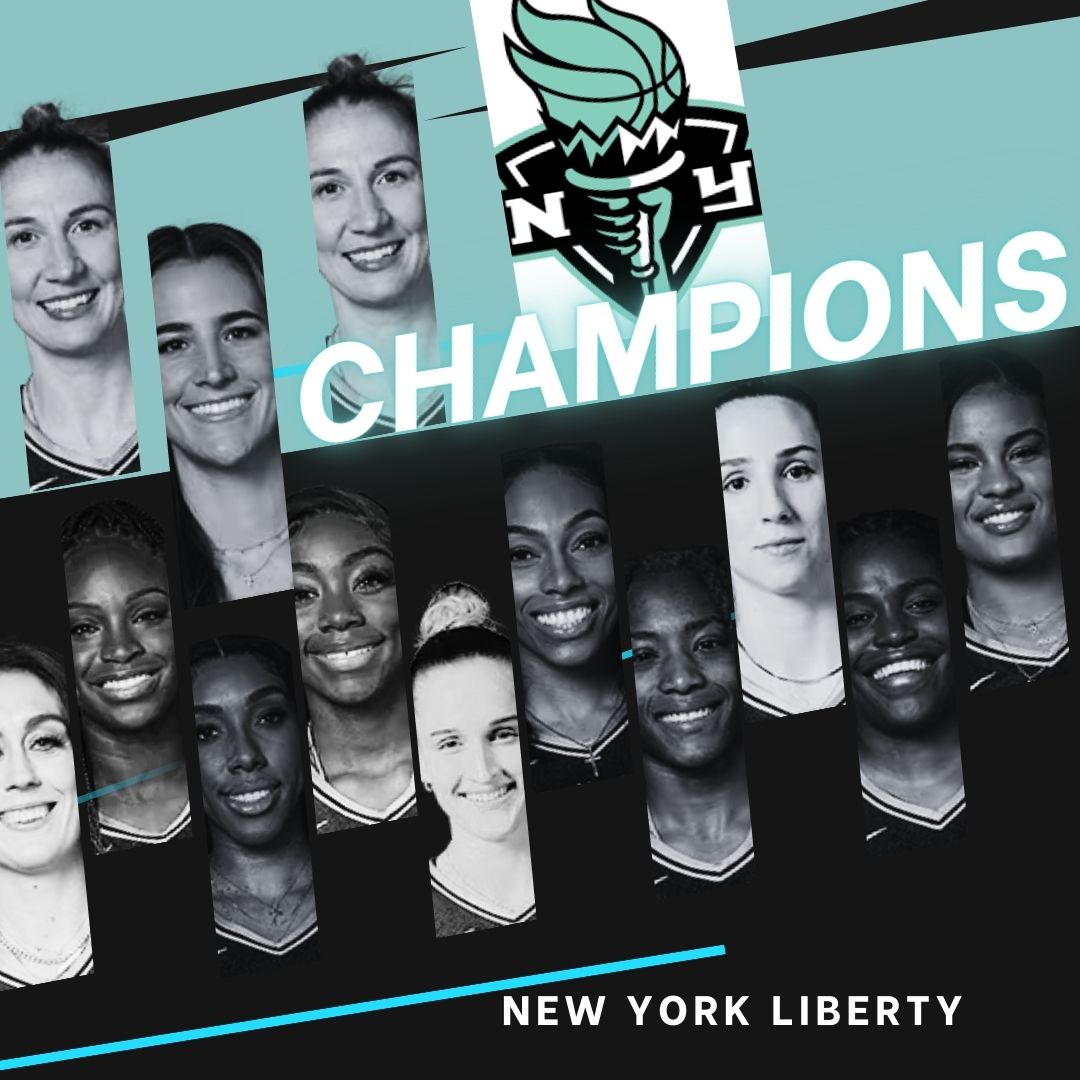
The New York Liberty clinched their first-ever WNBA championship title on Sunday, marking a historic achievement for the franchise.
As one of the league’s original teams, Liberty’s journey has been defined by years of transformation. This road to victory provides a compelling glimpse into the history of a team that has long been integral to the league’s foundation.
Founded in 1997 alongside seven other teams, Liberty quickly established themselves as a competitive force, led by known players like Terea Weatherspoon, Becky Hammon and Sue Wicks. They became known for their intense rivalries, particularly with the Houston Comets and Los Angeles Sparks, helping build the league’s visibility and fan base.
Over the years, Liberty endured several challenges. Despite reaching the Finals in 1997, 1999, 2000 and 2002, they fell just short of capturing a championship. Ownership changes created further instability. In 2017, then-owner James Dolan moved the team from Madison Square Garden to the Westchester County Center, significantly reducing attendance and raising questions about which direction the franchise was heading in.
In 2019, Wu Tsai and her husband Joe Tsai took ownership of the team, determined to revive Liberty’s legacy. Wu Tsai’s dedication to reinvesting in the team brought them back to New York City at the Barclays Center, a crucial step in reconnecting with their fan base.
“From the earliest days, what I remember is that no one wanted to buy the team. The first feeling out there was we thought that the fundamentals were actually very good,” Wu Tsai said. “Not only are the best female basketball players in the world playing this league, but of course New York and the tri-state area is this country’s largest media market.”
Under Wu Tsai’s leadership, Liberty underwent a transformation that went beyond winning games. She prioritized player well-being by investing in state-of-the-art facilities, a dedicated performance team and advanced training resources. Her strategic moves in recruitment created a star-powered lineup that set Liberty apart. She also focused on building an experience, by bringing games back to the Barclays Center where fans could reconnect with their home team. Her commitment to inclusivity made Liberty games a must-see event, creating a community that represents New York’s diverse community. At this time Wu Tsai has set a new precedent, positioning the team as one of unity and talent.
Unlike an NBA franchise, which wouldn’t likely be overlooked due to the high visibility of men’s sports, the New York Liberty’s journey reflects the unique challenges that women’s sports teams often face. In the early 2000s, WNBA teams didn’t receive the same level of attention, investment, or media coverage as their NBA counterparts, leaving franchises — in this case the Liberty — more vulnerable to being forgotten or undervalued. Wu Tsai’s acquisition and revitalization of the Liberty stood out as she took a team that had once faced New York’s spotlight and transformed it into a champion-winning franchise. Her efforts reveal the disparities in support between men’s and women’s sports and underscore the importance of dedicated ownership in pushing women’s teams to the forefront, ensuring that they receive the recognition and resources they deserve.
The New York Liberty’s first WNBA championship is a milestone that celebrated the evolution of a team, and the growth revolved around women’s sports. This victory represents the culmination of years of hard work, resilience and renewed vision under Wu Tsai’s leadership.
By reinvigorating the franchise and reconnecting with fans, the team was not only transformed, its value and potential were highlighted and put on the national stage as a women’s sport. This championship is more than just a trophy on the Liberty’s shelf; it’s a moment that honours their legacy and sets a bold precedent for the future of women’s basketball.