

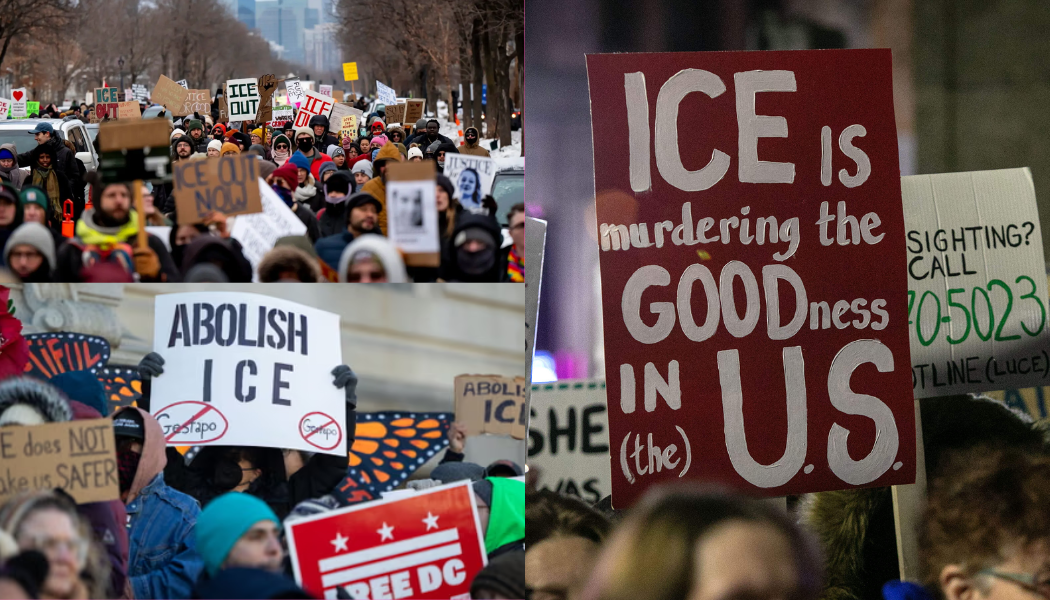
Minneapolis has become an international flashpoint with a blunt sequence of two shootings, two official narratives and a public that was asked to accept federal claims faster than it could access federal evidence. How a democratic state can unfold into government officials killing their own citizens can be understood by situating the moments in the United States’ longer history of immigration policing and the legal language that has long divided their people into categories of belonging and removability.
We can understand how states consolidate coercive power within pre-established frameworks — through emergency logic, intimidation, propaganda and the steady narrowing of what is considered worthy of rights — by looking into historical parallels, not for an easy equivalence but for methodology.
On Jan. 7, Renée Good, a 37-year-old U.S. citizen, was shot by an Immigration and Customs Enforcement (ICE) agent while driving her Honda Pilot in Minneapolis. The Hennepin County Medical Examiner’s Office later ruled her death as a homicide caused by “multiple gunshot wounds,” with People reporting that the incident report described wounds to her chest, forearm and head, noting that the full autopsy report had not yet been released at the time of publication.
In response to the incident, U.S. President Donald Trump wrote in a Truth Social post “the woman screaming was, obviously a professional agitator, and the woman driving the car was very disorderly, obstructing and resisting, who then violently, willfully, and viciously ran over the ICE officer, who seems to have shot her in self-defence.”
Minneapolis Mayor Jacob Frey held a news conference on the killing of Renée Good, calling out the Department of Justice (DOJ) and the Trump Administration for coming to conclusions “from the very beginning” that “the victim [was] a domestic terrorist, [and] the actions of the agents involved [was] some form of defence posture.” Frey emphasized the necessity of transparent participation in the investigation and accused federal authorities of limiting access to evidence, turning the post-shooting period into a contest, not just over what happened but also over who gets to document what happened.
Then, on Jan. 24, Minneapolis confronted another fatal shooting involving federal immigration enforcement, with Reuters reporting that several federal immigration officers wrestled 37-year-old U.S. citizen Alex Jeffrey Pretti to the ground before shooting him 10 times, ultimately leading to his death.
Reuters also relayed the Department of Homeland Security’s (DHS) claims that Pretti approached officers with a handgun and two magazines, requiring the agents to act in self-defence. The report also mentions local officials saying they are still working to confirm details and demanding an end to the federal operation, as Trump defends federal actions and criticizes local leaders for “inciting insurrection.”
Frey continued his vocal stance against the administration by asking “how many more residents, how many more Americans need to die or get badly hurt for this operation to end? How many more lives need to be lost before this administration realizes a political and partisan narrative is not as important as American values?”
These accounts highlight a recurring structure: the federal government narrates the confrontation by immediately calling it an act of self-defence, while fuller evidentiary clarity remains contingent on investigations, video interpretation and disclosures that often arrive much after political meaning has already been set in motion.
That evidentiary gap is sharpened by policy choices and institutional decisions that shape what can be known and when. The Washington Post reported that DHS proposed slashing ICE’s body-camera program staff and reducing spending from roughly $20.5 million to $5.5 million in its initial budget proposal, while also reporting that officers at the scene of Renée Good’s killing did not appear to be wearing body cameras and that DHS had released little officer-worn footage even as witness and government accounts diverged.
In other words, the absence of footage is not merely a matter of technological lag: it is intertwined with how seriously the agency and administration treat transparency as a default expectation rather than a discretionary concession. Where accountability might ordinarily flow from independent review, Al Jazeera reported on Jan. 19 that the DOJ said it would not investigate the ICE agent’s fatal shooting of Renée Good, a decision that signals the federal system may be willing to close ranks quickly in a case that has already sparked nationwide outrage.
When lethal force controversies cluster and the primary institutions capable of resolving contested facts either cannot produce comprehensive records or choose not to intervene, the government’s narrative advantage grows — not because it is necessarily true, but because it is first to release, and because it is backed by the state’s power to speak as though their words alone are sustainable evidence.
Political communication in this period has also treated scrutiny as hostility, reinforcing the sense that the administration’s story is not merely an interpretation but a position to be defended against “enemies” rather than tested by inquiry. The Guardian reported that White House Press Secretary Karoline Leavitt launched a “tirade against a reporter who asked about ICE” and Renée Good’s killing. Leavitt accused the reporter of being a “leftwing activist,” preserving the moment as part of the administration’s public-facing posture: critics are not simply wrong, they are illegitimate.
The backlash in Minnesota took form in a coordinated attempt to withdraw social consent from the enforcement surge by interrupting everyday life at scale, with major organizers calling for an “economic blackout” framed as “no work, no school, no shopping” on Jan. 23.
Time reported that the day of action, billed as “ICE Out of Minnesota: Day of Truth and Freedom,” drew thousands into Minneapolis amid subzero temperatures combined with large street marches and a rally at the Target Center, which was explicitly framed as a response to the ICE surge and the killing of Renée Good.
The reporting also stated that the protests were organized by community leaders, clergy and labour unions, and that a large group of clergies were arrested after kneeling in prayer during a peaceful protest at the Minneapolis-St. Paul International Airport to demand an end to cooperation with deportation flights.
The blackout’s force came from the fact that it extended beyond isolated activists and into institutions, workplaces and visible civic sites. Dynamic local reporting documented in real time how businesses across Minnesota announced closures to join the protest, showing how quickly the enforcement surge had become not only a legal controversy but also a community-level legitimacy crisis.
The administration’s posture toward this mobilization is part of what makes Minnesota an instructive case. While Trump has framed the protests as a security-and-order problem that justified intensifying enforcement rather than pausing it, the same events were repeatedly framed by protesters as an emergency in accountability. Specifically driven by opposition to Trump’s intensified immigration enforcement, federal authorities deploying roughly 3,000 ICE agents to Minnesota and the killing of Renée Good, protestors were not only contesting policy, but the legitimacy of the operation’s methods.
The surge is further enabled by DHS and ICE’s expansion of money and manpower. A Congressional Research Service table describing DHS reconciliation funding states that ICE received $74.85 billion, including $45 billion for detention capacity and $29.85 billion for operational and procurement costs, anchoring the claim that this is not merely a rhetorical “crackdown” but a material expansion of coercive capacity.
When describing the legislation’s effects, Reuters previously reported that it provided $30 billion for ICE arrest and deportation operations — triple the roughly $10 billion appropriated that year — and that the funds could be used for hiring and training new officers and ramping up arrests, including through partnerships with state and local law enforcement.
DHS announced on Jan. 3 that ICE had achieved a “historic 120% manpower increase,” crediting a recruitment campaign that “brought in 12,000 officers and agents” —language that frames agency expansion as a triumph of managerial execution rather than as a shift in the state’s relationship to civil liberty and oversight.
Fortune reported that a former ICE director warned that “wartime recruitment” messaging and large bonuses could draw the wrong kind of applicants and strain training standards, a concern that becomes structurally relevant when enforcement operations are simultaneously expanding and producing lethal-force controversies that demand reliable, reviewable documentation.
The result is an enforcement environment in which state claims travel faster than the evidence that could confirm or contradict them, while the institutional choices that would reduce that gap — like robust body-camera deployment and public-facing transparency — remain contested rather than guaranteed.
Then, detention is where immigration enforcement becomes hardest to see and easiest to normalize, because once the state has someone in custody, the public record often shrinks to institutional paperwork while the person’s life is governed by rules, contractors and facilities that operate far from cameras and street scrutiny. ICE itself describes a detention “management” structure in which Enforcement and Removal Operations monitor conditions through compliance reviews and facility inspections, implicitly acknowledging that the system’s legitimacy depends on oversight mechanisms that the public rarely observes directly.
As that dependence suggests, the risk in detention is not only overt brutality but the routine power asymmetry that makes mistreatment both easier to perpetrate and harder to prove after the fact, which is why federal detention standards and sexual-abuse prevention regimes exist at all. ICE’s own 2025 National Detention Standards say their purpose is to ensure humane treatment, protection from harm and access to medical and mental health care, formalizing the idea that detention creates predictable vulnerabilities requiring explicit guardrails.
Those guardrails include sexual-abuse prevention standards under DHS’s implementation of the Prison Rape Elimination Act framework, codified in federal regulations that require facilities to maintain sufficient supervision, including through appropriate staffing and, where applicable, video monitoring — an explicit recognition that supervision and documentation are central to preventing and proving abuse in custodial environments.
Yet, on Dec. 29, 2025, reporting from KALB stated that David Courvelle, a former contract detention officer at the South Louisiana ICE Processing Center in Basile, Louisiana, pleaded guilty in federal court to one count of sexual abuse of a ward or individual in federal custody, a charge carrying a potential sentence of up to 15 years.
Local reporting about the plea described the relationship as months-long and tied to Courvelle’s period of employment at the facility, underscoring how abuse can persist inside a closed system until it becomes legible to courts, journalists or investigators, often long after the harm has occurred.
Oversight gaps are not accidental. The Government Accountability Office (GAO) has reported that ICE can improve detention oversight and accountability for meeting national detention standards, noting that ICE inspects facilities for compliance with standards such as adequate medical care and cleanliness and that several GAO recommendations remained unaddressed as of its reporting.
More recently, GAO recommended that DHS and ICE develop and implement goals and measures to assess the effectiveness of inspection programs, warning that without clear goals and measures it is difficult to assess whether inspections ensure facilities meet detention standards — another signal that the integrity of detention depends on oversight that can be weakened by administrative choices.
Even congressional oversight of detention conditions has been contested in court. The American Press reported that a federal judge temporarily blocked a Trump-era policy requiring members of Congress to give seven days’ notice before visiting ICE facilities, finding it likely exceeded DHS authority. Later, the same judge refused to temporarily block a revised version of the DHS policy requiring a week’s notice, emphasizing how access to real-time observation of detention conditions has become a live dispute rather than a settled democratic norm.
Lately, many questions have risen regarding how such inhumane treatment can occur within a democratic framework. However, the architecture enabling large-scale enforcement and broad public stigmatization did not originate with Trump. It was already embedded in law, policy and administrative vocabulary. The phrase “illegal alien” appears in federal statute in contexts that have nothing to do with campaign rhetoric, including 8 U.S.C. § 1365, which directs reimbursement to states for costs of incarcerating “any illegal alien or Cuban national” convicted of a felony, demonstrating that the term is not merely a media invention but part of the statutory lexicon. The same terminology appears in welfare-era immigration provisions referencing estimates of the “resident illegal alien population,” illustrating that federal law has long treated “illegal” presence as a measurable category of governance rather than only a moral claim, and “alien” as a way to dehumanize them.
DHS’s Office of Homeland Security Statistics has likewise used “resident illegal alien population” as a definitional term in its statistical reporting, reinforcing how the label persists as an administrative category even when public-facing language shifts toward “undocumented.”
This lineage matters because the U.S. has precedents for mass removal and coerced departures that predate today’s partisan configurations, including the 1930s Mexican repatriations. United States Citizenship and Immigration Services (USCIS)’s historical archive notes that an estimated 400,000 to 1 million Mexicans and Mexican Americans left the U.S. during that period and that, in many cases, no federal record exists for these departures — a detail that underscores how state and quasi-state pressure can operate at scale without producing a transparent archival trail.
The modern apparatus also contains procedural tools designed for speed and discretion, such as expedited removal, which a Congressional Research Service report describes as a legal framework allowing certain noncitizens to be removed without a full hearing before an immigration judge, a mechanism created by the Illegal Immigration Reform and Immigrant Responsibility Act of 1996 and implemented through subsequent regulation and practice.
The system includes legal pathways for deputizing local law enforcement into immigration functions through ICE’s 287(g) program as part of the Immigration and Nationality Act. The program authorizes delegation of certain immigration enforcement functions to specially trained state and local officers under federal oversight by ICE, widening the enforcement footprint beyond federal personnel alone.
Today’s surge tactics and rhetorical hardening are built and evolving from older legal categories, older enforcement precedents and long-standing administrative mechanisms built to classify, detain and remove. Once those structures are funded, staffed and politically celebrated, the distance between policy and coercive power narrows fast.
These tactics hold historical parallel, not to claim that Minneapolis today is Berlin in 1933, but rather that democratic systems can be hollowed out by methods that look procedural, reactive and even legal as they unfold.
In February 1933, the Nazi coalition government used the Reichstag fire as a pretext to persuade President Paul von Hindenburg to sign an emergency decree that suspended core civil liberties — freedom of speech, press, assembly, privacy protections — and removed restraints on police investigations, enabling arrests and incarceration of political opponents without specific charges while also empowering the central government to override state and local authorities.
That sequence shows how an authoritarian project can convert a crisis narrative (such as, “too many undocumented people”) into a durable policing framework without needing to announce itself as a revolution, while “public safety” language becomes an all-purpose solvent that dissolves ordinary limits on state power.
Once those emergency powers were normalized, the next step in Germany was not merely more policing but the legal reconfiguration of governance itself, accomplished through the Enabling Act of March 1933, which allowed the Reich government to issue laws without the consent of parliament and laid a foundation for the systematic Nazification of German society.
This is part of why historians emphasize that dictatorship does not always arrive as a single rupture. It can arrive as a series of administrative moves that steadily narrow who counts as a legitimate participant in public life, and shifts power away from institutions designed to slow, scrutinize and limit coercion.
The terror that followed was not only ideological but institutional, with the Holocaust Encyclopedia describing how Nazi power consolidated through coordinated violence and intimidation directed at political opponents, carried out by party formations and the police as the regime stamped out opposition. That consolidation relied on organizations like the SS, which the Holocaust Encyclopedia describes as an increasingly central instrument of Nazi terror whose members served as auxiliary police and later as concentration-camp guards, illustrating how the boundary between partisan force and state authority can be deliberately blurred during authoritarian consolidation.
Italy’s fascist trajectory underscores a related method that authoritarianism can be built not only through emergency decrees but through slow saturation of daily life via censorship, propaganda and the capture of public institutions, often using “traditional elites” and existing state structures rather than entirely new organs. Encyclopaedia Britannica’s account of Italy’s “end of constitutional rule” notes that by the 1930s, the Fascist Party dominated many aspects of daily life: the press was tightly censored, newsreels functioned as government propaganda, radio broadcasting was controlled and schools and youth movements were reorganized for regime purposes.
That same Britannica discussion notes that anti-fascist groups were periodically founded but the secret police soon cracked down on them, capturing the dynamic in which civil society becomes not a counterweight but a target to be managed, infiltrated or suppressed.
What ties the German and Italian cases together, at the level of method rather than historical equivalence, is the way state power moves to make dissent socially risky and institutionally ineffective by controlling who may speak, who may gather, who may publish and who may credibly narrate events, while expanding the coercive capacity of policing and surveillance through law and bureaucracy.
The reason these techniques remain relevant to a contemporary U.S. immigration enforcement story is that they illuminate how the legitimacy of coercion can be manufactured before evidence is fully tested, and how institutions can be configured to privilege the state’s account over independent verification.
The Reichstag Fire Decree is an explicit historical example of a government using the language of protection and security to suspend liberties and empower arrests without charge, demonstrating how a state can treat its own narrative of threat as sufficient warrant for extraordinary action. The Enabling Act shows how quickly that logic can translate into structural power shifts that weaken oversight and concentrate authority in the executive. And Italy’s fascist consolidation shows how censorship and propaganda can normalize coercion not only through fear but through constant messaging that trains the public to accept the regime’s version of reality as the default baseline, while casting opponents as dangerous disruptions to order.
Even in the midst of repeated lethal-force controversies and an enforcement surge defined by speed, the current moment is also marked by the continued presence of democratic “counterweights” that can still force visibility back into systems designed to operate out of sight. The point is not that courts and Congress are powerless, it is that the conditions for democratic checking now resemble a tug-of-war rather than a baseline, and that this tug-of-war is unfolding at the same time that the federal government’s narrative advantage in Minneapolis has been reinforced by inconsistent documentation and rapid official claims.
The lack of transparency or credibility needed when federal officials discuss the death of Good or Pretti, paired with body cameras for ICE agents remaining unevenly deployed and were proposed for deep cuts, illustrates why “counterweights” cannot merely exist in theory. If transparency tools and oversight access are weakened or delayed, the public is left to contest state violence through partial clips and competing statements, while the state’s story tends to harden long before independent verification can catch up.