

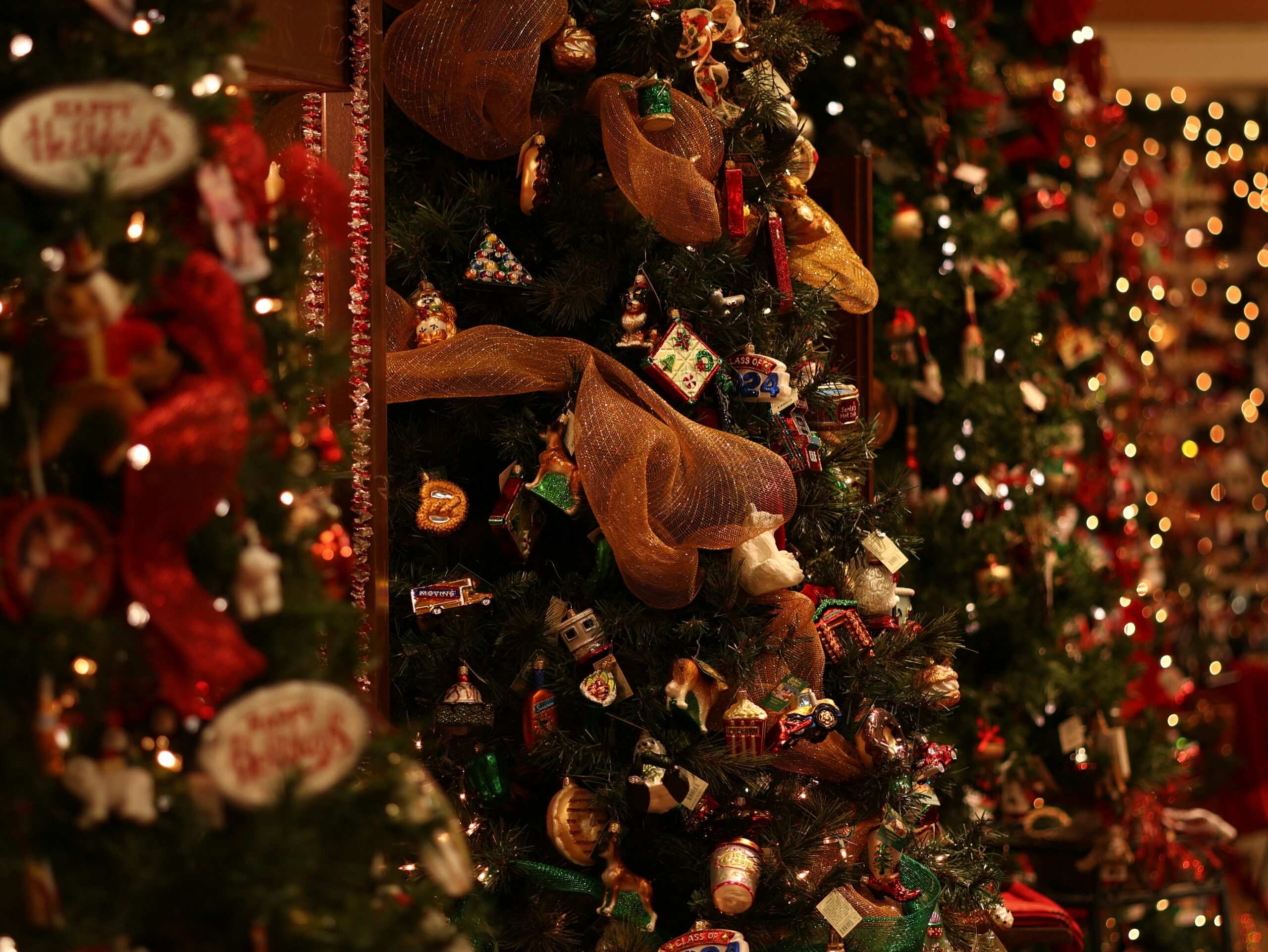
As Oct. 31 has come and gone, the stores have marked Halloween candy half-off while your neighbours tore down their fake cobwebs and put out their pumpkins on garbage day. Following suit, the famous debate reignited: when does the Christmas season really begin?
Some argue that Christmas should not be discussed before American Thanksgiving (falling on Nov. 27 this year), while others insist that Dec. 1 is the only “proper” start date — not to mention the few grinches who claim that the tinsel should not come out at all.
Let’s face reality: by November 1st, the spirit of Christmas is already in the air. And maybe, just maybe, that’s exactly the way it should be.
The Christmas season, in all its cozy, sparkling, cranberry-scented glory, does not need to wait until late November or early December to make its grand entrance. Once Halloween has faded into the back of your memory, the calendar flips to the most wonderful time of the year. November 1st is the perfect — and perfectly natural — moment to let Christmas begin.
Allowing yourself to feel excited for Christmas on November 1st is the emotional reset that we all need. I know you may be thinking that celebrating Christmas early is about consumerism: HomeSense is decked out in red and green, covered in tinsel and displaying about 50 different nutcrackers — yet another marketing tactic. For me, celebrating Christmas early is not about consumerism or “rushing” the holidays: it’s emotional survival.
The post-Halloween slump is real, and Christmas decorations, music and traditions provide an immediate antidote. The joy of anticipation is a real psychological concept, as research suggests that looking forward to something joyful releases dopamine — the “feel good” chemical in your brain — and lifts your mood. So, if putting up a Christmas tree on November 1st makes you smile, science says you’re not rushing: you’re doing self-care.
One of the most common objections to the Christmas season is that it “overshadows” American Thanksgiving. As a Canadian with no American roots, I personally do not care to celebrate Thanksgiving again. If American Thanksgiving means something to you, however, I argue that this notion is still irrelevant, as it fails to understand the spirit of both holidays.
Thanksgiving and Christmas aren’t rivals; the two come from the same spirit of gratitude, generosity and togetherness. Both holidays are rooted in appreciation, reflection and connection with loved ones. Extending the Christmas season into November does not erase Thanksgiving — it enhances it.
Besides, let’s be honest: Thanksgiving does not require a full month of preparation. There’s no need to hold the holiday season hostage for the sake of one day’s turkey.
Even if we pretend that the Christmas season should wait until December, the world around us disagrees. As much as I may criticize them, Starbucks rolls out its holiday menu in early November. Radio stations begin teasing their holiday playlists. Retailers swap out pumpkins for poinsettias overnight. Streaming platforms release holiday movies weeks before Black Friday.
These aren’t coincidences — they’re reflections of what people actually want. Businesses, driven by data and demand, know that their customers are ready to embrace the Christmas season as soon as the clock strikes midnight on Oct. 31. For millions, that first sip of a peppermint mocha — which I beg you to get from a local coffee shop — is the official start of Christmas.
While critics dismiss this as pure marketing (though I acknowledge that is certainly part of it), I argue this is more cultural that commercial. The early rollout of Christmas signals our collective craving for warmth and nostalgia. We don’t buy Christmas — we build it, one song, cookie and glowing string of lights at a time.
Honestly, Christmas brings too much joy to fit into one month. Between decorating, baking, watching classic movies, attending parties, wrapping gifts and a hundred other preparatory tasks, one month is simply not enough time to do Christmas the justice it deserves.
Condensing the entire season into only December creates unnecessary stress. The rush to buy presents, squeeze in events and somehow feel “merry” on command can be overwhelming. Extending the season into November doesn’t dilute its meaning — it allows us to savour it.
When you start on November 1st, Christmas becomes less about frantic obligation and more about slow enjoyment. You can decorate gradually, shop thoughtfully and find time to actually rest. It’s not about commercializing Christmas: it’s about reclaiming it from chaos.
In a time when the world often feels heavy — politically, socially and emotionally — why would anyone want to shorten a season that revolves around kindness, generosity and hope? If we can stretch out the period of good will toward others by a few weeks, I argue that we should.
The beauty of Christmas lies in its optimism. It encourages us to look for light in darkness, to reconnect with people we love and to believe in something good. In an increasingly fractured and fast paced world, maybe the best thing we can do is start celebrating joy a little earlier.
If hanging lights on November 1st helps someone feel hope, that’s not “too soon.” That’s exactly on time.
The truth is, there’s no moral high ground in waiting until a certain time in late November or December to put up a tree or hang some lights. The Christmas season begins when we decide it does, and more people than ever are deciding that it begins the moment that Halloween ends.
So, this year, as November 1st has come and gone, don’t feel guilty if you pressed play on your holiday playlist or put out some decorations. Pour yourself a peppermint mocha, turn on Home Alone and embrace the Christmas season unapologetically. Christmas is not just a date on the calendar: it’s a feeling. And that feeling deserves all the time it can get.