

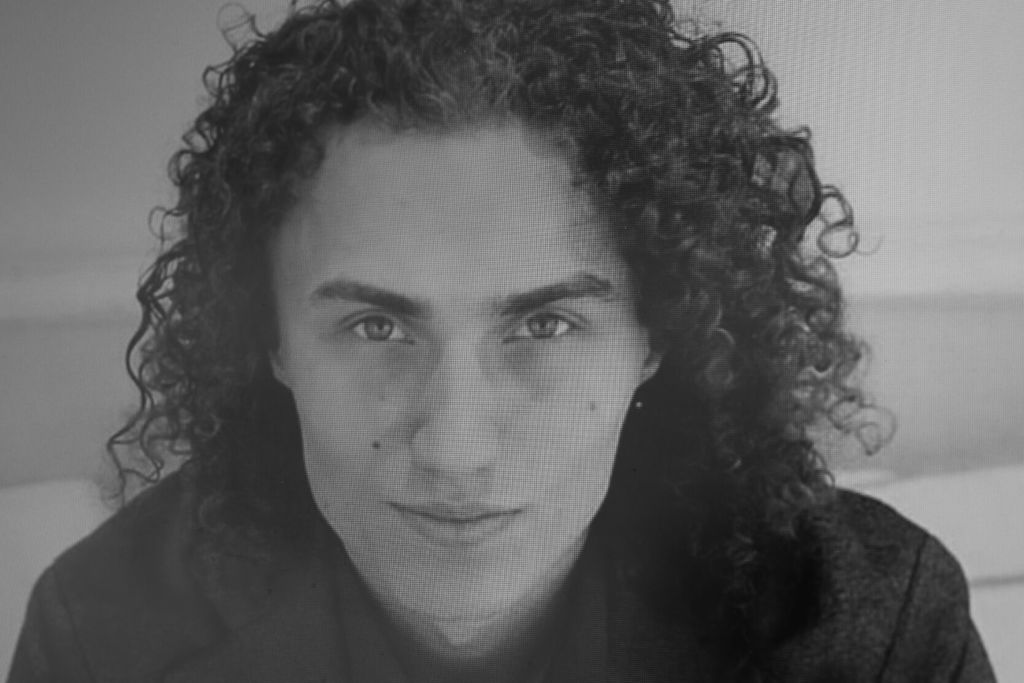
YouTuber Kwebbelkop has destroyed his reputation due to his reliance on artificial intelligence (AI), and it’s a sad sight to see.
Jordi Maxim van den Bussche, known online as Kwebbelkop, has amassed a staggering 15-million subscribers on his YouTube channel. He rose to fame over the last decade, gaining much of his popularity from the group he formed with his friends Jelly and Slogo, known as Robust.
The trio would play video games and compete in challenges together, and their friendship became integral to their joint online growth. Their videos were evidently made for children and had a significant impact on the viewers who grew up watching them.
In 2020, Kwebbelkop exited the group, citing mental health issues as the reason for his departure. While this move would be a blow to many fans of the trio, many seemed to understand the rationale behind Jordi’s decision. After all, mental health is incredibly important, and it was clear that Jordi was simply doing what’s best for him.
Things looked to be improving for Jordi, but no one could predict the downfall that his channel soon experienced.
In the years after departing the group, Kwebbelkop would primarily create surface-level gaming and reaction content. His new videos presented nothing of substance or value and, based on the plethora of commenters asking for Jordi to return to Robust, it’s safe to assume that many of his remaining views came from people hoping to see what had happened to their once-beloved creator.
Jordi’s viewership dropped to abysmal levels, with his videos usually attaining a fraction of his former views. Over the last year, his view count dropped even lower, with many of his videos struggling to reach even 100,000 views. This is an especially odd sight when juxtaposed with his subscriber count, which remains sky-high thanks to his days of notoriety.
It was clear that something needed to change, so Jordi altered his approach – and somehow, he made things far, far worse.
On Aug. 1st, Kwebbelkop released his first video starring “Kwebbelkop AI,” a fully AI-generated version of Jordi. The video shows a cartoon-style version of Jordi “playing” a Minecraft challenge. The animation’s physical likeness and speech are generated by code analysing Jordi’s past behaviour, meaning that the real Jordi is nowhere to be found in the video.
Needless to say, the video is completely soulless. Without any element of human touch, there is no reason for any of Jordi’s fans to watch it. They’d just be watching a simulation of what a computer thinks Jordi is like, not the creator himself.
This approach to content creation – if you can even call it that – shows everything wrong with AI in the current technological landscape. Jordi’s strategy is lifeless, lazy and misinformed about why people watch content creators in the first place. It’s mind-boggling that Jordi expected anyone to enjoy this. For someone that was once a YouTube powerhouse, this move illustrates how out-of-touch he is with any audience on the platform.
Naturally, fans and critics alike were outraged by Jordi’s strategy. As he continued uploading new videos starring his simulated doppelganger, angry comments about the nature of Jordi’s so-called “content” began to flood in.
Jordi has taken to X, formerly Twitter, to defend his use of AI, calling it a “tool for creators” that will “enhance storytelling.” He expressed excitement over the influx of views on his AI videos, when in reality, these views are primarily coming from people wanting to see the absurdity of an “AI creator” for themselves.
Once Jordi got the message that viewers were not happy with his content shift, his response was to introduce a new, more realistic iteration of Kwebbelkop AI. This new version is a scarily accurate depiction of Jordi that is difficult to tell apart from his real self. While he can never actually replace himself with AI, he’s doing a convincing job of making it seem that way.
Jordi has started posting about his “AI girlfriend,” a troubling sign of a man who’s replacing more and more aspects of his life with AI. It’s a sad tale, but one that can hopefully prevent others from following in his footsteps.
Kwebbelkop’s behaviour displays his utter disconnect with the world around him as he slowly moves into a comfortably simulated existence. His misunderstanding of content creation shows the beginning of his detachment from humanity, and this is something he’s unintentionally made quite clear through his own words.
“I think the issue is that a lot of creators and brands have pushed the narrative that creators are all about having a connection with them [and their] personalities,” Jordi posted. “It’s not that deep. It’s just about having a good time when watching a video; [it] could be for any reason.”
While his program is certainly technologically impressive, it’s downright terrifying for the future of content creation given the fear that he and his AI counterpart are essentially non-differentiable. What this holds for the future of content creation remains to be seen, but it can only be hoped that Jordi’s ideas do not pass on to other creators.